These instructions apply to the SsangYong Tivoli Mk1 2015-2022.
For other models, please choose your vehicle here.
If the touchscreen in your SsangYong Tivoli (X100, 2015–2022) has frozen — the display ignores your taps, the radio stalls, or the screen sticks on the start-up logo — you can almost always clear it yourself with a forced restart. The Tivoli’s 7″ (later 8″/9″) touchscreen head unit is a small embedded computer, and like any computer it occasionally locks up. Holding the Power/Volume knob reboots it in under a minute and keeps your settings.
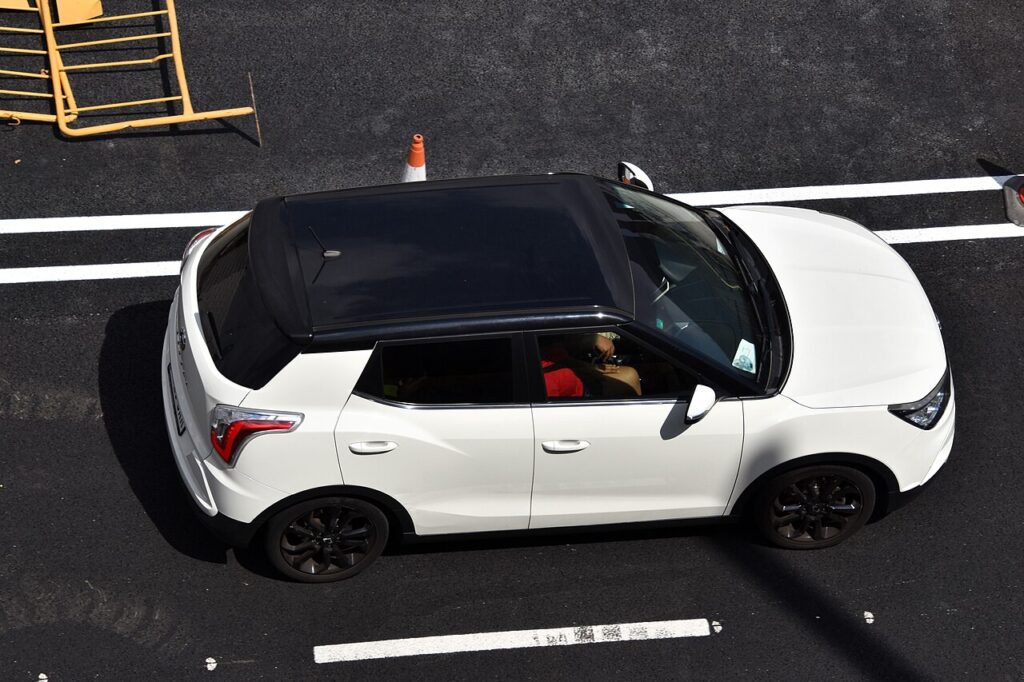
Does your Tivoli have a touchscreen?
Trim matters here. Entry-level Tivolis (SE and some fleet cars) shipped with a basic radio and no touch panel — there is nothing on those to freeze, and this guide does not apply to them. EX, ELX and Ultimate trims, plus the later facelift cars, carry the 7″ touchscreen (8″ or 9″ on the updated 2019+ models) with one rotary Power/Volume knob on the corner of the bezel. That knob is the reset control: a long hold forces the unit to power-cycle.
Soft reset — the knob hold
- Park, apply the handbrake and leave the ignition in ACC or ON so the screen has power. The engine does not need to run.
- Find the round Power/Volume knob beside the touchscreen.
- Press and hold it — keep going past the mute point, roughly 10 seconds.
- The screen blanks and the SsangYong logo reappears. Release the knob.
- Wait 20–40 seconds for radio, Bluetooth and (where fitted) navigation to reload. Done.
Is it safe? Will I lose data?
Yes, it is safe, and no, you lose nothing. The knob-hold reboot only clears the unit’s temporary working memory. Paired phones, radio presets, saved navigation favourites, brightness and language are all stored permanently and survive the restart. It is the same idea as restarting a phone rather than wiping it — repeat as often as you need with no harm.
If the screen stays frozen
- Cycle the ignition fully. Switch the car off, open the driver’s door, wait two minutes for the head unit to power down completely, then restart. A fast off/on sometimes will not drop power.
- Pull the audio fuse. With the ignition off, open the cabin fuse box (lower dash / passenger footwell) and remove the head-unit / AUDIO fuse for 30 seconds, then refit. This forces a hard power-down when the knob will not respond — check the fuse-box lid diagram for the AV circuit.
- Disconnect the battery. As a last resort, disconnect the negative terminal for two to three minutes to reboot every module, then reset the clock.
- Re-check after software updates. If freezes started after a phone update, delete and re-pair the device — a corrupt Bluetooth profile can hang the unit on connect.
Factory reset (erases data)
Only needed if the unit keeps misbehaving after reboots, or before you sell the car. With the system on, open Settings → General/System and select Factory data reset (or Default). Confirm to wipe paired devices, presets and saved destinations back to factory state. Try the knob-hold soft reset first — it cures almost every freeze without deleting anything.
Frequently Asked Questions
My Tivoli has no touchscreen — how do I reset the radio? Base SE radios have no touch panel and rarely freeze; if one locks up, pull the audio fuse for 30 seconds or briefly disconnect the battery to power-cycle it.
Which knob reboots the touchscreen? The single round Power/Volume knob on the corner of the screen. Press and hold it about 10 seconds until the logo reappears.
Will rebooting delete my paired phone or presets? No. A knob-hold reboot only clears working memory; pairings, presets and favourites are stored permanently and stay put.
The screen freezes only when I connect my phone — why? That usually points to a corrupt Bluetooth profile. Delete the pairing on both the car and the phone, then pair again fresh.
Do I need the engine running? No. The ignition only needs to be in ACC or ON so the head unit is powered; the engine can stay off.
Dealing with a dashboard warning light or fault code on your Tivoli too? Our sister site autodtcs.com explains every OBD-II diagnostic trouble code and how serious each one is.
Independent guide — not affiliated with SsangYong. Always follow your official service manual and safety precautions. Read our full disclaimer.