Most drivers judge a tyre by one thing: how much tread is left. But tread depth is only half the story. A tyre is made of rubber, and rubber ages — it hardens, shrinks and cracks over the years whether you drive on it or not. A tyre with plenty of tread can still be unsafe simply because it is old and perished. This guide shows you what that ageing looks like, why it matters, and how to judge whether a tyre needs replacing on condition rather than wear.
What tyre cracking (dry rot) actually is
Tyre rubber is not just rubber. It contains oils, antioxidants and anti-ozonant waxes that keep it soft and flexible and protect it from the environment. Over time those protective ingredients are used up: the oils evaporate, and sunlight, heat and the ozone in everyday air slowly attack the rubber. As that happens the rubber hardens, shrinks slightly and begins to crack. You will hear it called dry rot, perishing, weather-checking or ozone cracking — they all describe the same thing: rubber that has aged past its best.
Crucially, this clock keeps ticking even on a tyre that is barely used. A car that covers few miles, a spare that never touches the road, a caravan or trailer parked for months, a classic kept for weekends — all of these can wear their tread very slowly while the rubber quietly ages underneath. That is exactly how you end up with a tyre that looks almost new on tread but is dangerously old in condition.
Where to look for age cracking
Cracks show up first in the places that flex most and catch the most sun and air:
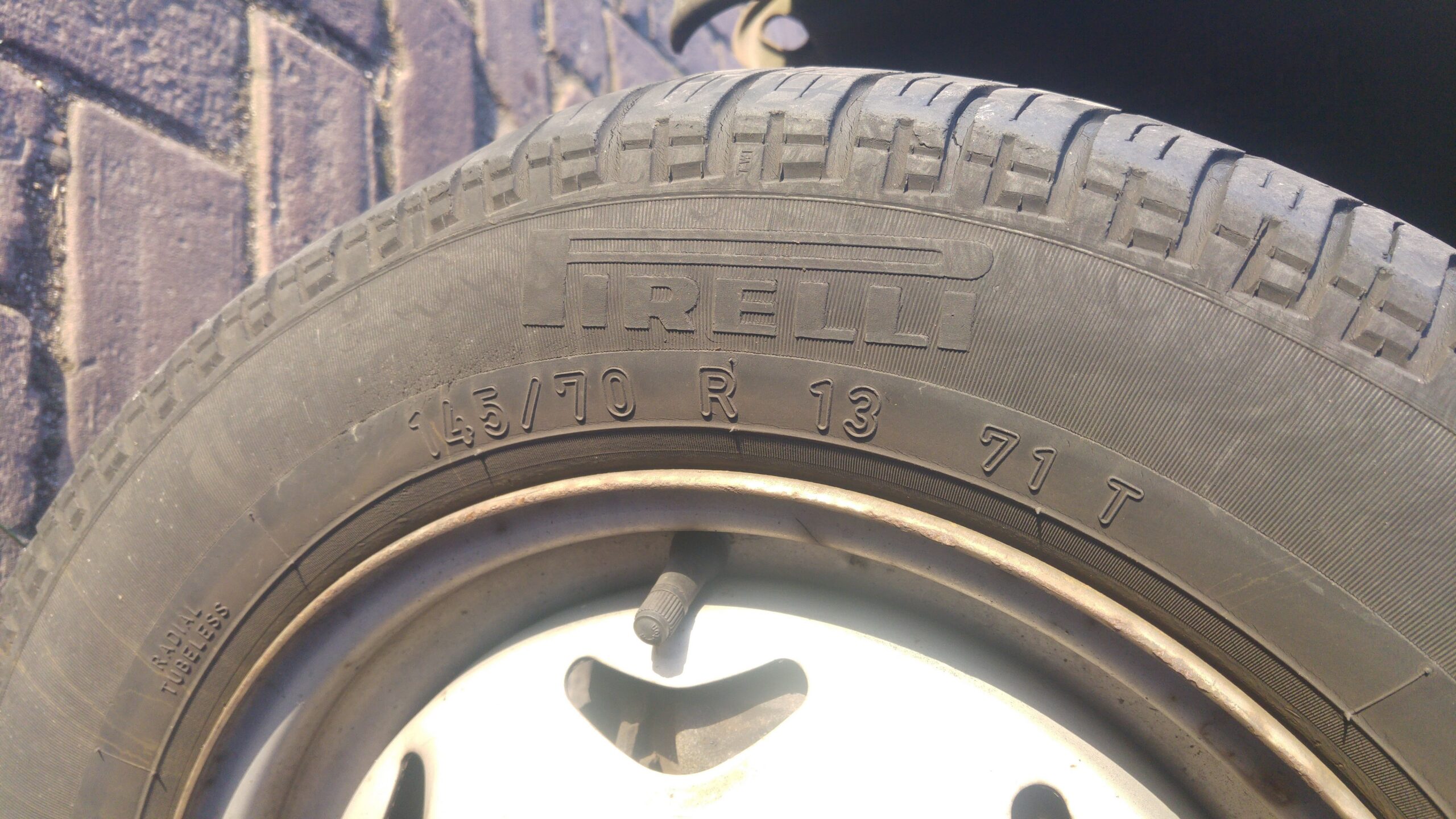
- The sidewall — fine lines running around the tyre, often near the rim or the widest part.
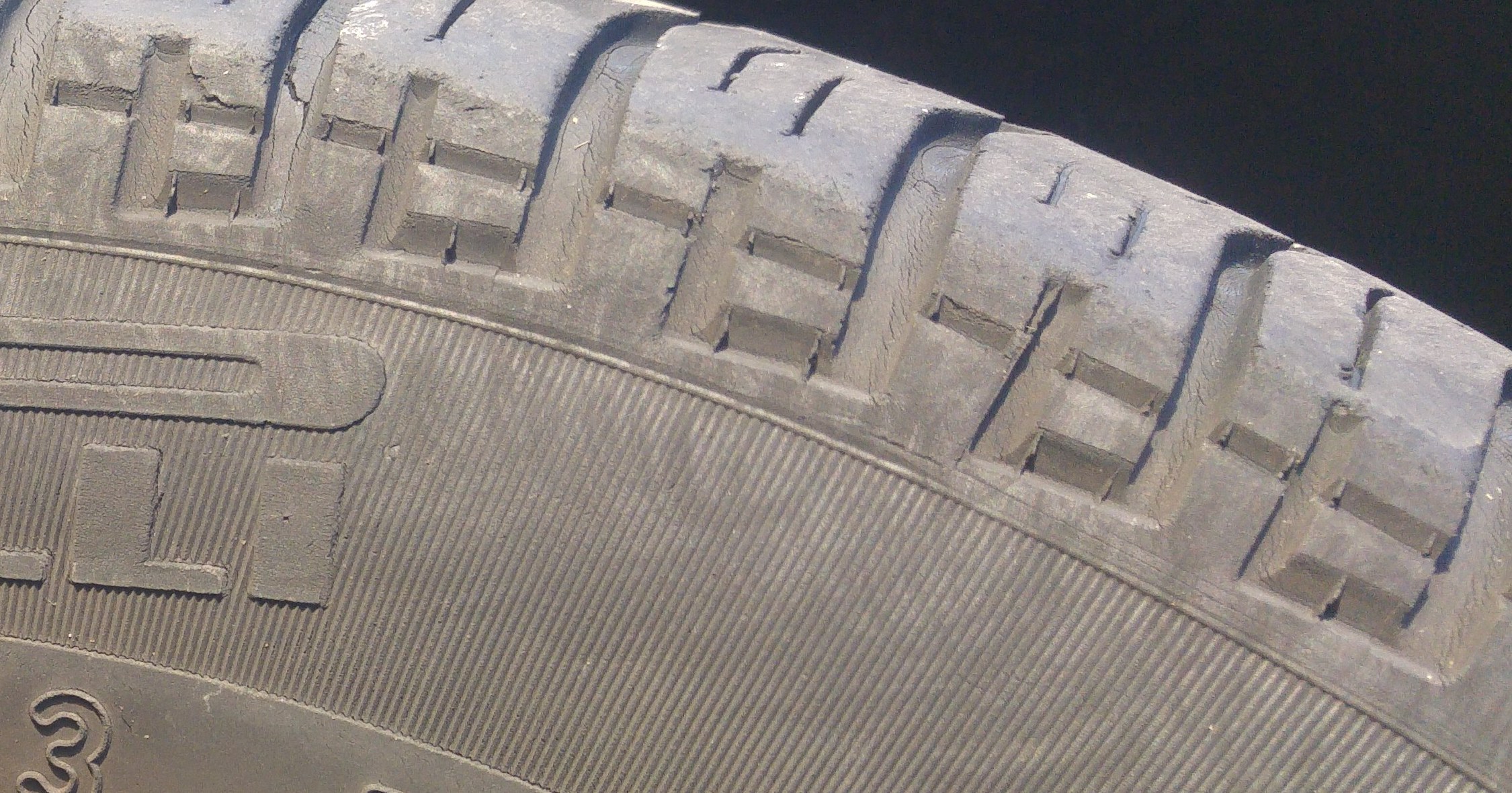
- The base of the tread grooves — small cracks between the tread blocks, as in the close-up above.
- The shoulders — the corners where the tread meets the sidewall, which flex hard in every corner.
Very fine surface crazing — a network of tiny lines you can barely feel — is early ageing. Cracks that are wide enough to see clearly, deep, or that you can fit a fingernail into are a sign the rubber has gone well past safe, and any crack deep enough to expose the fabric or steel cords underneath means the tyre must come off the car straight away.
Why old, cracked tyres are dangerous
Hardened, cracked rubber does not grip the road the way fresh rubber does. The consequences are real:
- Less grip, especially in the wet and cold — hard rubber cannot key into the road surface, so braking distances grow and the tyre lets go sooner in a corner.
- Chunking and tread separation — cracks can spread until pieces of tread break away, or the tread belt starts to peel from the carcass.
- Blowouts — a perished, weakened tyre is far more likely to fail suddenly at speed, which is the worst possible moment for it to happen.
None of this is visible in a quick glance at the tread depth — which is exactly why age cracking catches people out.
How old is too old?
You do not have to guess a tyre’s age. It is moulded into the sidewall as the DOT date code — the last four digits tell you the week and year it was made (for example, 2419 means week 24 of 2019). We cover exactly how to find and read it in our guide on reading your tyre sidewall.
As general guidance, many car and tyre manufacturers recommend having tyres inspected once they are around five to six years old, and replacing them by about ten years regardless of how much tread remains. Those are guidelines, not hard law — a tyre stored well may still look good at eight years, while one baked in the sun can crack badly in four. Condition always beats the calendar, but the date code tells you when to start looking closely.
What makes tyres age faster
- Sunlight and heat — UV and high temperatures break the rubber down; a car always parked outside in the sun ages its tyres faster.
- Ozone and pollution — ozone in the air attacks rubber; being parked near electric motors or in busy urban air does not help.
- Standing still — counter-intuitively, tyres that are rarely driven can crack sooner. Flexing works the protective waxes to the surface; a tyre that never rolls does not renew that protection.
- Under-inflation — a soft tyre flexes and overheats, which accelerates cracking. Keeping pressures correct is a genuine longevity measure, not just a fuel-economy one.
- Harsh tyre-shine products — some solvent-based dressings strip the very waxes that protect the rubber, doing more harm than good over time.
Cosmetic crazing or replace now?
Not every fine line means an instant replacement, but it does mean a proper look. Treat it like this:
- Very light surface crazing, tyre only a few years old: keep an eye on it and re-check regularly; it is early ageing.
- Clear, deep or widespread cracks; tyre old or of unknown age: have it inspected and plan to replace — do not wait for the tread to wear out.
- Cracks exposing cords, bulges, or any deformity: stop using the tyre immediately and replace it — this is failure territory.
If you are ever unsure, a tyre specialist can judge in seconds whether cracking is cosmetic or structural. When in doubt on a tyre that carries you and your family at speed, replacement is cheap insurance.
The bottom line
Tread depth tells you how worn a tyre is; the rubber’s condition and age tell you how safe it still is. Check both. Read the date code, look along the sidewalls, shoulders and groove bases for cracking, and be especially wary of low-mileage cars, spares, trailers and any tyre whose history you do not know. The tyre in these photos would have sailed through a tread check — and it had no business staying on a car.
