Car dashboard warning lights follow a simple colour code. Red means stop as soon as it is safe – something needs attention right now. Amber (or yellow) means a system needs checking soon, but it is usually not an emergency. Green and blue are just information. This guide explains the most common symbols, what each one means, what to do – and, unlike most guides, how to reset each light yourself once the fault is fixed, with step-by-step guides for your exact car and honest guidance on the jobs that really need a garage.
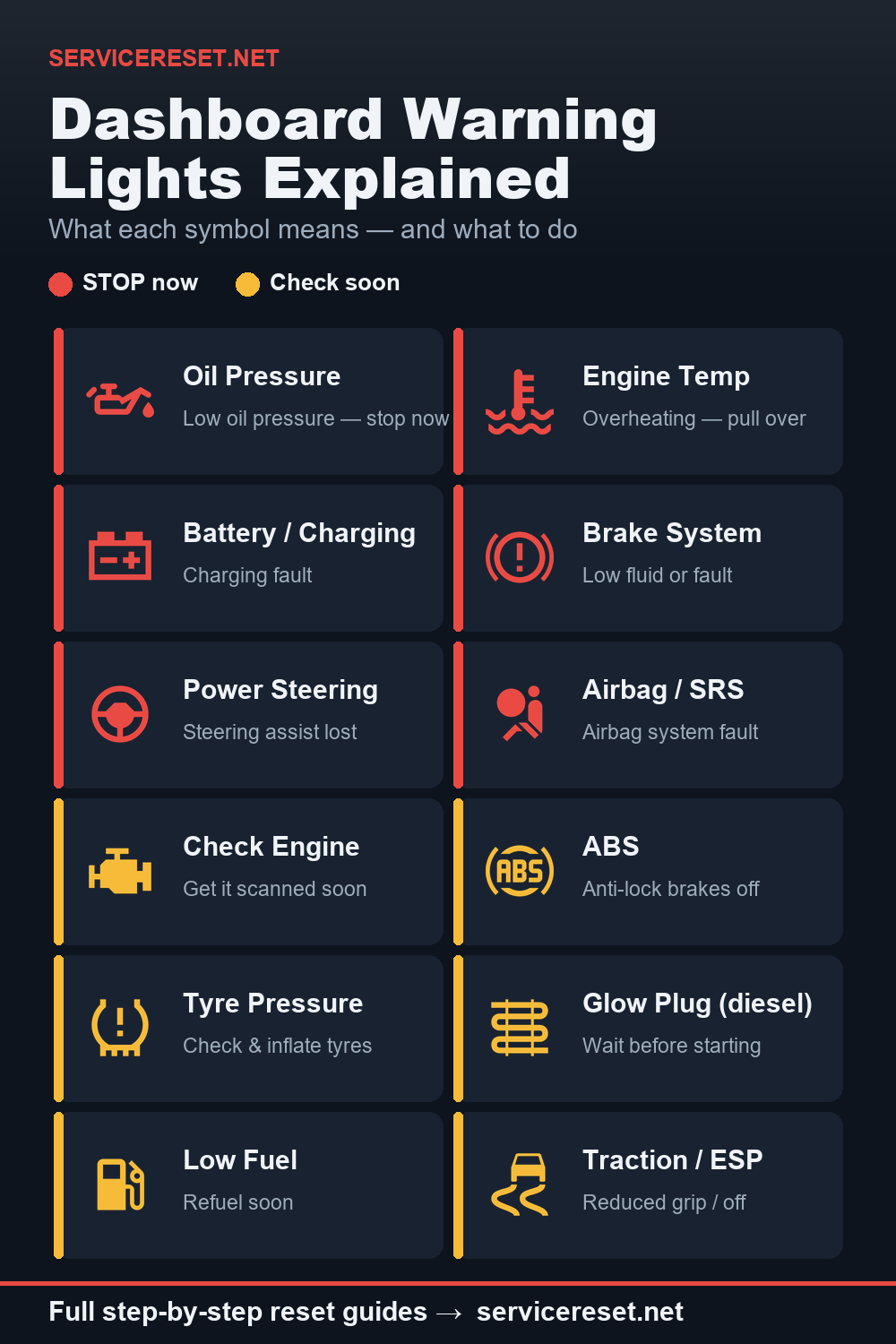
The dashboard warning light colour code
Before you worry about a specific symbol, look at its colour – it tells you how urgent the problem is:
- Red – stop now. A safety or serious mechanical issue (oil pressure, overheating, brakes, charging, airbags). Pull over safely and investigate, or call for help.
- Amber / yellow – check soon. A system needs attention but you can usually drive gently to a safe place or a garage. The big exception is a flashing engine light (see below).
- Green / blue – information only. A feature is switched on – sidelights, indicators, cruise control, or blue main-beam. No action needed.
The exact drawing of a symbol varies slightly between manufacturers, so always check the warning-lights section of your owner’s manual for your specific car. The meanings below are the internationally standardised ones.
Red warning lights (stop as soon as it is safe)
 Oil pressure – oil can with a drip
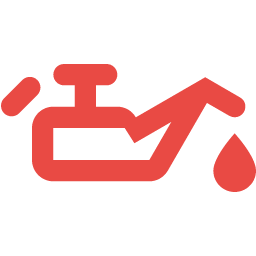 Oil pressure – oil can with a drip
This is one of the most serious warnings. It signals low oil pressure, not simply a low oil level, and running the engine without pressure can destroy it within minutes. Stop as soon as it is safe, switch off the engine, and check the oil level once it has cooled. If the level is fine but the light stays on, do not drive – have the car recovered.
Engine temperature – thermometer in waves
 Engine temperature – thermometer in waves
The engine is overheating. Pull over, switch off, and let it cool for at least 30 minutes before checking the coolant. Never open the expansion tank cap while the engine is hot. Driving on while overheating risks a warped head or blown head gasket.
Battery / charging – battery symbol
 Battery / charging – battery symbol
This does not mean the battery is flat – it means the charging system (usually the alternator or its drive belt) has stopped keeping the battery topped up. The car will keep running until the battery drains, so head somewhere safe. If the car will not restart, see our guide to jump-starting a car safely, and remember that many modern cars need a specific battery disconnect and reconnect procedure after any battery work.
Brake system – circle with an exclamation mark, or “(!)”
 Brake system – circle with an exclamation mark, or “(!)”
First check the obvious: this light is on whenever the parking brake is applied. If it stays on after you fully release the parking brake, it usually means low brake fluid or a fault. Drive very carefully to a garage – or stop and call for help if the pedal also feels soft.
Power steering – steering wheel with an exclamation mark
 Power steering – steering wheel with an exclamation mark
The power-assisted steering has reduced or lost assistance. The car is still steerable but the wheel will feel much heavier, especially at low speed. Drive gently to a safe place and have it checked; on some cars a quick restart temporarily restores assistance.
Airbag / SRS – person with a large circle in front
 Airbag / SRS – person with a large circle in front
The supplementary restraint system has a fault, which means the airbags or seatbelt pretensioners may not deploy in a crash. It is not something you can reset at home – have it diagnosed as soon as possible.
Seatbelt reminder – person wearing a belt
 Seatbelt reminder – person wearing a belt
A driver or passenger belt is unfastened (or something on the seat is heavy enough to trigger the occupancy sensor). Buckle up and it clears. If it stays on with belts fastened, the buckle switch or seat sensor may be faulty.
Amber warning lights (get it checked soon)
Check engine / engine management – engine outline
 Check engine / engine management – engine outline
A steady amber engine light means the engine-management or emissions system has logged a fault. It is rarely an emergency, but you should have the fault code read soon. You can look up what a stored code means with a code reader – our sister site autodtcs.com explains OBD-II trouble codes in plain English. If the light is flashing, that indicates a live misfire that can damage the catalytic converter: reduce power and stop as soon as it is safe.
ABS – “ABS” inside a circle
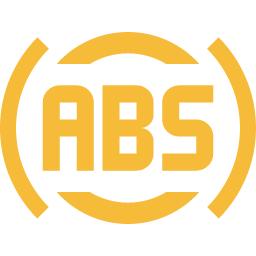 ABS – “ABS” inside a circle
The anti-lock braking system has switched itself off. Your normal brakes still work exactly as usual – you simply lose anti-lock assistance in an emergency stop, so leave extra distance and get it checked.
Tyre pressure (TPMS) – horseshoe shape with an exclamation mark
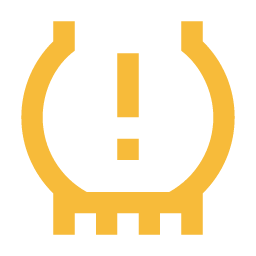 Tyre pressure (TPMS) – horseshoe shape with an exclamation mark
One or more tyres is low on pressure, or the monitoring system needs resetting. Check and inflate all tyres to the pressures on the label inside the driver’s door, then follow the reset guide for your car to clear the light. If it comes back quickly, you may have a slow puncture.
Diesel particulate filter (DPF) – box with dots inside
 Diesel particulate filter (DPF) – box with dots inside
On a diesel, this means soot is building up in the particulate filter and a regeneration is needed. The usual fix is a 15–20 minute drive at steady motorway speed to let the filter burn off the soot – lots of short trips are what block it. If the light stays on after that, or a red version appears, get it checked before the filter needs replacing.
AdBlue / exhaust emissions – often shown as a fluid symbol or engine with drops
 AdBlue / exhaust emissions – often shown as a fluid symbol or engine with drops
Many modern diesels use AdBlue to cut emissions, and will warn you – then eventually refuse to start – when it runs low. Top it up before it reaches zero. See our full explainer on what the AdBlue warning means and how to clear it.
Glow plug – coil symbol (diesel cars)
 Glow plug – coil symbol (diesel cars)
On a diesel this is the wait-to-start light: turn the key to the on position and wait for it to go out before cranking, especially in cold weather. If it stays on or flashes after the engine is running, the glow-plug system has a fault and should be checked.
Brake pad wear – circle with dashed/curved lines around it
 Brake pad wear – circle with dashed/curved lines around it
The friction material on your brake pads has worn down to the sensor. It is not an instant emergency, but book new pads soon – leaving it risks scoring the discs and a much bigger bill.
Traction control / ESP – car with skid marks
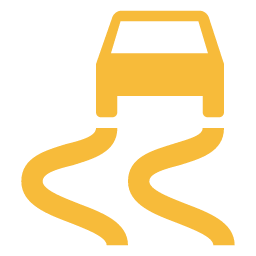 Traction control / ESP – car with skid marks
If this flashes as you drive, the stability system is actively working – ease off and keep going. If it stays on steadily, the system is either switched off (check for an ESP button you may have pressed) or has a fault worth checking.
Low fuel – fuel pump symbol
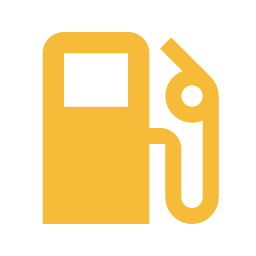 Low fuel – fuel pump symbol
You are into your reserve fuel – refuel soon. Running a modern car to empty can let the fuel pump draw in air and pick up debris from the bottom of the tank.
Green and blue lights (information only)
Not every symbol is a warning. Green usually means a system is active and working normally – sidelights, indicators, cruise control or eco mode. Blue almost always means your main-beam headlights are on. White symbols are typically features or reminders. None of these need action; they are simply telling you what the car is doing.
Flashing versus steady: why it matters
A symbol that flashes is usually more urgent than the same symbol shown steadily. The clearest example is the engine light: steady amber means “have it read soon”, while flashing means a live misfire is happening and you should reduce power and stop to protect the catalytic converter. A flashing traction/ESP light, by contrast, is normal – it just means the system is working. When in doubt, treat a flashing red light as “stop now”.
What if several warning lights come on at once?
Multiple lights appearing together often point to one root cause rather than several separate faults. A failing alternator, for example, can trigger the battery, ABS, traction and power-steering lights all at once as the voltage drops. A low battery or a recent battery disconnection can do the same. Rather than chasing each light, start with the charging system and the battery – and if the lights appeared right after battery work, they usually just need resetting (see below).
What to do when a warning light comes on
- Red light: find a safe place to stop, switch off, and investigate or call for assistance. Do not “drive it home” on a red oil, temperature, or brake warning.
- Flashing engine light: reduce speed and load, and stop as soon as it is safe.
- Amber light: no need to panic – note when it appears, and book a check or read the fault code within a few days.
- A light after service or a battery change: many warnings (service reminder, TPMS, steering angle) simply need resetting. Find the exact reset for your car in our step-by-step guides.
How to reset the light once you have fixed the problem
This is where most warning-light guides stop – but clearing the reminder is often the last step, and it is different for every car. Fixed the problem and just need to clear the light? Find the exact procedure for your car in our step-by-step reset guides – choose your make, model and year, or use the “Choose your car” box in the sidebar.
Safety first: only clear a warning light after the underlying fault has been fixed. Never simply reset a red brake or airbag (SRS) warning to make it disappear – those systems protect your life and must be diagnosed properly.
Frequently asked questions
Which dashboard warning light is the most serious?
The red oil-pressure and engine-temperature lights are the most urgent, because ignoring either can wreck the engine within minutes. The red brake warning is next. Any red light should be treated as “stop as soon as it is safe”.
Is it safe to drive with a warning light on?
It depends on the colour. A red light usually means stop as soon as it is safe. An amber light generally means you can drive carefully to a garage, with the exception of a flashing engine light, which means reduce power and stop.
Why do warning lights come on when I start the car?
It is normal for most warning lights to illuminate briefly as you turn the ignition on – the car is running a self-check of each system. They should go out within a second or two of the engine starting. A light that stays on after start-up is the one to pay attention to.
Why did a warning light appear after a battery change or service?
Disconnecting the battery or servicing the car can leave a reminder or monitoring light on until it is reset. The service reminder, tyre-pressure light, and steering-angle warning are the common ones – each has a simple reset procedure. Browse the reset guides by make and model to find yours.
What does a yellow engine symbol mean?
It is the check-engine or engine-management light. Steady means have the stored fault code read soon; flashing means a misfire is occurring and you should reduce power and stop. Reading the code – explained at autodtcs.com – tells you exactly which system is affected.
Can I reset a warning light myself?
Many can be reset at home once the underlying issue is fixed – service reminders, tyre-pressure lights and similar. Safety-critical faults such as airbag (SRS) or brake warnings should be diagnosed properly rather than simply cleared.
For the exact reset steps for your car, find your make, model and year in our step-by-step reset guides. If a warning light points to a stored fault code, look it up on our sister site autodtcs.com.
