When you change wheels or tire brands, you might notice a number like 91, 94, or 106 printed before the speed rating on your tire’s sidewall. That number is the Load Index, and it determines how much weight each tire can safely carry — and how much air pressure it needs. Setting the correct tire pressure isn’t just about comfort; it directly affects handling, braking, fuel economy, and safety.
What Is the Tire Load Index?
The load index is a numerical code that represents the maximum weight a tire can support when properly inflated. You’ll find it printed right after the tire size. For example: 245/45R20 99Y → 99 is the Load Index and Y is the speed rating.
| Load Index | Max Load (kg per tire) |
|---|---|
| 91 | 615 kg |
| 94 | 670 kg |
| 99 | 775 kg |
| 106 | 950 kg |
Why Load Index Changes the Required Pressure
The air inside the tire carries your car’s weight. A tire with a higher load index has a stronger carcass that can hold more air pressure and support a heavier load — but that also means it needs a slightly different inflation value to achieve the same sidewall deflection.
- Lower load index (e.g., 91): needs higher pressure to carry the same weight
- Higher load index (e.g., 106 XL): needs less pressure for the same weight, but uses a higher reference pressure at full capacity
Reference (cold) pressures used in practice:
- SL (Standard Load): ~2.5 bar (36 psi)
- XL (Extra Load): ~2.9 bar (42 psi)
Example: Upgrading From 91V to 106V XL
Suppose your OEM tire was 91V SL at 2.2 bar (32 psi), and you switch to a 106V XL rated for 950 kg instead of 615 kg. To carry the same axle load, you can scale pressure approximately like this:
P(new) ≈ 2.9 bar × (615 / 950) ≈ 1.88 bar
In real driving, XL tires are designed to operate around their higher reference pressure, so a practical daily target is usually ~2.5–2.6 bar (36–38 psi) depending on axle load and comfort — which matches real-world recommendations on many sedans and sport sedans running 275/40R20 106V XL.
Rule of Thumb
| Situation | Adjust Pressure |
|---|---|
| Heavier load / towing | +0.2–0.3 bar (+3–4 psi) |
| Cold winter (~0 °C) | +0.2 bar (+3 psi) |
| Light load / city driving | −0.1 bar (−1.5 psi) |
| High-speed highway | +0.1–0.2 bar (+1.5–3 psi) |
Tip: Always measure pressure cold (parked a few hours, out of direct sun).
Common Mistakes
- Reusing old PSI values: If the load index changed, the old value no longer applies.
- Mixing SL and XL on one axle: Avoid this — they flex differently and can cause uneven wear or instability.
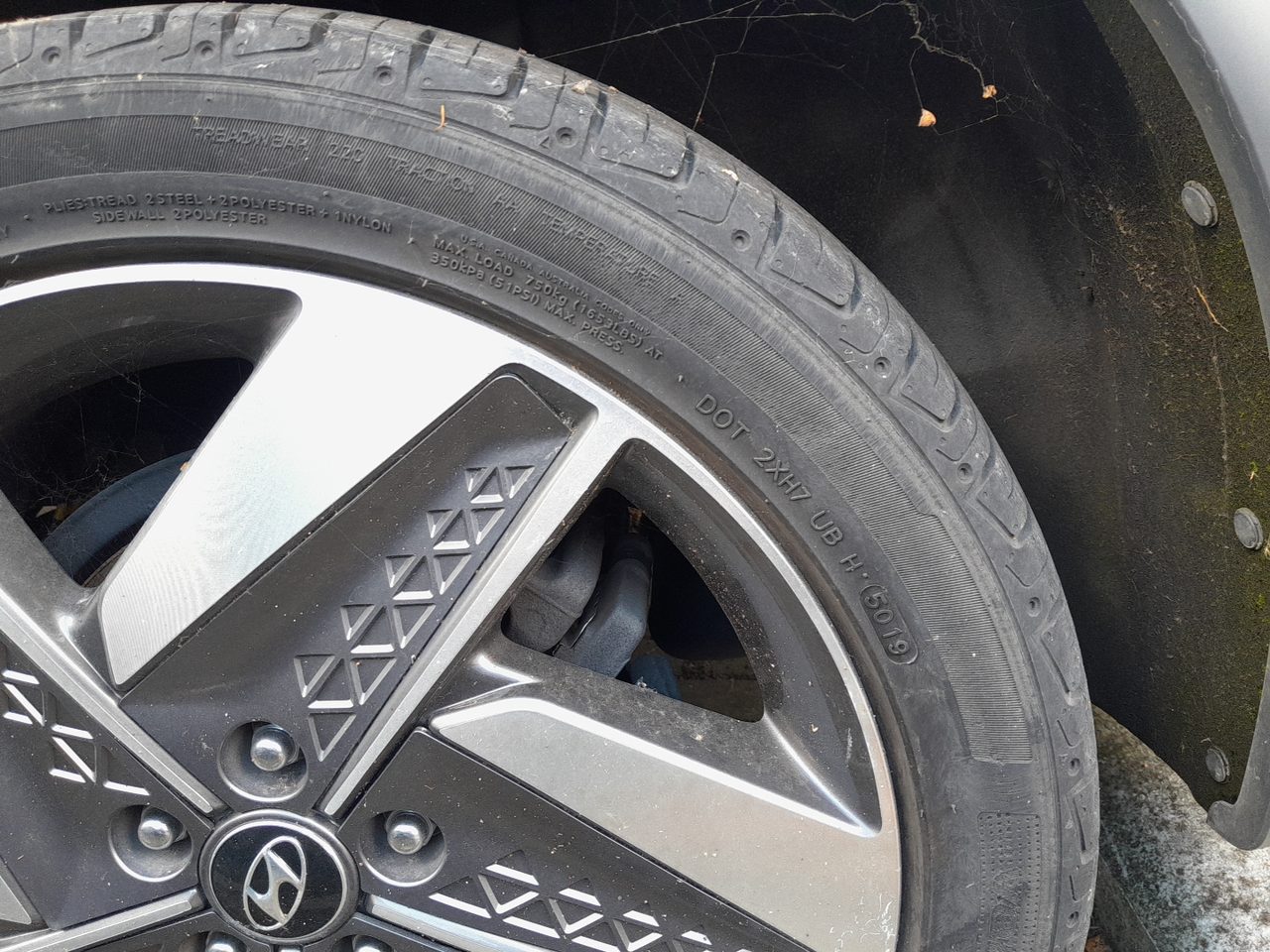
- Inflating to the sidewall “max pressure”: That number is a structural limit, not a daily target.
Use the Calculator
Instead of guessing, use our Tire Pressure Calculator for Non-Stock Sizes. It automatically adjusts for:
- OEM vs new load index
- SL or XL construction
- Speed rating and ambient temperature
Enter your details to get accurate front and rear pressures in bar, PSI, or kPa.
Disclaimer
This article provides technically reasoned estimates based on common ETRTO-style load-to-pressure relationships. Always follow your vehicle placard and tire manufacturer guidance for final settings.
