Tire pressure changes naturally with the weather. When the temperature drops, the air inside your tires contracts, reducing pressure. When it’s hot, pressure increases as air expands. Knowing how temperature affects tire pressure helps you stay safe and keep your tires lasting longer.
Why Temperature Matters
Air behaves according to the ideal gas law: when air gets colder, it becomes denser, and the pressure inside the tire drops. This means your tire pressure measured at 0 °C will be lower than at 20 °C, even if no air has escaped.
That’s why tire manufacturers and vehicle makers always specify tire pressure at 20 °C (68 °F) — the “cold tire pressure.”
Typical Pressure Change per Temperature
As a general rule, tire pressure changes by about 0.1 bar (1.5 psi) for every 10 °C (18 °F) difference in temperature.
| Ambient Temperature (°C) | Approx. Correction vs 20 °C | Correction (psi) |
|---|---|---|
| +30 °C | −0.1 bar | −1.5 psi |
| +20 °C | 0 (reference) | — |
| +10 °C | +0.1 bar | +1.5 psi |
| 0 °C | +0.2 bar | +3 psi |
| −10 °C | +0.3 bar | +4.5 psi |
Example: If your car’s recommended cold pressure is 2.4 bar at 20 °C, and it’s 0 °C outside, you should inflate to around 2.6 bar to compensate for the temperature drop.
Cold vs. Hot Measurements
Always check your tire pressures when they are cold — that is, when the car has been parked for at least 3 hours and driven less than 2 km. Driving warms up the tires and can increase the pressure by up to 0.3 bar (4–5 psi).
If you check after a long drive, the pressure will appear higher, which may lead you to deflate them too much — a common mistake.
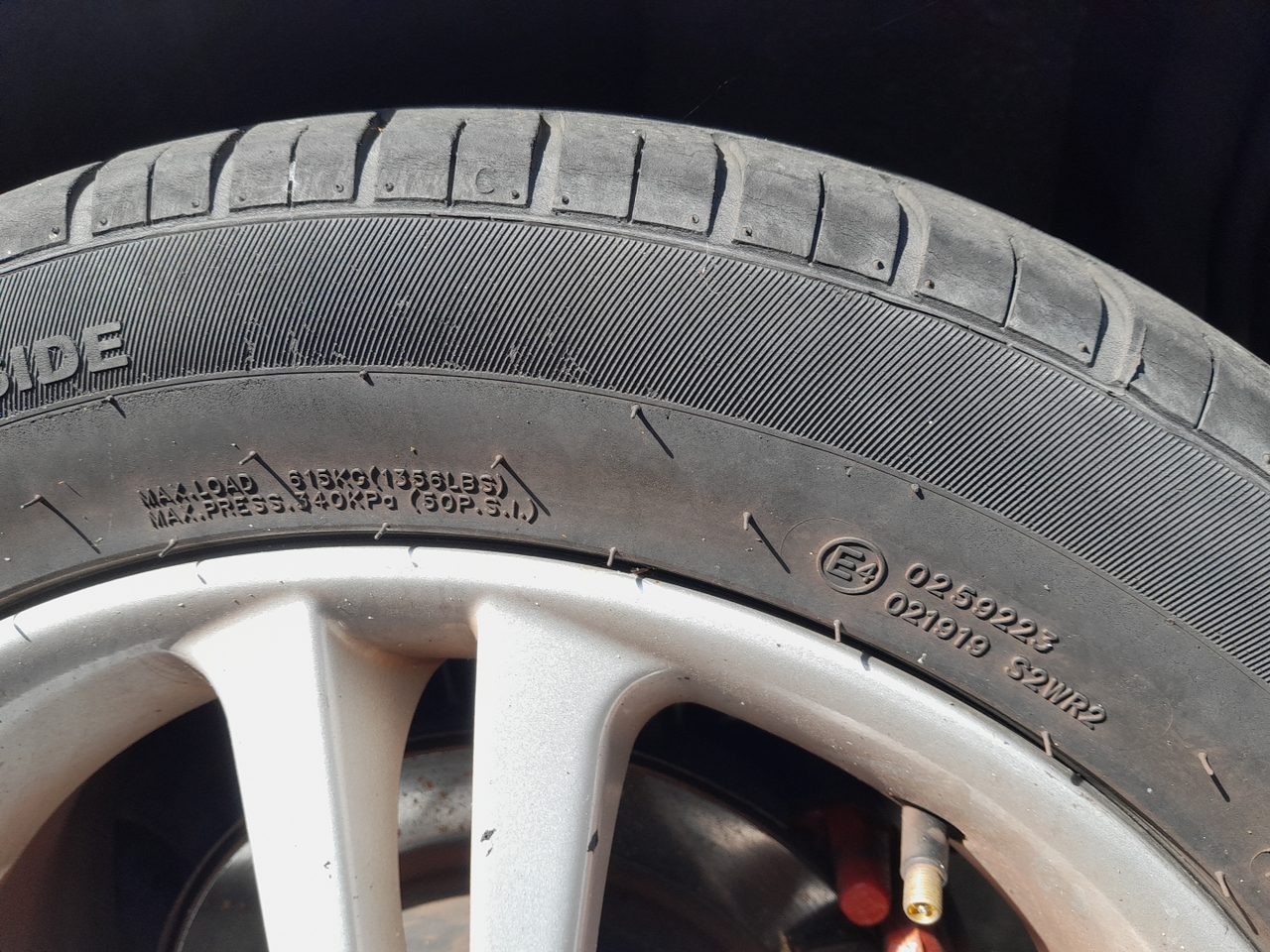
One number never changes with the weather: the maximum pressure moulded on the sidewall. It is a structural ceiling, not a target — your cold pressure comes from the car’s door-jamb label, and the temperature corrections above adjust that figure. They never push you up towards the sidewall maximum.
Why Seasonal Temperature Swings Matter
In autumn and winter, daily temperature changes can easily vary by 20 °C, which is enough to cause a pressure swing of more than 0.2 bar (3 psi). This is why your tire pressure warning light (TPMS) often turns on during cold mornings.
Best Practices for Year-Round Accuracy
- Check tire pressure at least once a month and before long trips.
- Adjust pressure when the temperature has changed more than ±10 °C from when you last filled them.
- Use a quality digital gauge calibrated in bar or psi.
- If your car has TPMS, reset or recalibrate it after adjusting pressures.
Pressure Adjustments by Season
| Season | Typical Adjustment |
|---|---|
| Winter (0 °C or below) | +0.2 bar (+3 psi) |
| Spring / Autumn (~10 °C) | +0.1 bar (+1.5 psi) |
| Summer (~30 °C) | −0.1 bar (−1.5 psi) |
Use the Calculator
To simplify these corrections, use our Tire Pressure Calculator for Non-Stock Sizes. It automatically adjusts pressure based on temperature, load index, and speed rating to provide accurate cold inflation values in bar, PSI, or kPa.
FAQ: Common Questions
Does sunlight affect tire pressure?
Yes — direct sunlight can warm one side of the car more than the other, causing a difference of up to 0.1 bar (1.5 psi) between sides.
Should I let air out when the tires are hot?
No. Hot tires always show a higher reading. Deflating them will leave them underinflated once they cool down.
Can temperature differences trigger the TPMS light?
Absolutely. A sudden cold night can drop pressure by 0.2 bar and trigger the low-pressure warning even if nothing is leaking.
Disclaimer
Pressure corrections above are general technical estimates based on standard atmospheric behavior. Always follow your vehicle placard and tire manufacturer recommendations for safe operating values.
