These instructions apply to the Lexus IS Mk3 (XE30) 2013-2020.
For other models, please choose your vehicle here.
If the tyre-pressure warning has come on in your Lexus IS (2013–2020) after you’ve adjusted the pressures or changed a wheel, you reset the monitor with the TPMS SET button. Here’s how.
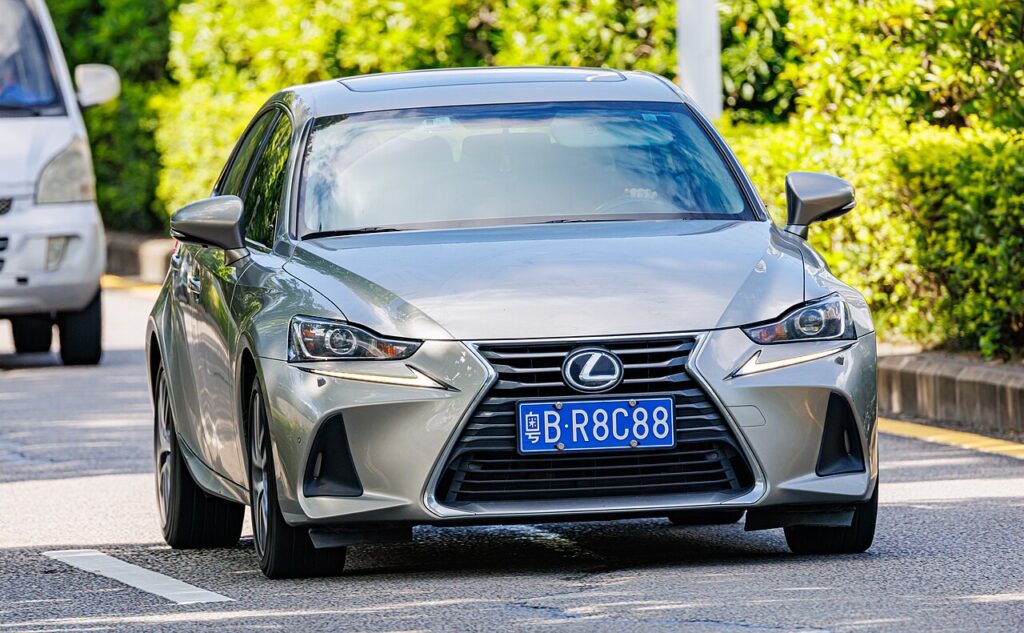
The amber tyre-pressure symbol on the IS Mk3 isn’t a breakdown warning — it’s the monitor telling you a tyre has dropped below the pressure it has memorised. Owners of this compact sports saloon see it most often after a fuel-station top-up, on the first properly cold mornings, or once new tyres have been fitted or a summer/winter wheel swap has taken place. In each case the fix is the same two-part job: correct the pressures, then use the SET button so the car relearns them and clears the light.
How TPMS Works on the IS Mk3
This IS uses a direct monitoring system: a battery-powered sensor at each valve radios that wheel’s actual pressure to the car, so it reads real values rather than estimating from wheel-speed. That accuracy is handy, but it means the monitor has to be re-baselined whenever you intentionally alter your pressures — otherwise it keeps measuring live readings against the old stored figures and lights the warning. Pressing SET writes the current pressures in as the reference, and a short drive lets every sensor check in and confirm.
Before You Begin
- Set the tyres cold — even a short spirited drive warms them and pushes the readings up.
- Use the figure on the placard in the driver’s door shut; the IS may list a higher pressure for sustained high speed or a full load.
- Set the spare too if your car has a full-size wheel with its own sensor.
- Park on level ground and keep the car stationary while you reset.
- Turn the ignition on — you don’t need to start the engine.
Resetting the System
- Park level and set all four tyres to the correct cold pressures (placard in the driver’s door shut).
- Switch the ignition on (you don’t need to start the engine/hybrid system).
- Press and hold the TPMS ‘SET’ button (low on the dash, near the steering column) until the TPMS warning light blinks (typically three times), then release.
- The system learns the current pressures as the new baseline; it finishes after a short drive.
If the Warning Won’t Clear
- Re-gauge every tyre — a single corner below the placard figure keeps the light on and prevents the relearn.
- Hold SET until the light blinks; letting go too early cancels the registration and nothing is saved.
- Drive for a few minutes after pressing SET so the sensors wake and transmit — the light can take a mile or two to go out.
- Re-store the pressures after any wheel change, including rotations and seasonal swaps.
- Check a fitted spare or space-saver is at its own correct, usually higher, pressure.
- If a corner keeps deflating soon after you inflate it, suspect a slow puncture and have it looked at.
- After several years a sensor battery can go flat, leaving that wheel silent; the reset then won’t take until the sensor is renewed.
After the Reset
Once the pressures are right and the SET registration has taken, the warning light goes out and stays off through normal driving, only coming back if a tyre truly loses air or the temperature drops sharply. There’s no confirmation tone — the light simply switching off tells you the new baseline is stored.
Frequently Asked Questions
How do I reset the tyre pressure light on a Lexus IS?
Set the pressures, switch on, then press and hold the TPMS SET button until the warning light blinks.
Where is the TPMS SET button?
Low on the dashboard near the steering column, generally within the driver-side controls. The precise spot varies by trim and market, so the handbook points it out; you’re after a small button marked ‘SET’ to press once the pressures are correct.
Why won’t the warning clear after I’ve set the pressures?
Usually one tyre is still slightly low, or the SET button wasn’t held until the light blinked. Re-check all four with a gauge (and the spare if it has a sensor), correct anything under the placard figure, then repeat the hold-and-release and drive a short distance so the sensors update.
Do I need to reset TPMS after changing or rotating wheels?
Yes. The IS stores your cold pressures as its reference, so any time you fit new tyres, move to a winter set, or rotate the wheels you should confirm the pressures and run SET again, ensuring the monitor compares live readings against the correct baseline.
Can cold weather trigger the light on its own?
Yes. Pressure falls about 1–2 psi for every 10°C drop, so a cold night can take a properly-set tyre just below the threshold. Top the tyres back to the placard figure while cold and reset; the light should then stay off for the journey.
Do I need a tool?
No for a normal reset; a tool is only needed if a sensor is replaced.
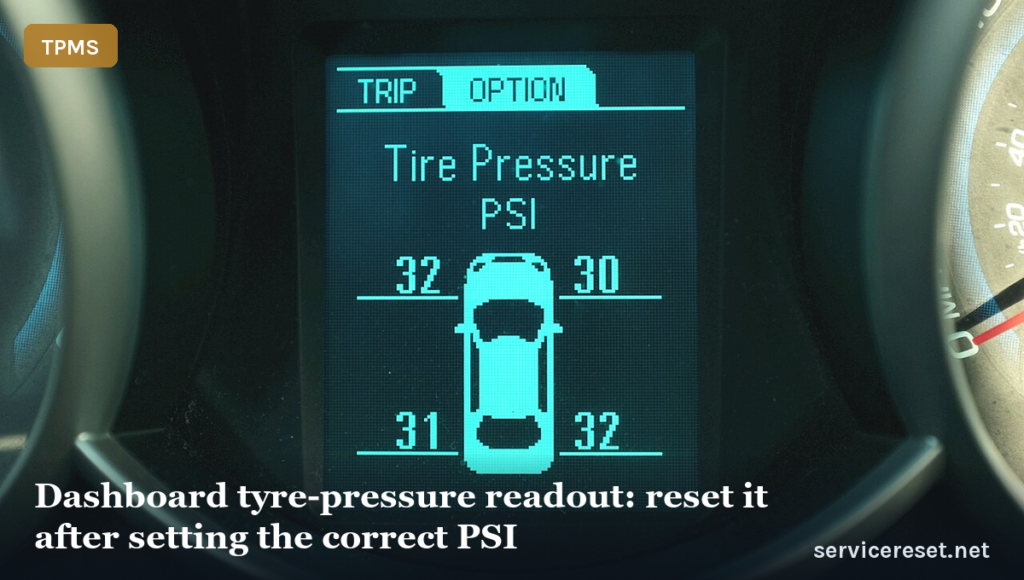
If the warning came on with other lights, decode the code on autodtcs.com.
Independent guide — not affiliated with Lexus. Always follow your official service manual and safety precautions. Read our full disclaimer.