These instructions apply to the Lexus GS Mk3 (S190) 2005-2012.
For other models, please choose your vehicle here.
If the tyre-pressure warning has come on in your Lexus GS (2005–2012) — the S190 — it means the system has seen a pressure below the level it was last taught to expect. That’s often just a cold morning, a slow leak, or the natural result of adjusting the pressures or fitting different wheels. Unlike newer cars that relearn on their own, this generation stores a baseline that you set with the TPMS SET button, so after any deliberate pressure change you need to teach it the new values. Here’s how.
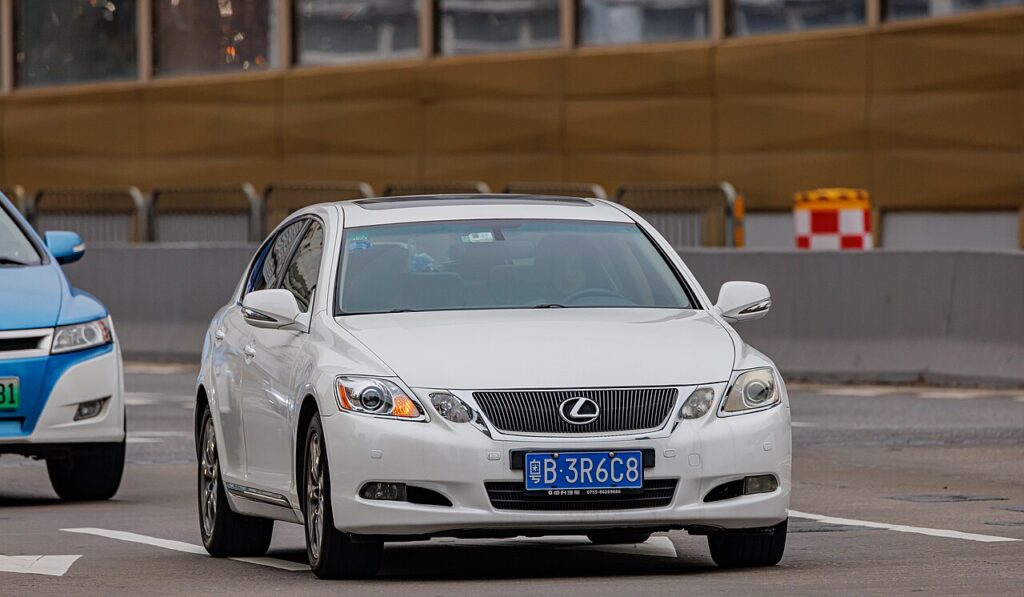
How the GS TPMS Works
This is a direct system: each wheel has its own battery-powered sensor that measures real pressure inside the tyre and radios it to the car. Rather than continually judge against a fixed figure, the GS remembers a baseline you confirm with the SET button. That’s why the warning can persist after you top up or swap wheels until you store the new pressures — the car is still comparing against the old baseline. Once you set it, the light behaves normally again.
When to Reset
- After checking or adjusting the tyre pressures.
- After changing wheels or tyres, or fitting winter wheels.
Before You Start
- Set the pressures with the tyres cold — before driving, or after the car has stood a few hours.
- Read the correct cold figures from the placard in the driver’s door shut.
- Park on level ground before you begin.
- Only store a baseline once every tyre is exactly right — the system remembers whatever it sees when you press SET.
Resetting the System
- Park level and set all four tyres to the correct cold pressures (placard in the driver’s door shut).
- Turn the ignition on (you don’t need to start the engine/hybrid system).
- Press and hold the TPMS ‘SET’ button (low on the dash near the steering column) until the TPMS warning light blinks, then release.
- The system learns the current pressures as the new baseline; it finishes after a short drive.
If the Warning Stays On
- Recheck every tyre — one below spec keeps the warning on and blocks the reset.
- Hold the SET button until the light blinks — releasing early cancels it.
- Drive for a few minutes after pressing SET so the sensors report.
- Look for a slow leak — if one corner keeps falling, a nail or leaking valve is the likely cause.
- After a wheel change, make sure the fitter has kept a working sensor in each wheel before you try to store a baseline.
- Still showing with correct pressures? A sensor may have a flat battery — look up the code on autodtcs.com.
What to Expect After
Once you’ve stored the baseline and driven a short distance, the amber TPMS light goes out and stays out until a tyre actually drops again. Because the baseline is now your corrected pressures, small day-to-day variation won’t nag you. Remember that a real leak will still trigger the warning — and that a cold spell can nudge pressures down enough to light it, so top up cold and store the baseline again if needed.
Frequently Asked Questions
How do I reset the tyre pressure light on a Lexus GS (2005–2012)?
Set the tyres to the correct cold pressures, switch the ignition on, then press and hold the TPMS SET button until the warning light blinks and release. The car stores those pressures as its new baseline and the light clears after a short drive.
Where is the TPMS SET button?
Low on the dashboard near the steering column. It’s a small button marked for tyre pressure; your handbook shows the exact spot if you can’t see it. You only need the ignition on — the engine or hybrid system does not have to be running.
Why won’t the warning clear?
Usually a tyre is still below spec, or the SET button wasn’t held until the light blinked. Re-check all four pressures cold, then hold SET firmly until you see the blink. If it persists with correct pressures, suspect a slow leak or a sensor with a flat battery.
Do I need a tool?
No for a normal reset — the SET button handles it. A tool is only needed if a sensor is replaced, as a new sensor may have to be registered to the car before the system will accept it.
Do I press SET every time I check the pressures?
Only when you’ve actually changed them or the reading is now correct after a top-up. If you simply checked and everything was already right, there’s no need to store a new baseline. Store it whenever you deliberately alter the pressures or fit different wheels.
Can cold weather set the warning off?
Yes. Air contracts as it cools, dropping pressure by roughly 1 psi for every 5–6 °C fall, so a tyre set on a warm day can trip the light overnight. Inflate cold to the placard figure and store the baseline again with the SET button.
If the warning came on with other lights, decode the code on autodtcs.com.
Independent guide — not affiliated with Lexus. Always follow your official service manual and safety precautions. Read our full disclaimer.