These instructions apply to the Alfa Romeo Brera Mk1 (939) 2005-2011.
For other models, please choose your vehicle here.
Disconnecting the 12 V battery on your Alfa Romeo Brera (2005–2011) is a job most owners can do at home with a single spanner. You might need to do it to fit a new battery, to isolate the electrics before winter storage, or to make it safe to work near the airbags and seat-belt pretensioners. On this Mk1 (939) coupé the battery sits under the bonnet, in the engine bay, so there is no trim to strip out to reach it. Done in the correct order — negative off first, positive on last — the car relearns its settings cleanly and you should be driving normally again within a few minutes.
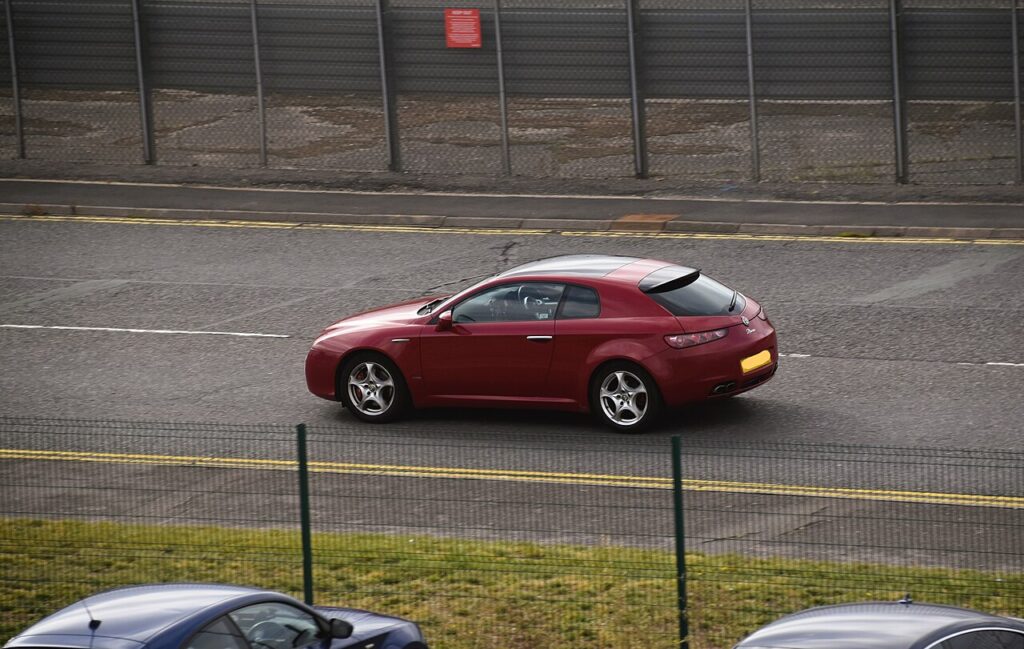
Where the 12 V Battery Is
The 12 V battery on the Brera is in the engine compartment, sitting in the usual front corner under a cover. Lift the bonnet, prop it safely and look for the battery box; on some cars a plastic lid or an insulating jacket clips over the top, so unclip or lift that away first. Once it is exposed you will see two terminals. The negative (−) post is the earth and is normally capped in black; the positive (+) post wears a red cover and feeds the main supply lead. Take a moment to confirm which is which before you touch a spanner to anything — that one check is what keeps the job safe.
Before you start, note down your radio security code and station presets, because the head unit and clock lose their memory the instant the battery is disconnected. If you cannot find the code, it is usually printed on a card in the service pack or can be retrieved from the audio unit’s serial number.
Before You Begin
- Switch the ignition fully off and take the key well away from the car.
- Turn off the lights, climate fan, radio and any other consumers so nothing is drawing current.
- Note the radio code and presets, and the clock setting, so you can restore them afterwards.
- If you are working near the airbags or seat-belt pretensioners, wait a couple of minutes after disconnecting for the systems to power down.
- Have the right spanner ready — usually a 10 mm — plus gloves and eye protection, and keep the terminals from touching bodywork or each other.
Disconnecting the Battery
- Confirm everything is switched off and the key is out of the car.
- Loosen the clamp on the negative (−) terminal first, lift the lead off the post and tuck it aside so it cannot spring back onto the terminal.
- Now loosen and lift off the positive (+) lead.
- If you are working on airbags or pretensioners, give the car a few minutes after disconnecting before you start that work.
Reconnecting the Battery
- Refit the positive (+) lead first and tighten its clamp.
- Refit the negative (−) lead last and tighten it. Make sure both clamps are firm — a loose earth causes flickering lights and odd faults.
- Replace any cover or insulating jacket you removed.
What You’ll Need to Reset Afterwards
Because the memory is wiped, a handful of items on the Brera relearn once power is back:
- Clock and radio — re-enter the time and, if prompted, the audio security code and your station presets.
- Power windows — one-touch and anti-pinch usually need re-initialising; see our Brera power-window reset guide.
- Electric sunroof, if fitted, relearns its open and close limits the first time you cycle it.
- Steering-angle and stability systems settle after a short drive with a few gentle full-lock turns.
- Some warning lights simply self-clear once the modules have seen normal running for a mile or two.
If a Warning Light Stays On or the Car Feels Off
- Recheck that both terminal clamps are properly tight — a poor earth is the most common cause of gremlins after a disconnect.
- Take the car for a short drive so the steering-angle, stability and other adaptations can relearn.
- If the windows still auto-drop or won’t one-touch, repeat the window re-initialisation.
- If a light will not clear, the battery may genuinely be flat or worn out — have it load-tested and fit a like-for-like replacement.
- A persistent light stores a fault code — look it up on autodtcs.com.
Frequently Asked Questions
Where is the battery on an Alfa Romeo Brera?
It is in the engine compartment, in the usual front corner under the bonnet, often under a plastic cover or insulating jacket. Unclip the cover and you will see the negative and positive terminals on top of the battery.
Which terminal do I disconnect first?
Always take off the negative (−) terminal first and reconnect it last. On reconnection the order reverses: positive (+) on first, then negative. This keeps the earth path broken while a live lead is exposed and avoids sparks.
What needs resetting after disconnecting the battery?
The clock and radio presets, and often the one-touch power windows and sunroof, need re-initialising. The steering-angle and stability systems relearn over a short drive, and any minor warning lights usually clear on their own once the car has been driven.
Does a new battery need coding on the Brera?
A standard like-for-like battery does not need coding on this generation. Just fit the correct type and capacity for the car, make the clamps tight, and reset the clock and presets. There is no dealer programming step for a straightforward swap.
Will disconnecting the battery clear fault codes or the service light?
It can clear some temporary codes and reset adaptations, but it is not a reliable way to turn off a service reminder or a hard-stored fault. A code that comes straight back points to a real problem that still needs looking at rather than one cured by cutting the power.
Can I jump-start it instead of disconnecting?
If the car is simply flat you can jump-start it and leave the battery connected, which keeps the memory intact. Disconnect the battery only when you are renewing it, storing the car, or working near the airbags — otherwise a jump-start avoids all the relearning.
If the windows lost one-touch after the job, see our Brera power-window reset guide, and look up any stubborn warning light on autodtcs.com.
Independent guide — not affiliated with Alfa Romeo. Always follow your official service manual and safety precautions. Read our full disclaimer.