These instructions apply to the Alfa Romeo Brera Mk1 (939) 2005-2011.
For other models, please choose your vehicle here.
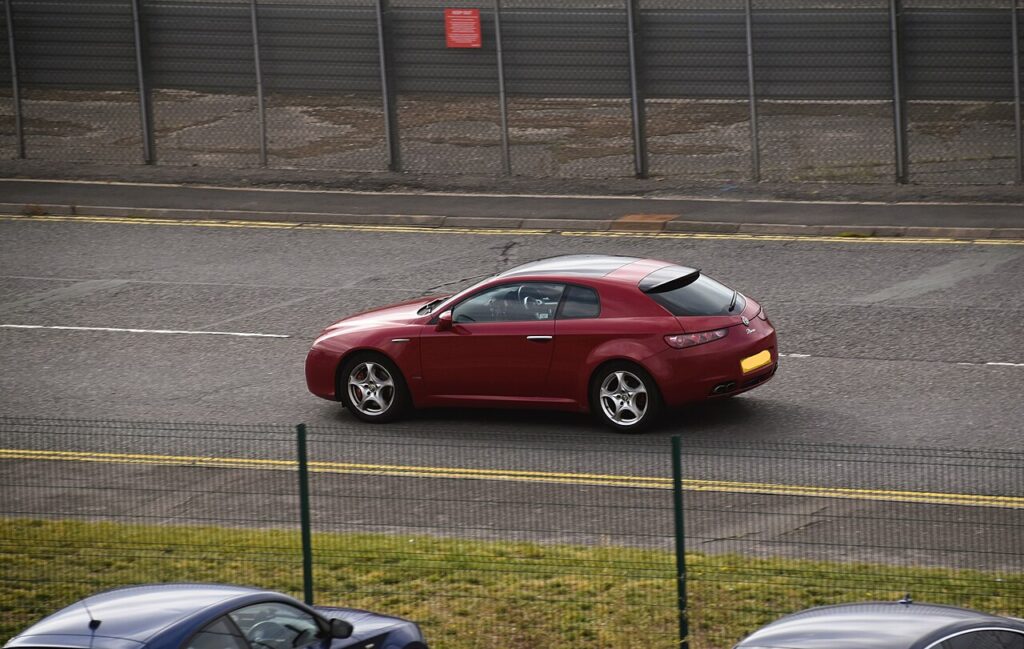
If the remote on your Alfa Romeo Brera (Type 939, 2005–2011) only locks the car when you are standing right next to it, or has stopped responding altogether, the coin cell inside the key is almost certainly flat. The Brera was sold with the Fiat-group three-button folding “flip” key — the same design shared with its close relatives, the Alfa 159 saloon and the 939-series Spider — where a spring-loaded metal blade swings out of a black plastic head that also houses the lock, unlock and boot buttons. There is no separate smart or keyless fob to worry about on this generation, so one procedure covers the car. Below is exactly how to tell a dying battery from a real fault, the precise cell the Brera takes, and how to open this particular key without snapping the case.
How to Tell the Fob Battery Is Dying
- Shrinking range. You find yourself having to stand beside the car, or almost touch the key to the door, before it will lock or unlock. A healthy Brera remote works from several metres away, so this is usually the first clue.
- Weak or no LED flash. The little indicator light on the key head barely lights, or does not light at all, when you press a button — a quick way to confirm the fault is in the key rather than the car.
- Intermittent, one-button-at-a-time response. The remote works occasionally, or only the lock button responds while unlock does not. A cell that is right on the edge struggles with the brief high current the transmitter needs.
- Worse in the cold. Lithium coin cells lose voltage as the temperature drops, so a battery that is nearly done will often fail on a frosty morning and seem to recover once it warms up.
A coin cell in a Brera key typically lasts two to four years. If yours is around that age and showing any of the signs above, fit a fresh cell before you start suspecting the receiver or the immobiliser — a battery is far and away the most likely culprit.
The Battery You Need
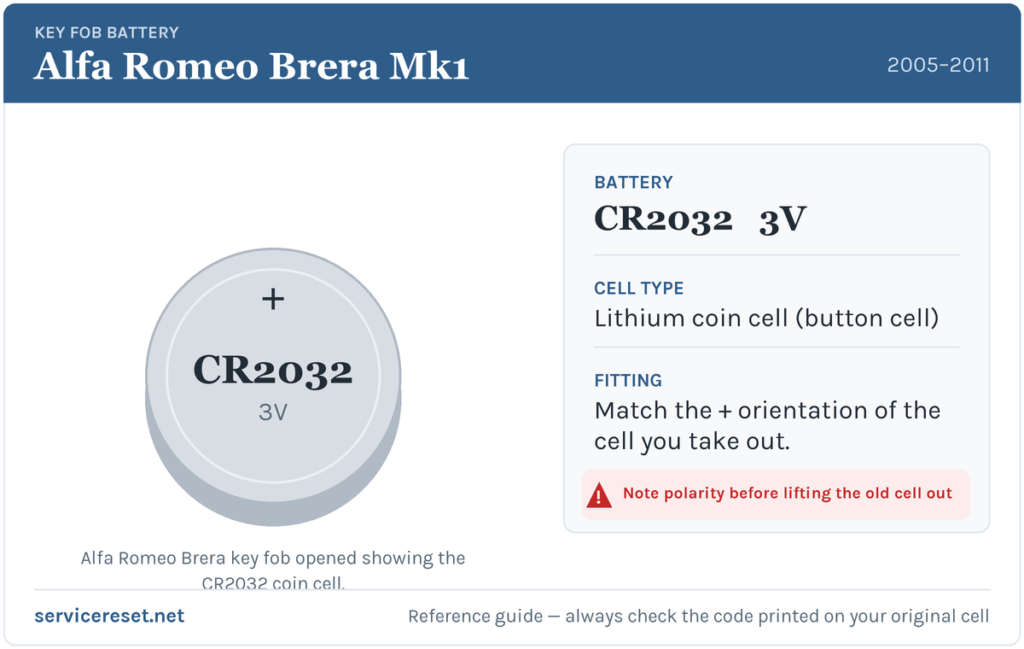
The Brera’s folding remote uses a single CR2032 3-volt lithium coin cell — the large, common “watch” battery about the size of a two-pence piece, sold in any supermarket, hardware shop or pharmacy. The same CR2032 is used right across the 159, Brera and Spider family, so replacements are cheap and easy to find. Buy a good branded cell rather than the cheapest multipack: budget cells can sag under load and give poor range even when they read as “new”. If you ever pull the old cell and find a different code stamped on it, trust the marking on the battery you removed over any generic guide, including this one.
How to Change the Brera Key Battery
- Release and remove the metal blade. Press the small catch (one of the two metal buttons on the side of the key head) and let the spring-loaded blade flick out, then pull the blade fully free of the head. On this key the blade doubles as your prying tool for the next step.
- Lever out the battery holder. With the blade removed, a slot is exposed in the head. Insert the tip of the metal blade — or a small flat-blade screwdriver — into that slot and gently lever the inner battery carrier out of the black outer housing. It slides out as a small tray; do not try to split the whole case along its seam.
- Note the orientation, then take out the old cell. Look carefully at which face of the CR2032 is showing before you disturb it, then slide the cell out of its clip. Matching that orientation on the way back in is the single most important part of the job.
- Fit the new CR2032. Wipe the new cell with a dry cloth to remove finger grease, then seat it in the carrier exactly the way the old one sat — same face up — so it clicks under the retaining clip against clean contacts.
- Reassemble. Push the battery carrier back into the head until it is fully home and flush, then slide the metal blade back into the head until it latches. Fold the blade closed and test all three buttons.
⚠️ Get the polarity right. A coin cell fitted upside down will not power the transmitter and, left in place, can slowly discharge against the contacts. There is no shortcut here: copy the exact orientation of the cell you removed, and if in doubt, the printed side (the face carrying the CR2032 marking) is the positive side.
Did It Work?
Stand back a few metres and press lock, then unlock. Full range should return straight away and the key-head LED should give a clear, bright flash on each press. If the doors respond crisply from across the car park, the job is done — no reprogramming, no drive cycle, nothing else to reset.
If a Fresh Cell Doesn’t Fix It
- Re-check the orientation and seating. An upside-down or loosely seated cell is by far the most common reason a “new battery” makes no difference. Pop the carrier back out and confirm the cell sits firmly under its clip.
- Clean the contacts. A smear of grease or a little corrosion on the metal tabs is enough to cause dropouts. Wipe both the cell faces and the terminals with a dry cloth, or a cotton bud lightly dampened with contact cleaner.
- Test with a known-good cell. Very occasionally a battery is flat straight out of the packet. If the LED still refuses to light with a second fresh CR2032, the key’s transmitter or the folding assembly may have failed and the key head needs replacing — but that is rare next to a simple flat or reversed cell.
- Rule out the car. If the Brera itself is slow to wake or the central locking is erratic on both keys at once, the fault may be the car’s 12-volt battery or the receiver, not the remote — try your spare key to see whether the problem follows one key or affects both.
New Key or Spare — Why It’s a Dealer Job
Changing the battery leaves the key’s stored coding untouched, which is why the remote works the instant you refit a good cell. Cutting and coding a new or spare key is a very different matter: the Brera runs a transponder immobiliser (the Fiat-group CODE system), so a blank key has to be cut to the car and its transponder programmed to the immobiliser with the correct diagnostic equipment and, usually, the car’s security code or CODE card. That puts a replacement or additional key firmly in the hands of an Alfa Romeo dealer or a qualified auto-locksmith. The practical takeaway: keep the battery in your spare key fresh too, so you are never left relying on a single working remote.
Frequently Asked Questions
What battery does an Alfa Romeo Brera key fob take?
A single CR2032 3-volt lithium coin cell. The same battery fits the folding flip keys used across the 159, Brera and Spider range of this era.
Which way round does the cell go?
Match the orientation of the cell you take out — that is the only reliable guide. As a general rule on these keys the printed face carrying the CR2032 marking (the positive side) faces the same way the old one did. Fitting it reversed simply leaves the remote dead.
Do I need to reprogram the Brera key after changing the battery?
No. A battery swap does not affect the key’s coding or its transponder, so the remote and the immobiliser both keep working. Programming is only needed when a brand-new key is added.
How long should a Brera key battery last?
Usually two to four years. Frequent use of the remote, or a key that spends its life on a crowded keyring knocking the buttons, tends to be at the shorter end of that range.
How do I open the Brera flip key without breaking it?
Press the side catch to release the metal blade and pull the blade out, then use that blade to lever the small battery carrier out of the black head through the slot the blade leaves behind. Do not try to prise the whole case apart along its seam — only the inner carrier comes out.
Can I still drive the Brera if the fob battery is completely dead?
Yes. Fold out the metal blade to unlock the driver’s door manually, then insert the key in the ignition as normal — the transponder in the key is powered by the car and does not rely on the coin cell, so a flat remote battery will not stop the engine from starting.
If your remote died suddenly rather than fading over weeks — for example right after the car battery was disconnected or went flat — and the car is also throwing a warning light, the cause may lie with a stored fault rather than the key. You can look up what a logged code means on autodtcs.com before booking any diagnostic time.
Independent guide — not affiliated with Alfa Romeo. Always follow your official service manual and safety precautions. Read our full disclaimer.