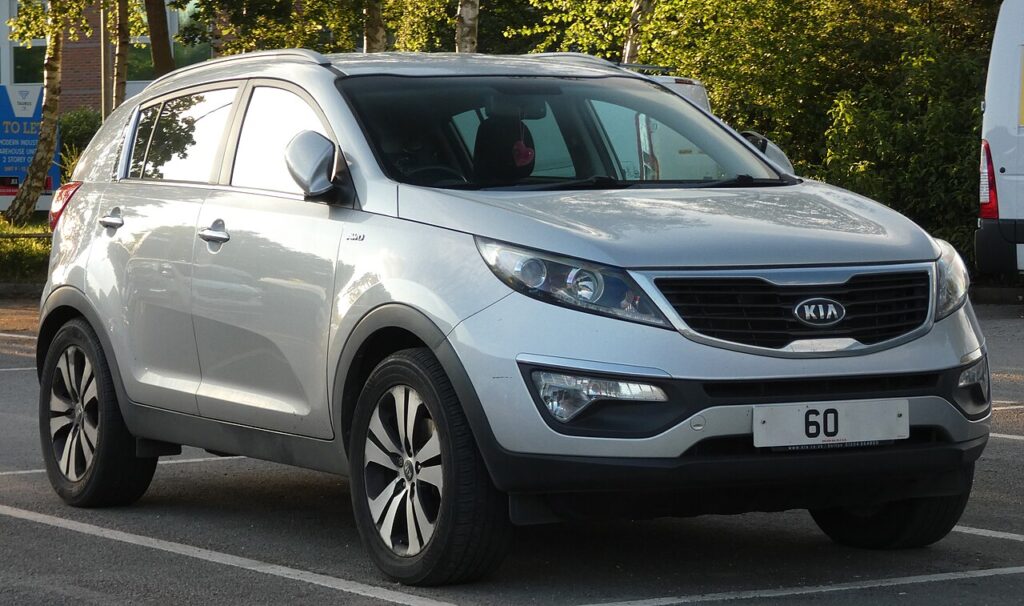
These instructions apply to the Kia Sportage Mk3 (SL) 2010-2016.
For other models, please choose your vehicle here.
The ISG (Idle Stop & Go) automatic stop/start system on the Kia Sportage Mk3 (SL, 2010–2016) switches the engine off when you stop and restarts it as you pull away. It trims fuel use in town, but many owners find it intrusive in traffic. This guide shows how to turn ISG off on a Sportage, the second way to suppress it, and why the car re-enables it every drive.
How ISG Works on the Sportage
The system only stops the engine when a set of conditions is met: the car is stationary, the engine is warm, the battery is well charged, the climate demand is satisfied, and you have the clutch up (manual) with the car in neutral. On a cold morning or with the heater on full it may do nothing — that is the system working as designed. When it cuts the engine, an “AUTO STOP” / green ISG symbol appears.
Method 1 — The ISG Off Button
- With the engine running, find the ISG OFF button — usually on the dash to the right of the wheel or on the centre console, marked with the “A”/AUTO STOP symbol.
- Press the button once.
- The warning light in the button illuminates and the display shows a message confirming the system is off.
- The engine will now idle normally at a standstill.
Press the button again to switch ISG back on.
Method 2 — Seat Belt and Door Interlock
The Sportage will not auto-stop the engine unless the driver’s seat belt is fastened and the driver’s door is closed. As a quick workaround:
- With the driver’s seat belt unbuckled, the engine will not enter auto-stop.
- Opening the driver’s door also inhibits the system.
Stay belted while driving — this just explains why the system sometimes seems to do nothing.
Why It Comes Back On Every Drive
The button only disables ISG for the current drive cycle. Switch the ignition off and on and the Sportage re-enables it by default, because the system counts toward the car’s official emissions figures. There is no menu setting to make “off” permanent — a permanent change requires recoding with a Kia-capable diagnostic tool, which is an at-your-own-risk modification.
ISG Stopped Working? Check These First
- Battery state of charge low — the most common reason; ISG protects the battery by not stopping the engine.
- Battery replaced but not registered — the charging system keeps it in a protective mode.
- Engine or cabin not yet at temperature — climate demand keeps the engine running.
- A stored fault — a battery-management or engine code can disable ISG silently. Check what a code means on autodtcs.com.
Frequently Asked Questions
Can I permanently disable ISG on a Sportage without coding?
No — the button only lasts for the current drive. A permanent default change requires recoding with a Kia diagnostic tool.
Is it bad for the engine to keep restarting?
No. The starter and battery are designed for it, and the system blocks auto-stop until the engine is warm.
I fitted a new battery and now ISG won’t work — why?
The new battery likely needs registering; until then the charging system holds it in a protective state that prevents auto-stop. Register it with a Kia tool.
Why does the symbol have a line through it?
That means auto-stop is temporarily unavailable because a condition is not met (cold engine, low battery, climate demand). It resumes once conditions allow.
If a low or unregistered battery is the cause, our Sportage battery disconnect/reconnect guide covers replacing and resetting it.
Independent guide — not affiliated with Kia. Always follow your official service manual and safety precautions. Read our full disclaimer.