These instructions apply to the Maserati Levante (M161) 2016-2024.
For other models, please choose your vehicle here.
The Maserati Levante (M161, 2016–Present) is fitted with a new-generation motor-on-caliper electronic parking brake — two electric motors mounted directly on the rear calipers, each driving a spindle onto the piston to clamp the pads. Changing the rear pads means putting the EPB into maintenance (service) mode first so the motors wind the spindles back. There is no owner button sequence that retracts the calipers, and the pistons must never be forced.
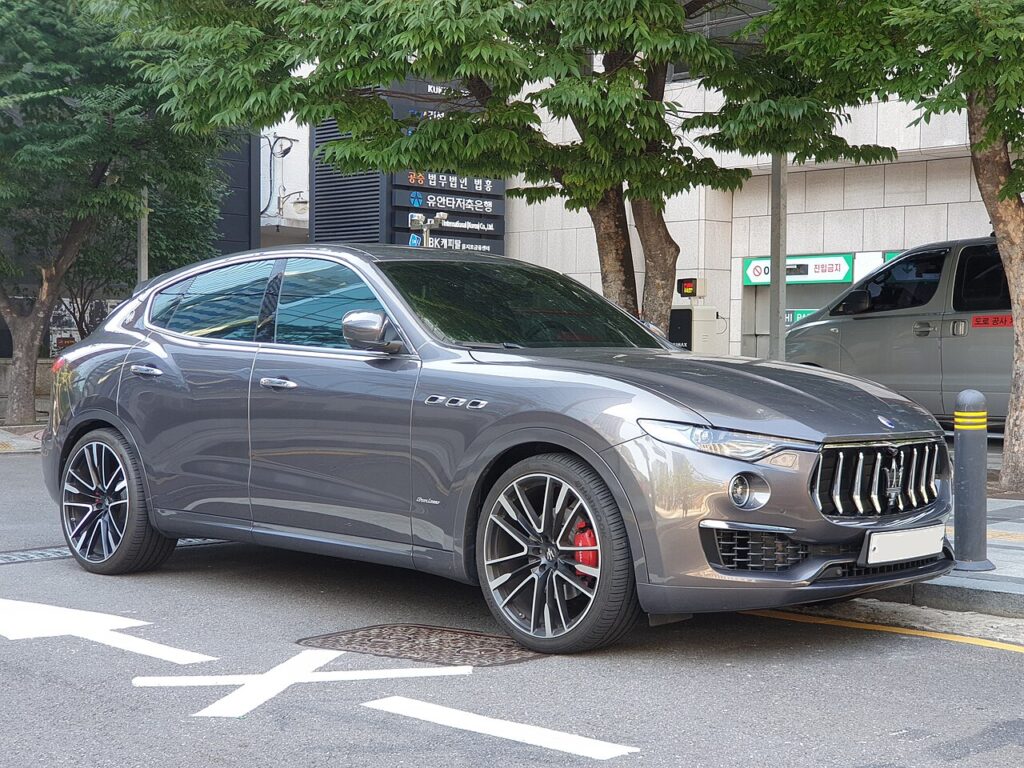
What maintenance mode is and why the Levante needs it
Each rear caliper’s motor screws a spindle onto the piston for parking. New, thicker pads need that spindle wound fully back before the piston will go home. Maintenance mode commands both rear motors to retract the spindles and locks the EPB out so it can’t re-apply while you work. On the Levante this is a scan-tool function — the Maserati MDVCI/SD3 factory tool, or a capable aftermarket unit (OBDSTAR X200/X300, Foxwell NT824, Autel, iCarsoft for FCA) that lists a Maserati brake-pad-change / maintenance routine.
Retracting the rear calipers on the Levante
Park level, chock the fronts and connect a battery charger — the EPB is voltage-sensitive and aborts on a tired battery.
- Release the EPB. In the tool, open the parking-brake module and run maintenance mode / brake-pad replacement; both rear motors retract the spindles.
- Unbolt the caliper and press the piston straight in with a flat spreader — once the spindle is back it does not rotate.
- Fit the new pads and refit the caliper.
Without a scan tool, the rear caliper can be released mechanically: disconnect and unbolt each motor, then turn the exposed spline to wind the piston clear — the same access the boot emergency-release tool uses on the parking brake. Refit the motors afterwards; a tool is still needed to exit maintenance mode cleanly.
Never force the EPB pistons back by hand
Never push or clamp the Levante’s rear piston back while the motor is still applied. The piston sits on the motor’s spindle; forcing it strips the actuator gearbox or spindle thread and ruins the caliper. The motor must retract the spindle in maintenance mode — or you must wind it clear with the motor removed — before the piston moves. A piston that feels solid means the EPB is not in maintenance mode; stop rather than force it.
Exit and bed-in
With the new pads in and the caliper torqued, use the tool to end maintenance mode so the motors re-clamp and take up the running clearance. Cycle the ignition, apply and release the EPB a couple of times, and confirm the parking-brake warning has cleared. Bed the pads in with several moderate slowdowns from about 30–40 mph, allowing cooling between them, and check the parking brake holds on a slope. A Levante with the optional carbon-ceramic brakes needs no pad grind-in, but the ceramic discs are fragile and costly, so handle them carefully.
Frequently Asked Questions
Does the Levante piston screw in or push straight? Push straight — once the motor winds the spindle back in maintenance mode, the piston compresses straight in. You don’t rotate it.
Can I change the rear pads without a scanner? It can be done by unbolting each motor and winding the spindle back, but a tool is needed to exit maintenance mode cleanly and clear any EPB code.
What is the tool in the boot for? It’s the emergency parking-brake release for the rear calipers, using the same spline — not a full pad-change procedure by itself.
Why did maintenance mode abort? Low 12 V supply, almost always. Keep a charger connected and retry — the Levante’s EPB needs a strong battery.
EPB stuck in maintenance mode? Reconnect the tool and command it out; cycling the ignition will not release it.
If a parking-brake or ABS code is stored after the job, decode it on our sister site autodtcs.com.
Independent guide — not affiliated with Maserati. Always follow your official service manual and safety precautions. Read our full disclaimer.