These instructions apply to the Land Rover Defender Mk2 (L663) 2020-Present.
For other models, please choose your vehicle here.
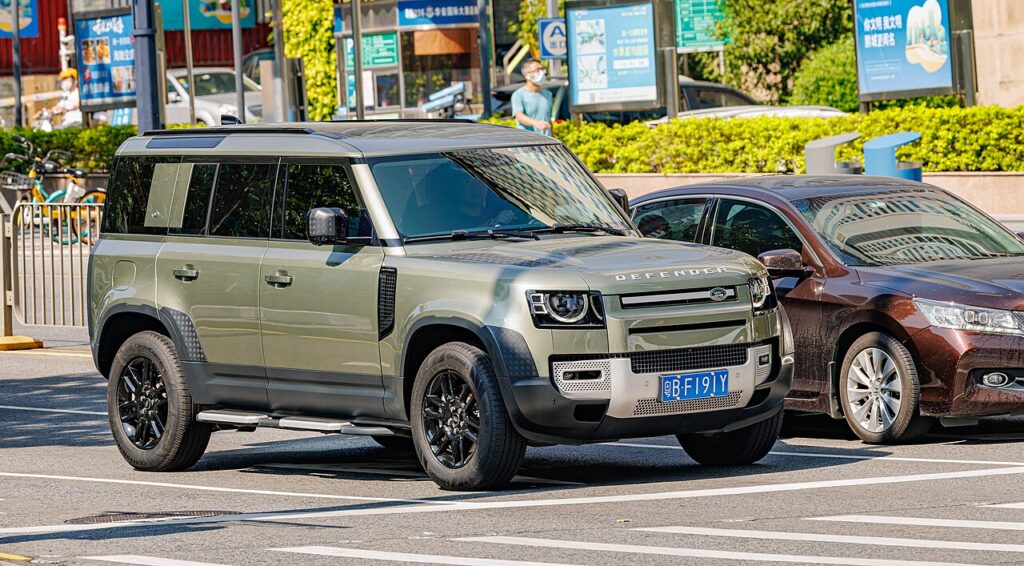
When the remote on a Land Rover Defender (L663, 2020–present) starts making you stand right on top of the car before it locks — or ignores you altogether — the culprit is almost never the vehicle. It is the little 3-volt coin cell buried inside the smart key. The new Defender ships with a single keyless “proximity” fob (no folding blade on the outside; the emergency key is hidden inside it), so there is only one design to learn. This guide walks through spotting a fading cell, the exact battery it takes, how to crack the case open without marking it, and why cutting an extra key is the one part of this job you cannot do at home.
How to Tell the Fob Battery Is Dying
- You lose range. Where the Defender used to wake and unlock from across a car park, you now have to be within a metre — or hold the fob against the door handle — for it to respond. That gradual shrink is the earliest and clearest sign.
- Keyless entry gets fussy. The passive door-handle unlock and one-touch start begin to work only sometimes, and you find yourself reaching for a button instead.
- A dashboard warning appears. The Defender’s cluster shows a “Smart Key battery low” style message in the instrument panel once the cell voltage drops far enough — treat it as a two-week warning, not an emergency.
- Cold mornings make it worse. A coin cell that is nearly flat sags further in low temperatures, so a fob that just about works in summer can go dead on the first frosty day.
A fob cell in a Defender usually lasts two to three years. If yours is around that age and showing any of the above, fit a fresh battery before you start suspecting the receiver, the aerials, or the immobiliser.
The Battery You Need
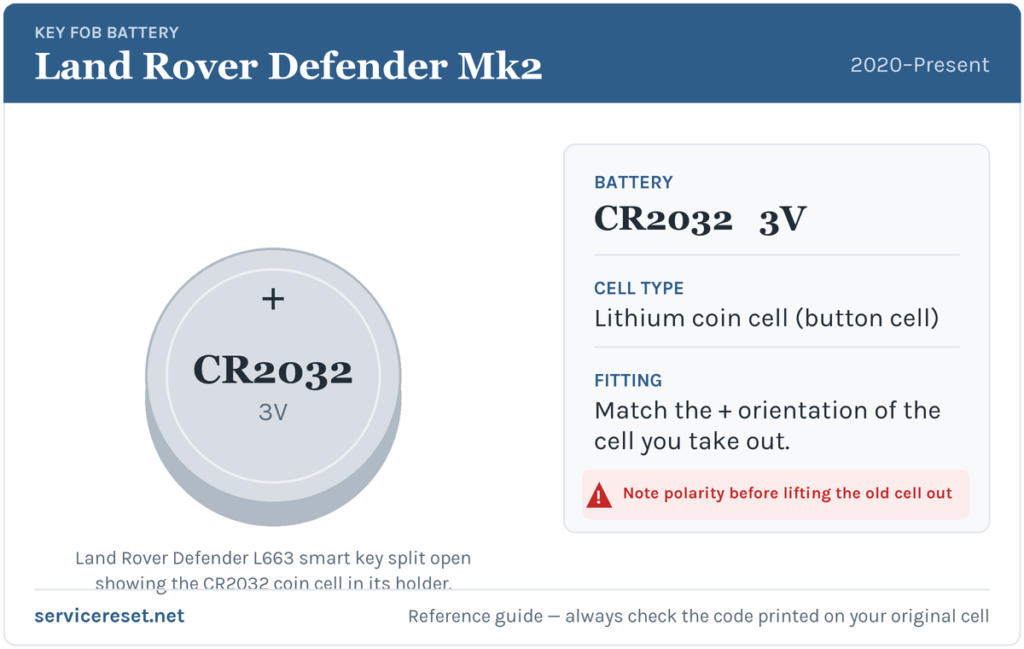
The Defender smart key takes one CR2032 — a 20 mm 3-volt lithium coin cell, the most widely stocked fob battery there is. Fit a branded cell; budget ones can read as “new” yet sag under the short current burst the transmitter draws, giving poor range from day one. Do not substitute the thinner CR2025 (2.5 mm versus 3.2 mm): it sits loose in the holder and drops contact over bumps.
How to Change the Defender Key Battery
- Free the emergency blade first. On the back of the fob is a small button or catch; press and hold it, then slide the metal emergency key blade straight out of the body. That blade is both your access to a locked car and the tool you are about to use.
- Split the case. Slip the tip of the emergency blade (or a thin plastic pry tool) into the seam that runs around the fob and twist gently. The two halves pop apart with a click — work around the edge rather than forcing one spot, so you do not stress the plastic clips.
- Lift out the old cell. Note which face is showing, then ease the coin cell from under its retaining clip with a fingernail or the blade. Avoid touching the flat faces of the new cell — skin oils can corrode the contacts and shorten its life.
- Fit the new CR2032 positive (+) side up. The lettered face points outward, the same way the cell you removed sat. Press it home until it seats fully under the clip.
- Close it up. Line up the two halves and squeeze them together until every edge clicks flush, then slide the emergency blade back in until it latches. Test lock, unlock and tailgate from a few paces.
⚠️ Mind the orientation. A CR2032 fitted upside down will not power the transmitter and, left in place, can slowly discharge against the reversed contacts. If in any doubt, copy exactly how the old cell was sitting before you dropped the new one in.
Check It Worked
Step back several metres and lock, then unlock, the Defender. Full, confident range should return the instant the fresh cell is in. If the low-battery message was showing, it typically clears once the car has read a healthy key a couple of times — sometimes not until the end of your next drive rather than the moment you close the door.
If a Fresh Cell Doesn’t Fix It
- Recheck seating and polarity. The single most common reason a “new” battery fails is that it is upside down or not fully clipped in. Pop the case and confirm the + face is up and the cell is flat under its clip.
- Clean the contacts. Wipe the holder terminals with a dry cloth; a film of grease or light corrosion is enough to cause dropouts even with a good cell.
- Try passive start. If the buttons are dead but keyless start still works when you hold the fob to the marked spot on the column or console, the transponder is fine and only the remote circuit or cell is weak.
- Rule out the car’s 12 V battery. A tired vehicle battery can make the Defender slow to wake and mimic a key fault — worth checking if the car itself feels sluggish.
New Key or Spare — Why It’s a Dealer Job
Changing the battery leaves the fob’s existing coding untouched, so nothing needs reprogramming afterwards. A replacement or additional key is a different matter: the Defender’s encrypted immobiliser has to be accessed with franchised diagnostic equipment, and a blank smart key must be ordered and paired against the car’s VIN with proof of ownership. That keeps lost-key and spare-key work firmly in the hands of a Land Rover dealer or a specialist auto-locksmith — so it pays to keep the battery in your spare fresh too, and never let yourself run down to a single working key.
Frequently Asked Questions
What battery does a Land Rover Defender key fob use?
A single CR2032 3-volt lithium coin cell. It is the standard 20 mm size sold in any supermarket, hardware shop or petrol station.
Which way round does the battery go?
Positive (+) side facing up, with the lettered face outward — the same orientation as the cell you take out. A reversed cell simply will not power the key.
Do I have to reprogram the fob after a battery change?
No. Swapping the cell does not affect the key’s coding, so it works the moment you reassemble it. Only a brand-new key needs pairing to the car.
How long should a Defender fob battery last?
Usually two to three years. Leaving the fob close to the car so it wakes repeatedly, or heavy use of the remote buttons, will shorten that.
The key still won’t work with a new battery — is it broken?
Most often not. Re-seat the cell the right way up and clean the contacts first. If keyless start still works but the buttons do not, the remote circuit may have failed — but that is rare next to a flat or upside-down cell.
Can I still drive a Defender if the fob is completely dead?
Yes. Use the hidden emergency blade to unlock the driver’s door, then hold the fob against the start-system reader point inside (as shown in the handbook) and the car will recognise it and start even with a dead cell.
If your Defender threw a warning light or went into a limp mode around the same time the remote quit — rather than the fob simply fading over weeks — the two may be unrelated, and a stored fault code will tell you which system is really unhappy. You can look up what any logged code means on autodtcs.com.
Independent guide — not affiliated with Land Rover. Always follow your official service manual and safety precautions. Read our full disclaimer.