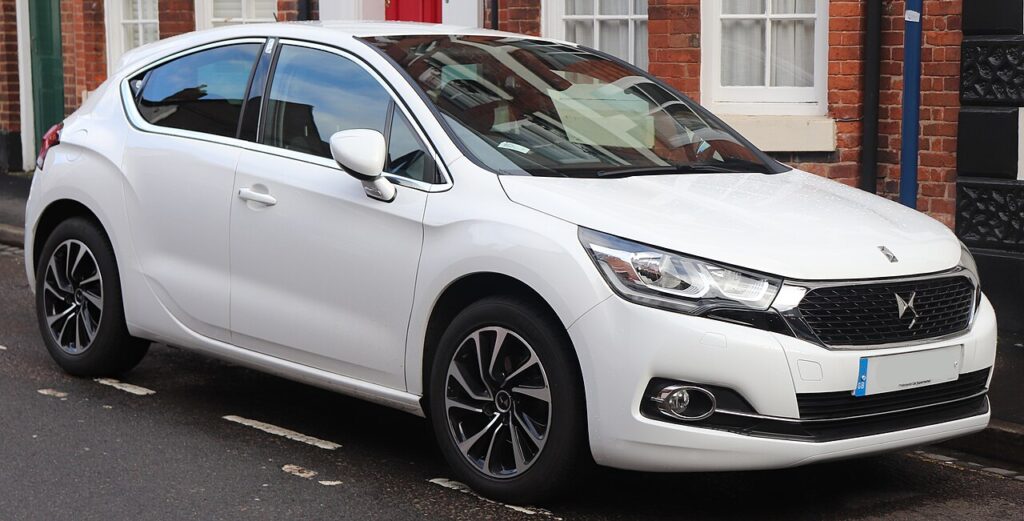
These instructions apply to the DS 4 Mk1 (B75) 2011-2018.
For other models, please choose your vehicle here.
The tyre-pressure warning on the DS 4 (2011–2018) usually lights up after you’ve adjusted the pressures, dealt with a slow puncture, or fitted a different wheel — and in most cases it is simply asking the car to relearn the new pressures rather than flagging a mechanical fault. This generation uses an indirect system: there are no pressure sensors inside the wheels, so you clear the warning by setting the correct pressures and driving a short distance to store them. Here’s how.
How the DS 4’s System Works
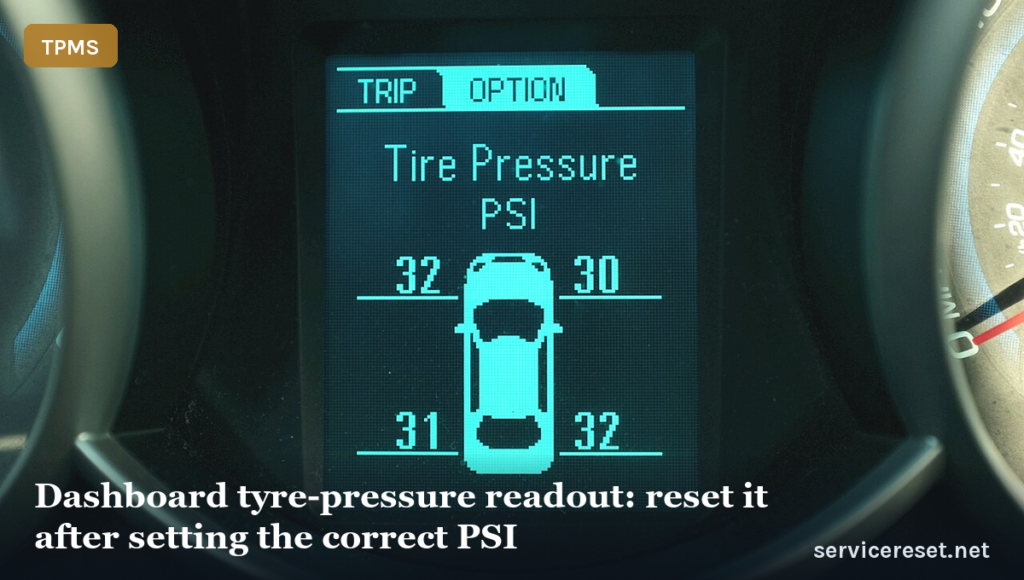
An indirect TPMS has no dedicated pressure sensor in each wheel. Instead it watches the wheel-speed signals the ABS already produces. A tyre that is losing air has a slightly smaller rolling radius, so it turns marginally faster than the others; the system spots that difference and lights the warning. Because it works by comparison, it has no fixed pressure value stored on its own — whatever pressures are in the tyres when you tell it to learn become the new reference. That is why a reset is always “set the pressures first, then store,” and why the light can only clear once every corner is correct.
Before You Begin
- Check pressures cold — before the car has been driven more than a mile or two, or after it has stood for a few hours. Warm tyres read high and will throw the setting off.
- Use the figure on the driver’s door-pillar placard, not a generic number. It lists the correct cold pressures for the front and rear, and often a separate laden figure for a full car.
- Set all four corners — and the spare too if yours is a full-size wheel that gets rotated into use.
- Have the car ready to drive afterwards, because the storing part only completes once you’re moving.
Resetting the System
- Park level and set all four tyres to the correct cold pressures (placard in the driver’s door shut).
- Confirm/reset the tyre-pressure setting in the menu if your DS 4 offers one.
- Drive the car at a steady speed for a few minutes to complete the procedure — the new pressures become the baseline.
If the Warning Stays On
- Recheck every tyre with a known-good gauge — a single corner a few psi low is enough to keep the warning lit, and forecourt gauges are often out.
- Give it a longer, steadier drive. A minute of stop-start town driving may not be enough; a few miles at a constant speed lets the system settle.
- After a wheel swap or tyre change, make sure the pressures are exactly to spec before you drive, then store again.
- Look for a slow puncture. If the light keeps returning a day or two after you set the pressures, one tyre is losing air — check for a nail or a leaking valve.
- Cold snap overnight? Pressure falls with temperature, so a warm-weather setting can drift below the threshold on a frosty morning; top up to the placard figure.
- Still lit with everything correct? A fault may be stored in the system — look it up on autodtcs.com.
After the Reset
Once the pressures are right and the car has been driven for a few minutes, the warning should go out and stay out for the rest of the journey and beyond. From that point the DS 4 is comparing the tyres against the baseline you just stored, so it will only warn again if a tyre genuinely drifts low. If it clears and then reappears within a day, treat that as a real pressure loss rather than a glitch.
Frequently Asked Questions
How do I reset the tyre pressure light on a DS 4?
Set all four tyres to the correct cold pressures from the door-pillar placard, confirm the setting in the menu if your car offers one, then drive at a steady speed for a few minutes. The indirect system takes the pressures you set as its new reference and the warning clears once the learn is complete.
Does the DS 4 have sensors in the wheels?
No — this generation uses an indirect, wheel-speed-based system. It reads the ABS signals rather than a radio sensor inside each tyre, so there is no sensor battery to go flat and nothing to reprogram after a tyre change. The trade-off is that it cannot tell you an exact pressure or name the low corner.
Why won’t the warning clear?
Almost always because one tyre is still below spec, or the learn drive was too short. Recheck every corner with a reliable gauge, top up any that are low, and drive a few miles at a steady speed. If it still will not clear with all pressures correct, a fault may be stored.
Do I need a diagnostic tool?
No. Because the system is indirect there are no sensors to match, so setting the pressures and driving is all that is needed. A tool would only come into play if a stored fault needed reading and clearing after you had already confirmed every pressure was correct.
Do I have to reset it after rotating the tyres?
Yes — any time the wheels move around or the pressures change, it is worth re-storing. Set each corner to its correct figure for its new position (front and rear pressures can differ), then drive to relearn. This keeps the baseline accurate so the warning stays meaningful.
Can cold weather set the light off on its own?
It can. Tyre pressure drops as temperature falls, roughly a little for every several degrees, so a setting made on a mild afternoon can slip under the threshold overnight in winter. If the light appears on a cold morning, check and top up to the placard figure before assuming a puncture.
If the warning came on alongside other dashboard lights, decode the code on autodtcs.com.
Independent guide — not affiliated with DS. Always follow your official service manual and safety precautions. Read our full disclaimer.