These instructions apply to the Jeep Cherokee Mk5 (KL) 2014-2023.
For other models, please choose your vehicle here.
If the tyre-pressure warning has come on in your Jeep Cherokee (2014–2023) after you’ve adjusted the pressures or changed a wheel, this generation uses an indirect system — there are no sensors in the wheels, so you reset it by setting the pressures and driving. Here’s how.
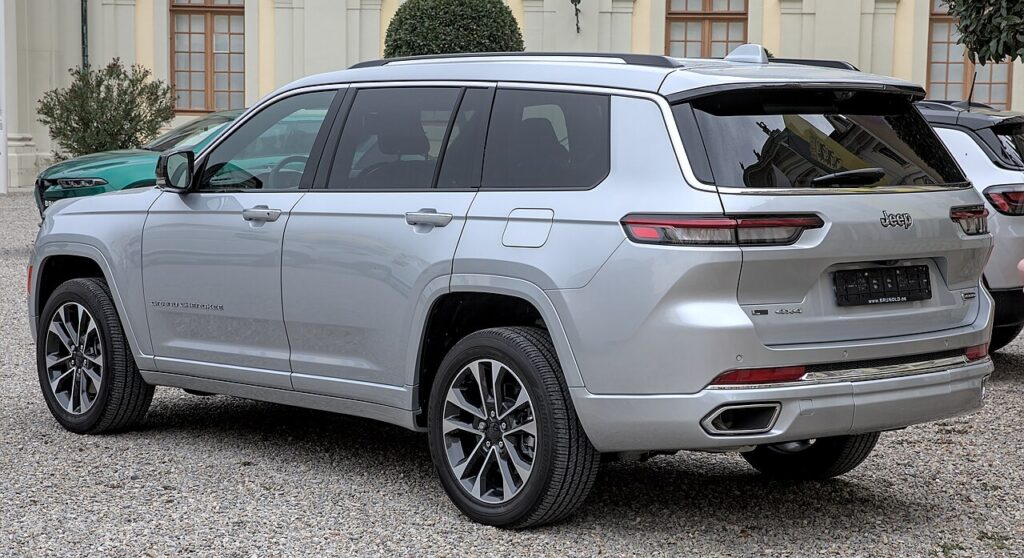
On this Cherokee the low-pressure telltale is a warning, not a fault. It comes on because the system has noticed a tyre reading differently from the others — commonly after cold weather lowers the pressures, after you’ve topped them up, or after a wheel has been rotated or swapped. Once the pressures are right and the car has relearned them, the light goes out and stays out. Nothing is broken; the system just needs a fresh baseline.
How the Cherokee’s System Works
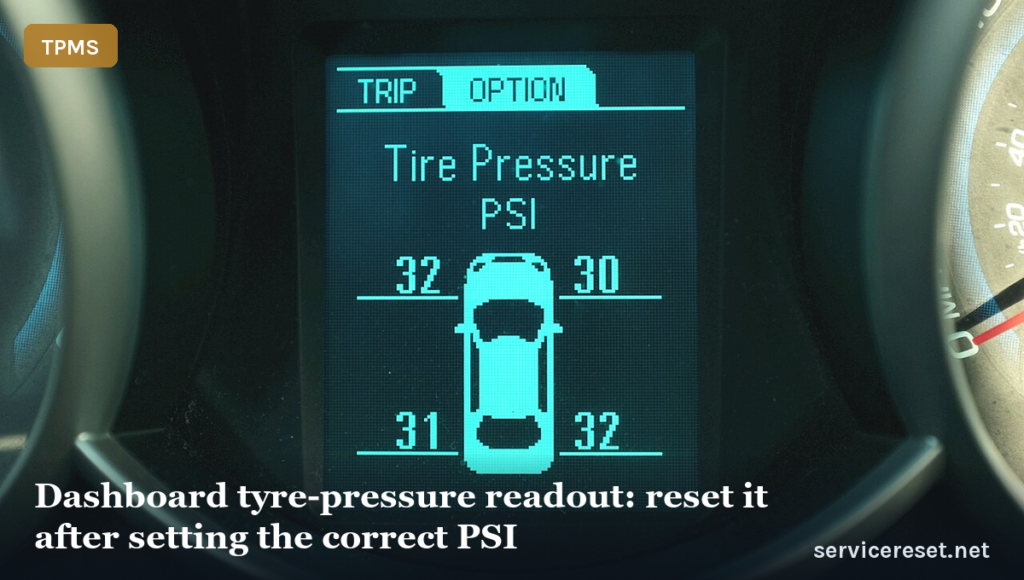
The indirect TPMS reads wheel-speed data to spot a tyre going soft, so after any pressure change you set the correct pressures and let the car relearn them on the move.
Because nothing physical sits inside each wheel, an indirect system has no sensor battery to run down and needs no matching tool for a routine reset. The catch is that it cannot point to the low corner for you, and it only accepts the pressures you set once a steady drive lets it compare all four wheels. That is why the reset is always “inflate correctly, then drive” rather than a button on the dash.
Before You Start
- Check pressures cold — before driving, or a couple of hours after the car has been parked. Warm tyres read high and send you off spec.
- Use the figure on the driver’s door-pillar placard (visible with the door open) for your tyre size and load.
- Set all four tyres, and check the spare if it is a full-size wheel you might rotate in.
- Park on level ground and refit the valve caps before you set off.
- Use a reliable gauge — forecourt airlines are often a few psi out.
Resetting the System
- Park level and set all four tyres to the correct cold pressures (placard in the driver’s door shut).
- Drive the vehicle for about 20 minutes at over 32 km/h (20 mph).
- The new pressures are stored as the baseline and the warning clears.
If the Warning Stays On
- Recheck every tyre — a single corner a few psi low keeps the warning lit.
- Complete the 20-minute learn drive — short, stop-start trips may not be enough to relearn all four wheels.
- Cold snap? Pressures fall roughly 1 psi for every 5 °C drop, so a cold morning can re-trip a car that was fine yesterday — top up and drive.
- After a wheel swap or rotation, set every pressure exactly to spec before moving so the new baseline is clean.
- Watch for a slow puncture — if one tyre keeps needing air, find the leak rather than resetting again.
- Still on with everything correct? A fault may be stored — look it up on autodtcs.com.
What to Expect After
Once the relearn finishes the warning goes out on its own — you don’t need to stop or cycle the ignition. It may clear in the last few minutes of the drive rather than the moment you pull away, so a short lag is normal. After that it should stay off until the pressures genuinely drift again, which is expected as the seasons change.
Frequently Asked Questions
How do I reset the tyre pressure light on a Jeep Cherokee?
Set all four tyres to the cold pressures on the door-pillar placard, then drive about 20 minutes at over 32 km/h (20 mph). The indirect system relearns the corrected pressures on the move and the warning clears itself — there is no reset button to press.
Does the Cherokee have sensors in the wheels?
This generation uses an indirect, wheel-speed-based system, so there’s no in-wheel sensor battery to fail (a tool is only needed if sensors are fitted). It reads how fast each wheel turns rather than measuring pressure directly, which is why it can warn you but not name the low corner.
Why won’t the warning clear?
Usually a tyre still below spec, or the learn drive wasn’t long enough. Re-check every corner cold against the placard, then take a steadier 20-minute run above 32 km/h. If a tyre keeps losing air you may have a slow puncture, which the system will keep flagging until it is repaired.
Do I need a tool?
No — setting the pressures and driving is all that’s needed. Because the system is indirect there is nothing to program in the wheels, so a garage scan tool is only relevant if a related fault has actually been stored rather than for a routine reset.
The light came back on after a cold night — is something wrong?
Not necessarily. A drop in outside temperature lowers tyre pressures and can re-trip the warning even on healthy tyres. Check them cold, top up to the placard figure and drive again. If the same corner keeps falling, look for a slow puncture or a leaking valve rather than resetting repeatedly.
Does the spare wheel affect the reset?
The indirect system watches the four road wheels, so a spare stowed away won’t trip the warning. It only matters once you fit that spare and drive on it — set it to the correct pressure and complete a learn drive so the system has an accurate baseline for the wheel actually on the road.
If the warning came on with other lights, decode the code on autodtcs.com.
Independent guide — not affiliated with Jeep. Always follow your official service manual and safety precautions. Read our full disclaimer.