These instructions apply to the Subaru Outback Mk5 (BS) 2015-2019.
For other models, please choose your vehicle here.
Seeing the tyre-pressure warning in your Subaru Outback (2015–2019) — the BS — is rarely a sign of a fault. The Outback keeps an eye on each wheel and flags up when a tyre reads low against the pressure the car expects, so the light tends to appear after the weather turns cold, when a tyre has slowly lost air, or right after you have topped the pressures up or fitted a different wheel. On a big all-wheel-drive estate that spends time on rough tracks and loaded up for trips, a kerbed valve or a slow leak is common enough. Correct the pressures, drive a short distance so the system re-reads them, and the warning clears itself. Here is the proper way to do it.
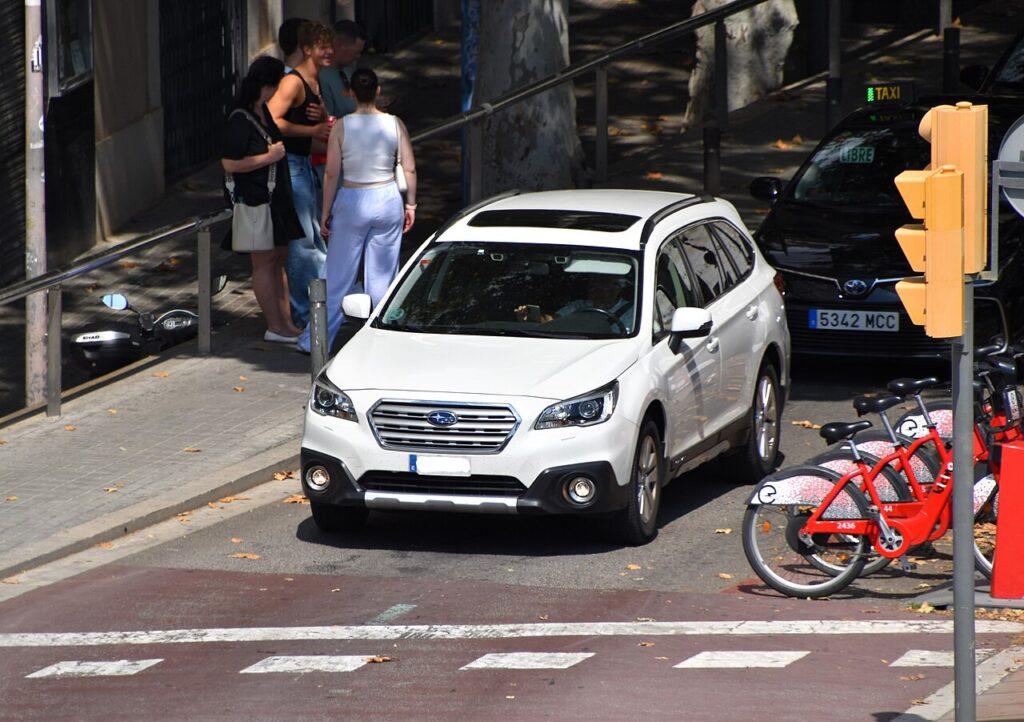
How the monitoring works on this Outback
Each wheel is watched individually, and the warning appears when a tyre drops roughly below the figure on the driver’s door-pillar placard. This generation clears the light from the corrected pressures rather than from a stored button-press, so there is no menu to dig through — the reset is essentially “set the pressures right and drive.” The load you are carrying matters too: the Outback’s placard often lists a higher figure for a fully laden car, so match the pressure to how the vehicle is loaded.
Before You Start
- Set the tyres cold — after standing three hours or more, or a drive of under a mile. Hot tyres read high and mask a soft corner.
- Use the door-pillar placard figure, not the number moulded into the tyre sidewall, which is a maximum only.
- Match the load — if you are running heavy or towing, use the higher laden pressure the placard lists.
- Check the spare if a full-size wheel is on the ground.
- Have a reliable gauge to hand and do all four corners.
When to Reset
- After checking or adjusting the tyre pressures.
- After changing wheels or tyres, or fitting winter wheels.
Resetting the System
- Park level and set all four tyres to the correct cold pressures (placard in the driver’s door shut).
- Drive the vehicle for about 10 minutes at over 40 km/h (25 mph).
- The system relearns the corrected pressures and the warning clears.
If the Warning Won’t Clear
- One low corner is enough — recheck all four; even a couple of psi short on a single tyre keeps the light on.
- Drive it longer — a short crawl may not give the system time to settle; a steady run of several minutes works better.
- Cold mornings pull pressures down; top back up to the placard figure with the tyres cold.
- Persistent low tyre — if the same corner keeps dropping, look for a nail, a split, or a leaking valve rather than resetting again.
- Temporary spare on? A space-saver runs much higher than the road wheels, and the light can stay on until the normal wheel is refitted.
- Sensor issue — a wheel sensor with a dead battery or a damaged valve can hold the warning on despite correct pressures. Any stored code can be looked up on autodtcs.com.
What to Expect After
With the pressures correct and a few minutes of driving done, the warning should clear and stay off for the trip. If it clears but comes back within a day or two, treat that as a slow leak rather than an electronic fault and have the tyre inspected. A brief flash of the symbol when you first switch on, followed by it going out, is just the system’s normal self-check.
Frequently Asked Questions
How do I reset the tyre pressure light on a Subaru Outback?
This generation has no reset button. Inflate all four tyres to the cold pressures on the driver’s door-pillar placard, then drive for about ten minutes above 40 km/h. The Outback re-reads the corrected pressures as you drive and turns the warning off automatically.
I inflated the tyres but the light is still on — why?
Usually one corner is still under the target, or the drive was too short. Recheck each tyre cold with an accurate gauge, correct anything low, and take a longer run. If all four are genuinely right and it persists, look at a slow leak or a wheel sensor.
Does the towing or heavy-load pressure affect the warning?
It can. The Outback’s placard lists a higher pressure for a laden or towing vehicle. If you have set the lighter figure but the car is loaded, a tyre can read low against what the system expects. Match the pressure to how the car is loaded.
Do I need a scan tool to clear it?
No, not for a routine reset — correcting the pressures and driving is enough. A tool only comes into play if a wheel sensor has been replaced and needs registering, or if you want to read a stored trouble code.
Why does the light keep coming back on the same wheel?
A warning that repeatedly returns on one corner almost always means a slow puncture — a nail, a porous alloy, or a weeping valve. Check that tyre’s pressure and inspect the tread and valve. Resetting again without fixing the leak only postpones the problem.
Do I have to reset after fitting winter tyres?
Set the winter wheels to the correct cold pressures first, then drive so the system re-reads them; a full-size winter set behaves like the standard wheels once inflated properly. The compact spare is the exception — it runs much higher and the light may stay lit until the road wheel is back on.
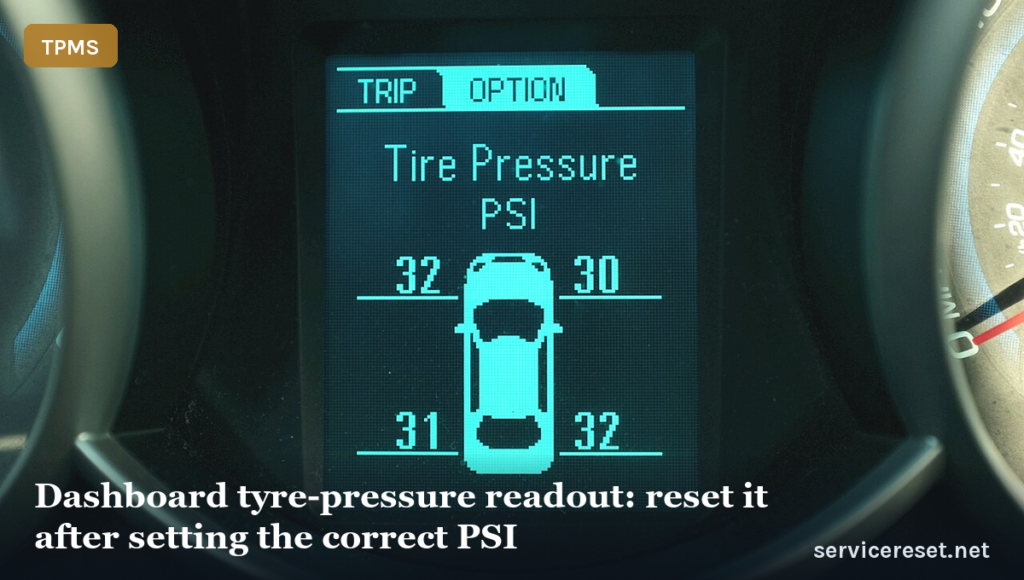
If the tyre-pressure warning showed up together with other dashboard lights, decode the stored code on autodtcs.com before assuming it is purely a pressure problem.
Independent guide — not affiliated with Subaru. Always follow your official service manual and safety precautions. Read our full disclaimer.