These instructions apply to the Smart Fortwo Mk3 (W453) 2015-2024.
For other models, please choose your vehicle here.
The Smart Fortwo (W453, 2015–2024) uses a Start/Stop system that shuts the engine off at a standstill to save fuel. If you’d rather keep it running — in traffic, when manoeuvring, or before working under the bonnet — you can switch it off with the dash button.
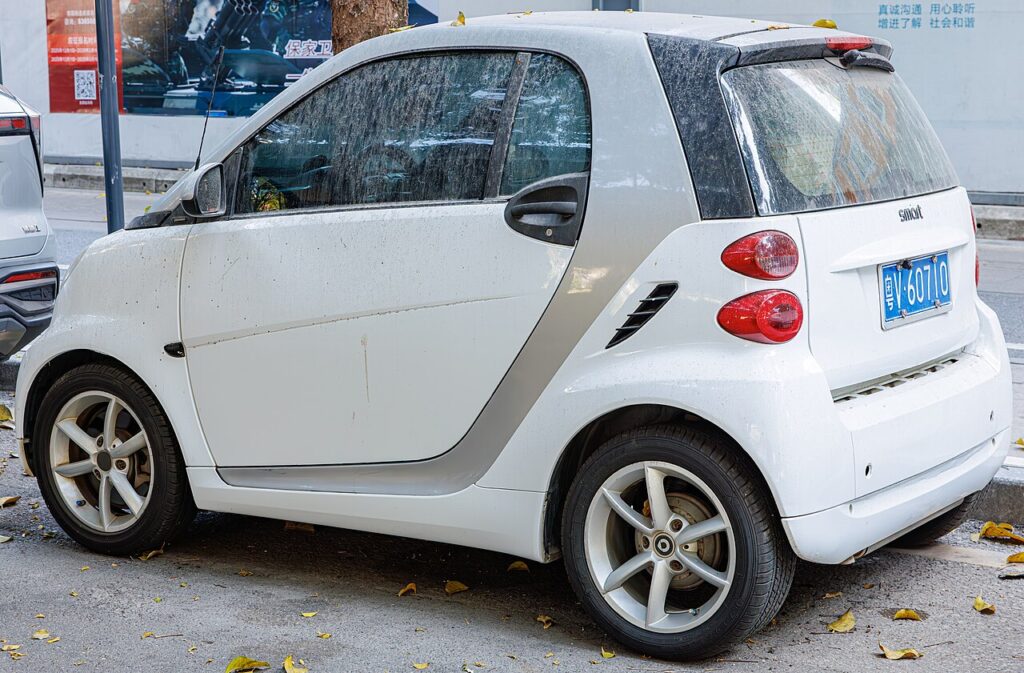
How Start/Stop Works on the Fortwo
Bring the car to a halt with the brake held and, if a set of conditions is met, the control unit shuts the engine down; move off again and it restarts at once. On this rear-engined city car a quick restart relies on the 12 V battery, so the system keeps an eye on battery charge, engine temperature and how hard the heating or air-con is working. If any of those isn’t right, it simply leaves the engine running. That is the system protecting the battery and your comfort, not a fault.
First, a Few Checks
- Switch the ignition on — you don’t need the engine running to change the setting.
- Identify the Start/Stop button on the dash before you press it.
- The choice only lasts the current drive, so set it before you pull away.
- Before any engine-bay work, switch it off so the engine can’t restart on its own.
Turning Start/Stop Off
- Press the Start/Stop button on the dashboard.
- The Start/Stop warning light goes out — the system is now switched off.
It Resets Every Time You Start
Start/Stop re-enables automatically each time you start the engine. There’s no permanent off setting — press the button again after each start if you want it disabled.
If the System Won’t Stop the Engine Anyway
Even with Start/Stop active, the engine won’t cut unless conditions are met. If it rarely or never stops, run through these:
- The 12 V battery is sufficiently charged — short trips leave it too low, and this is the most common cause.
- The engine is warm — it usually won’t stop until up to temperature.
- Cabin climate demand is satisfied — on a very hot or cold day it keeps running for the heater or air-con.
- The car is fully stopped with your foot firmly on the brake.
- You’re on level ground — a slope can keep it running.
- An ageing battery that no longer holds charge will need testing or renewing to restore the function.
A Start/Stop that rarely works is often a tired 12 V battery.
Once It’s Done
With the system switched off, the engine keeps idling at every stop for the rest of that drive and the warning light stays out to confirm it. Start the car next time and Start/Stop is active again by default. If a fault light stays lit rather than the normal status indicator, that points to something needing attention — most often the 12 V battery.
Frequently Asked Questions
How do I turn off Start/Stop on a Smart Fortwo?
Press the Start/Stop button on the dash — the warning light goes out to confirm it’s off. The engine will then stay running the next time you stop. The setting only applies to the current drive and resets when you next start the car.
Does it stay off permanently?
No — it re-enables every time you start the engine. There is no factory permanent-off setting, so if you prefer the engine to keep idling at stops you’ll need to press the button once each time you start a new journey.
Why doesn’t the engine stop at lights?
Usually the battery isn’t charged enough or the engine isn’t warm yet. The system also holds off on a slope, while the heater or air-con is still working hard, or if you’re not holding the brake firmly. All of these are normal and by design.
Should I disable it for engine work?
Yes — switch it off with the button so the engine can’t auto-restart while you’re near moving parts. Because the setting resets at the next start, make a habit of pressing it again whenever you begin work with the ignition on.
Is leaving Start/Stop on bad for the car?
No. The engine, starter and battery are designed for the repeated cycles, and the system already declines to stop when the battery is weak or the engine cold. Leaving it on saves a little fuel in town; turning it off is simply a comfort preference.
Why does the engine sometimes restart on its own?
After an auto stop, the engine may restart by itself if the battery charge drops, the cabin needs more heating or cooling, or the car begins to roll. This is the system keeping you comfortable and safe, and it’s completely normal — no action is needed.
If a Start/Stop fault light stays on, look up the code on autodtcs.com.
Independent guide — not affiliated with Smart. Always follow your official service manual and safety precautions. Read our full disclaimer.