These instructions apply to the Skoda Kodiaq Mk1 (NS) 2016-2024.
For other models, please choose your vehicle here.
The Škoda Kodiaq (Mk1, 2016–2024) is Škoda’s large seven-seat SUV, and across most of its trim range it carries KESSY keyless entry with a START/STOP button. So when the fob battery gives out, the doors ignore the buttons and the car will not detect the key for keyless start. The fix is simple once you know it: hold the dead fob against the start button so the immobiliser can read the chip, and use the emergency blade hidden in the fob to get into the cabin first.
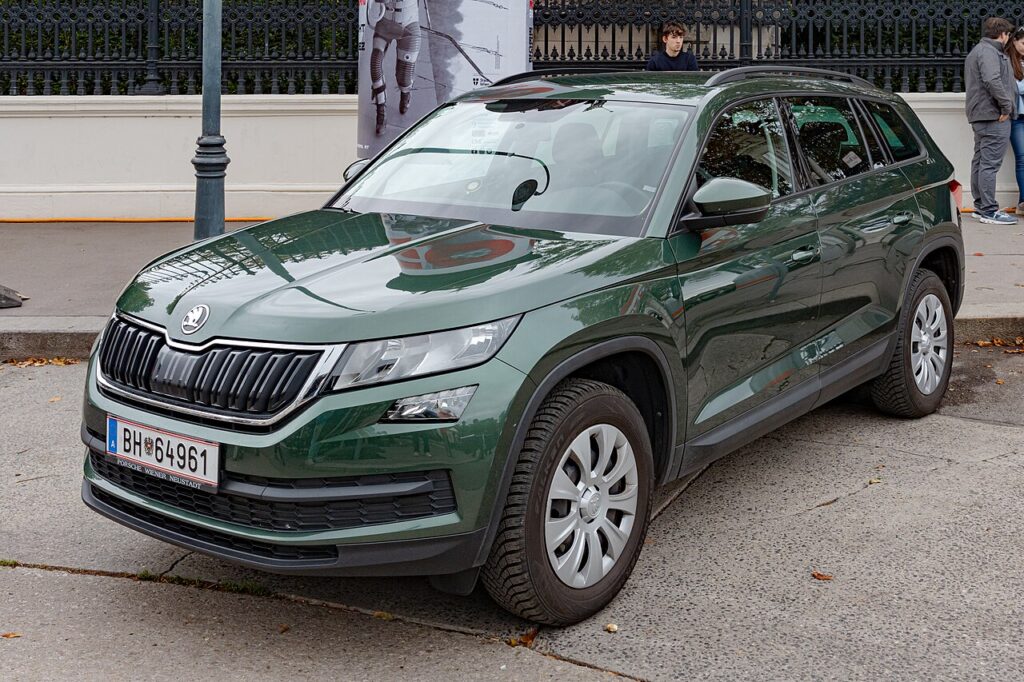
This covers the first-generation Kodiaq, including the rugged Scout and the sporty vRS, all sharing the same KESSY hardware. Lower-spec cars without keyless go use a turn-key ignition instead.
Start the Kodiaq With a Dead Fob
KESSY (button-start) Kodiaq:
- Unlock and climb in using the emergency blade (next section) — a flat fob will not work the door buttons.
- Press and hold the brake pedal.
- Hold the fob flat against the START/STOP button so the transponder sits over the reader behind it.
- Press the button through the fob. The immobiliser powers the chip by induction, confirms the key, and starts the engine.
- If it does not catch, reposition the fob slightly on the button and try again.
Turn-key Kodiaq:
- Open the driver’s door with the emergency blade.
- Insert the blade into the ignition barrel and turn to start — a flat fob does not affect a blade-ignition start.
Unlock the Kodiaq With the Emergency Key Blade
- Slide the catch on the fob and pull out the metal emergency blade.
- The driver’s door lock is hidden behind a plastic cap on the handle. Lever the cap off using the slot at its rear edge.
- Insert the blade and turn to unlock. Opening manually can trip the alarm; pressing START with the fob inside silences it.
- Continue with the contact-start method (KESSY) or the ignition barrel (turn-key).
Why a Dead Battery Doesn’t Strand You
The Kodiaq’s fob contains a passive immobiliser transponder powered wirelessly by the car’s reader coil, just like a contactless card — the coin cell takes no part in authenticating the key. The battery only drives the long-range radio for remote locking and keyless approach. Hold the fob to the START button and the short-range coil energises the chip directly, so the immobiliser still trusts it and releases the engine. A battery-free spare blade key starts the Kodiaq the same way.
Replace the Key Fob Battery
- Remove the emergency blade to free the case.
- Split the fob halves with a plastic pry tool along the seam.
- Lift out the old cell — the Kodiaq fob uses a CR2032 3V coin cell.
- Fit the new battery + side facing the same way as the old one, handling it by the edges.
- Click the case together, refit the blade, and test the buttons. A fresh cell lasts roughly 2–3 years.
Frequently Asked Questions
Does my Kodiaq have keyless start? Most do — KESSY is common across the range, including Scout and vRS. A START/STOP button rather than a twist key confirms it.
Where is the emergency reader on the Kodiaq? Behind the START/STOP button. Hold the flat back of the fob directly against it.
How do I unlock the Kodiaq with a dead fob? Use the emergency blade in the hidden driver’s-door lock, under the clip-off cap on the handle.
What battery does the Kodiaq fob take? A single CR2032 coin cell.
The car started only with the fob on the button — is something wrong? That usually signals a weak or flat coin cell. Replace it; if it persists, the key transmitter may be failing.
If a warning light is still showing once the engine is running, decode it on our sister site autodtcs.com.
Independent guide — not affiliated with Skoda. Always follow your official service manual and safety precautions. Read our full disclaimer.