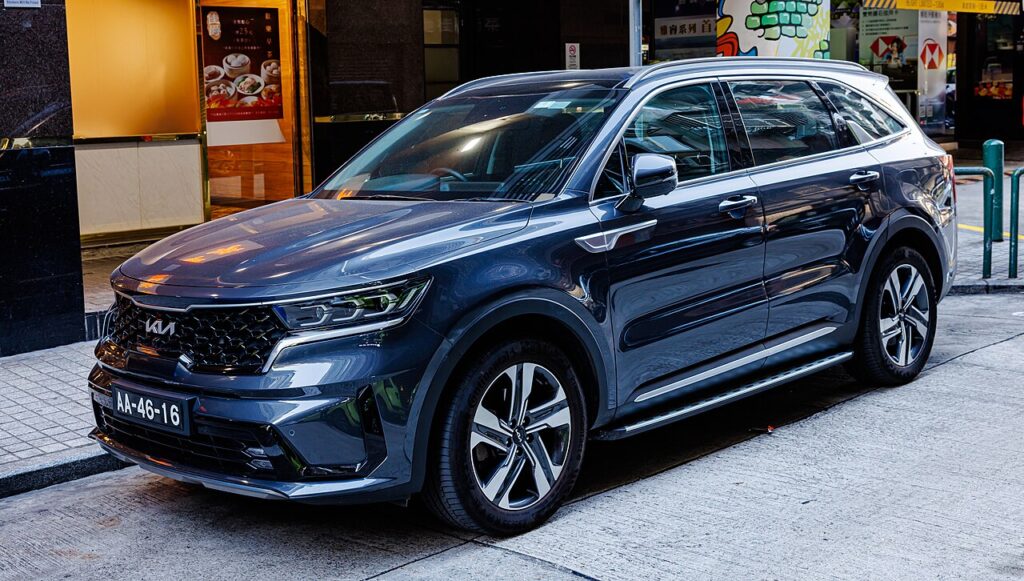
These instructions apply to the Kia Sorento Mk4 (MQ4) 2020-Present.
For other models, please choose your vehicle here.
The proximity remote for a Kia Sorento Mk4 (MQ4, 2020–present) that only unlocks the car when you are standing right beside it, responds on and off, or has gone silent altogether is nearly always flagging a flat coin cell inside the fob rather than a fault with the car. Every MQ4 Sorento — petrol, diesel, hybrid and plug-in hybrid — ships with the same style of smart (keyless-entry) key that carries a hidden mechanical blade and a single lithium cell. This guide covers how to spot a dying battery, the exact cell you need, how to split the case without cracking it, and why a completely dead fob still won’t leave you stranded on the driveway.
How to Tell the Fob Battery Is Dying
- Shrinking range. You have to be almost touching the door handle before the Sorento locks or unlocks. This is the earliest and most reliable warning sign.
- The car stops recognising the key. A weak fob can trigger a “Key not detected” or “Smart Key battery low” style message in the instrument cluster, especially when you press the ENGINE START/STOP button.
- Passive entry gets unreliable. The door handle’s touch-to-unlock and the boot’s hands-free open start working only sometimes — another symptom of a cell that can no longer support the brief current spike each transmission needs.
- Cold-morning dropouts. A near-flat cell sags further in the cold, so the fob that was marginal yesterday afternoon may do nothing on a frosty start.
A coin cell in a Sorento smart key typically lasts two to four years. Leaving the fob sitting close to the car overnight shortens that, because the key keeps waking to answer the vehicle’s polling. If yours is a couple of years old and showing any of the above, fit a fresh cell before you suspect the receiver or immobiliser.
The Battery You Need
The Sorento Mk4 smart key uses a single CR2032 — a 3-volt lithium coin cell, 20 mm across and 3.2 mm thick. It is the most common fob battery made, sold in any supermarket, hardware shop or petrol station. Buy a good-quality branded cell: budget batteries sag under the short high-current pulse the transmitter draws and can give poor range even when they read as “new” on a meter. One cell does the whole job — there is nothing else inside to replace.
How to Replace the Battery
- Release the mechanical blade first. Slide the small catch on the fob and pull the emergency key blade straight out. This exposes the slot the blade sat in and takes strain off the case seam.
- Find the seam. With the blade out you will see a thin gap running around the edge where the two halves of the case meet. This is the only place you should pry.
- Split the case gently. Insert a slim flat tool — a small flat-blade screwdriver, a plastic trim tool, or even the mechanical blade itself — into the slot and twist slowly to pop the halves apart. Work around the seam rather than forcing one point, so you don’t crack the plastic or snap a clip.
- Note how the old cell sits, then lift it out. Take a photo on your phone first if you are unsure. On the Sorento smart key the fresh CR2032 goes in with the positive (+) face showing — the writing and the “+” mark visible as you set it in — but always match the orientation of the cell you removed.
- Handle the new cell by the edge. Skin oil on the flat faces raises contact resistance; wipe it with a dry cloth before fitting if you have touched the terminals.
- Click the halves back together around the whole edge until the seam closes flush, then slide the mechanical blade back in until it latches.
⚠️ Get the polarity right. Kia’s own guidance warns that a cell fitted the wrong way round will quietly discharge and can leave the key unusable — so copy the orientation of the cell you took out and make sure the “+” is facing the right way before you close the case.
Check It Worked
Stand back several metres and lock, then unlock, the Sorento with the buttons; full range should return at once. Walk up with the fob in your pocket and confirm the door handle’s touch-sensor unlocks the car, and that the START/STOP button reads the key without complaint. Any “Key not detected” or low-battery message should clear the next time the car reads a healthy fob — sometimes after one drive cycle rather than the instant you close the door.
If a Fresh Cell Doesn’t Fix It
- Re-check polarity and seating. An upside-down or loose cell is by far the most common reason a “new” battery does nothing. The cell must sit firmly under its clip against clean contacts.
- Wipe the contacts. A smear of grease or light corrosion on the terminals is enough to cause dropouts; clean them with a dry cloth or a pencil eraser.
- Try the second fob. If the spare key works normally, the problem is the first fob (a tired transmitter, rare) rather than the car’s receiver.
- Suspect the car’s 12 V battery. A weak vehicle battery can mimic key faults — if the Sorento is slow to wake or the dash flickers on start-up, have the main battery load-tested.
Driving a Sorento With a Completely Dead Fob
A flat fob battery will not strand you. Use the mechanical blade hidden in the key to unlock the driver’s door manually. To start the car, hold the smart key flat against the ENGINE START/STOP button and press — the button has a backup coil that reads the key’s transponder at point-blank range even with no battery power — then press the button as normal with your foot on the brake. Kia designed this passive backup precisely so a dead coin cell can never lock you out of driving.
New Key or Spare — Why It’s a Dealer Job
Swapping the coin cell keeps the fob’s existing coding, so nothing needs reprogramming and the key works the moment you close the case. Cutting or coding a new key is a different matter: the Sorento’s immobiliser has to be accessed with a diagnostic tool, and blank smart keys must be ordered against the car’s VIN and registered to the vehicle. That makes adding a spare or replacing a lost key a job for a Kia dealer or an auto-locksmith — so keep the battery in your spare fresh too, and you are never down to a single working key.
Frequently Asked Questions
What battery does a Kia Sorento Mk4 key fob take?
A single CR2032 3-volt lithium coin cell. Every MQ4 smart key uses the same one, so you only ever need to buy that one size.
Which way up does the battery go?
With the positive (+) face showing as you set it into the holder. The simplest rule is to match the cell you removed — fitting a coin cell upside down can flatten it and disable the key.
Do I need to reprogram the key after changing the battery?
No. A battery swap doesn’t touch the fob’s coding, so it pairs with the car straight away. Only a brand-new key needs programming to the vehicle.
How long should a Sorento smart key battery last?
Usually two to four years. Heavy use of the remote, or leaving the fob near the car so it wakes constantly to answer the vehicle’s polling, will shorten that.
My key still won’t work after a new battery — is the car broken?
Usually not. Re-check the cell’s polarity and seating first, then wipe the contacts. If the spare fob works fine, the first fob’s transmitter may have failed — but that is rare next to a flat or upside-down cell.
Can I still start the Sorento if the fob is completely dead?
Yes. Unlock the driver’s door with the mechanical blade, then hold the smart key against the START/STOP button and press it with the brake down. The car reads the key at close range even with no battery, so a dead cell won’t leave you stuck.
If the remote stopped responding suddenly — right after the car battery went flat or was disconnected, rather than fading gradually — the cause is more likely the pairing or a stored fault than the coin cell. You can check what any logged code means on autodtcs.com.
Independent guide — not affiliated with Kia. Always follow your official service manual and safety precautions. Read our full disclaimer.