These instructions apply to the Kia Sportage Mk5 (NQ5) 2021-Present.
For other models, please choose your vehicle here.
A tyre-pressure light on your Kia Sportage Mk5 (NQ5, 2021–present) after adjusting pressures or swapping wheels usually just needs the car driven so the system relearns — it isn’t a fault. The Sportage uses a direct TPMS, with a sensor in each wheel, so the dash can show each tyre’s actual pressure and the reset is automatic once the pressures are right. There’s no button to press or menu to confirm; you correct the air and let the sensors report. Here’s what to do and what to check if the light lingers.
How the Sportage’s TPMS Works
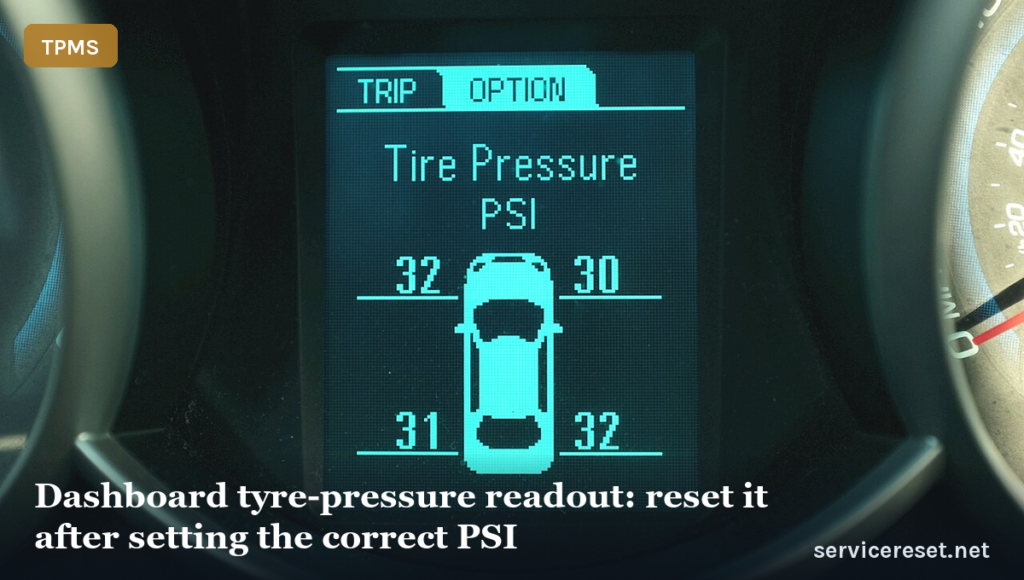
Each wheel reports its own pressure to the car, so you can see a low corner on the display. There’s no button or menu to confirm — you correct the pressures and the warning clears after a short drive while the sensors report the new values. Because it reads true pressure rather than wheel speed, the Sportage can tell you exactly which tyre is down and by how much, which makes tracking a slow leak much easier than on an indirect system.
Before You Begin
- Check and set the pressures cold — before driving, or after the car has stood a few hours. Warm tyres read high and mask a soft corner.
- Use the figures on the label in the driver’s door opening, and pick the laden column if you’re carrying a full load or towing.
- Check the spare too if your car carries a monitored full-size wheel.
- Read the per-tyre display first — it tells you which corner is low so you’re not guessing.
- Plan a short drive afterwards; the light clears on the move, not at a standstill.
How to Reset the Sportage Mk5 TPMS
- Set all four tyres to the correct pressure cold — the figures are on the label in the driver’s door opening.
- Drive normally for around 20 minutes, keeping above roughly 25 km/h (15 mph).
- The system confirms the new pressures and the warning goes out by itself.
If the Warning Stays On
- Re-check every tyre, including the spare if it’s a monitored full-size wheel.
- Read the display to see which corner is still low, and top that one up — the direct system points you straight to it.
- One tyre keeps dropping — look for a slow puncture, a leaking valve or a corroded rim seal; the system is doing its job.
- Cold morning? Pressure falls as temperature drops, so a frosty night can trip it — top up to the door-label figure and drive.
- After a wheel change or seasonal swap, sensors fitted to different wheels may need matching with a tyre shop’s tool before they report correctly.
- A steady-flashing TPMS light points to a sensor fault (dead sensor battery, or a sensor not matched after a wheel change) and needs a tyre shop’s tool.
After the Reset
With the pressures correct, the warning normally clears within about 20 minutes of steady driving and stays off for the rest of the trip and beyond. The per-tyre readout will show all four sitting near the door-label figure, rising slightly as the tyres warm up on the move — that small increase is normal. You won’t need to repeat anything unless a tyre loses air again or you change a wheel.
Frequently Asked Questions
Does the Sportage TPMS need a tool to reset?
Not for a normal reset — set the pressures and drive. The in-wheel sensors report the corrected values automatically and the light goes out. A tool is only needed if sensors were replaced or swapped between wheels, in which case a tyre shop matches the sensor IDs to the correct positions so the display reads the right corner.
How long until the light goes out?
Usually within about 20 minutes of steady driving above 25 km/h after correcting the pressures. If you mostly do short, slow trips it can take longer, because the sensors need a sustained run to report and the car to settle. A single uninterrupted drive clears it faster than several short hops.
Why did the light come on in cold weather?
Pressure drops as temperature falls — roughly 0.1 bar for every 10°C — so a cold night can leave a correctly set tyre reading low by morning. Top up to the door-label figure and drive. It may recover a little as the tyres warm, but topping up cold is the proper fix rather than relying on heat.
The light keeps flashing — is that low pressure?
A persistent flash, especially for a minute or so at start-up before staying lit, usually means a sensor fault rather than low pressure — a dead sensor battery or a sensor the car can no longer read. Check the display: if it shows a dash instead of a value for one corner, that sensor needs looking at. Have the sensors checked at a tyre shop.
Can I see each tyre’s pressure on the Sportage?
Yes — because it’s a direct system, the driver display has a tyre-pressure page showing all four values individually. Use it to confirm every corner is at the door-label figure after inflating, and to spot which tyre is losing air if the warning returns. It’s the quickest way to find a slow leak without a separate gauge.
Do I need to reset after rotating the tyres?
On the Sportage the sensors keep reporting wherever they’re fitted, so pressures are still monitored after a rotation. What can change is which position the display assigns each reading; if the corners look mixed up after a swap, a tyre shop can re-match the sensor locations. Set all four to the correct pressure and drive as normal.
If a fault code is stored, look it up on autodtcs.com. To clear a service reminder, see our Sportage Mk5 service reset guide.
Independent guide — not affiliated with Kia. Always follow your official service manual and safety precautions. Read our full disclaimer.