These instructions apply to the Land Rover Range Rover Mk4 (L405) 2013-2022.
For other models, please choose your vehicle here.
Your Range Rover (2013–2022) switches the engine off at a standstill to save fuel, then restarts it as you pull away. If you’d rather keep it running — in traffic, when towing, or off-road — you can switch the system off in one press. Here’s how, and why it resets each drive.
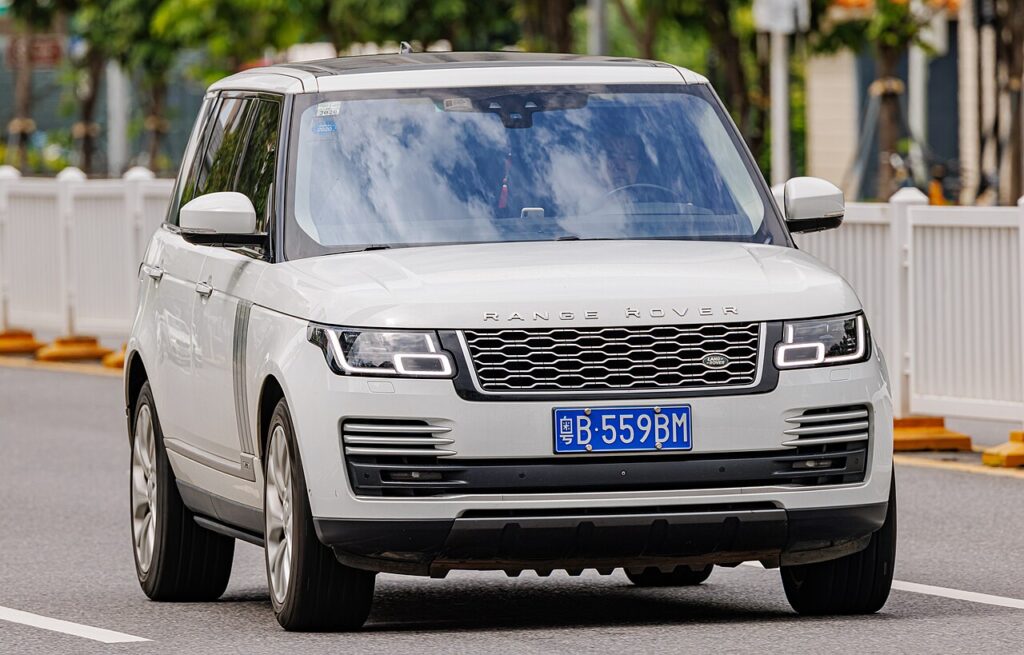
Auto stop-start is a normal, factory-fitted feature on the L405 Range Rover — not a fault and not something that has gone wrong. It exists to save fuel and cut emissions during the seconds you spend halted at lights or in queues. Many owners are happy to leave it on; others find the restart intrusive when crawling in traffic, towing, or working the car off-road, which is why there is a one-press override on the console.
How the System Works on the Range Rover
When you brake to a full stop, the engine control unit shuts the engine down if a long list of conditions is met, then spins the reinforced starter the moment you lift off the brake. To do that safely it keeps watch on the 12 V battery state of charge, engine and coolant temperature, cabin climate demand, and whether the car is genuinely stationary. If any one of those isn’t satisfied the engine simply keeps idling — the system is being cautious, not failing.
Getting Ready
- You only need the engine running — nothing to plug in and no deep menu to work through.
- The control is a physical button on the centre console; find it before you drive so you are not hunting for it in traffic.
- Expect to repeat this every drive — the choice does not carry over between journeys.
- If you tow or go off-road regularly, make pressing it part of your start-up routine.
Turning the System Off
- With the engine running, press the stop/start (ECO) button on the centre console (an “A” inside a circular arrow).
- An indicator confirms the system is off; the engine now stays running at a standstill.
The system defaults back to on each time you start the car, so disabling it is a per-drive choice — press the button again to re-enable it.
When the Car Disables Stop/Start Itself
Even with the system on, the Range Rover won’t stop the engine when it isn’t appropriate, so continued idling isn’t necessarily a fault. It keeps the engine running when the cabin is still reaching temperature, the engine is cold, the car is on a gradient or off-road, or the 12 V battery charge is low. It will also hold the engine on when demist or strong heating/cooling is running, when the steering is on lock during a manoeuvre, or on very short stops where a restart would follow almost immediately.
If Stop/Start Won’t Cut Out
- Check the 12 V battery. The system needs a healthy battery and a settled charge; a weak or ageing battery is the most common reason the Range Rover stops cutting out.
- Recent battery disconnection? The battery-monitoring sensor relearns the state of charge over several drives, and stop-start can stay dormant until that is complete.
- Warm the car up. A cold engine, or a cabin still climbing to its set temperature, will keep the engine idling until things are up to temperature.
- Close everything. An open bonnet, an unbuckled driver’s belt, or a driver’s door ajar will inhibit the stop.
- Brake firmly to a full stop — a light or rolling halt may not trigger the cut-out.
- Heavy climate load. On a very hot or cold day the climate system can legitimately keep the engine running to hold cabin temperature.
- Fault light? A charging or sensor issue stores a code — decode it on autodtcs.com.
What Happens Next
Once you press the button, the on-screen indicator confirms the system is off and the engine will idle normally at every stop for the rest of that journey. Switching it off does not store a fault or bring up a warning light — it is purely a driver preference. When you next start the Range Rover it defaults back to on, ready to be switched off again if you want it.
Frequently Asked Questions
How do I turn off stop/start on a Range Rover?
With the engine running, press the ECO button on the centre console — the one marked with an “A” inside a circular arrow. An on-screen indicator confirms the system is off, and the engine will then keep running whenever you stop for the rest of that drive.
Does the setting stay off permanently?
No. The Range Rover resets stop-start to on every time you start the engine, so it cannot be disabled once and forgotten. If you prefer the engine to keep idling at stops, press the ECO button again at the start of each journey. Once you know where the button is it takes only a moment.
Why has my Range Rover stopped switching the engine off?
Most often it is the 12 V battery: if it is ageing, weak, or recently disconnected, the system waits until the charge is healthy and relearned. A cold engine, a cabin still reaching temperature, heavy climate demand, or an open door, bonnet or unbuckled belt will also keep the engine running.
Is it harmful to leave stop-start switched on?
No. The engine, reinforced starter and battery on the L405 are all designed for frequent stop-start cycling, and the system will not cut out if doing so could harm the car. Leaving it on is completely safe; switching it off is only a comfort choice for traffic, towing or off-road driving.
Will disabling stop-start use more fuel?
A little, in stop-go traffic, because the engine idles instead of shutting off at halts. On an open run at speed the difference is negligible since the system rarely activates there anyway. If economy is your priority, leave it on; if you want smoother behaviour in queues, switch it off for that drive.
Could a warning light mean the system has failed?
Not usually. Stop-start declining to operate is normally down to conditions such as battery charge or temperature rather than a fault. If a dedicated warning message or light appears and stays on, the car may have logged a charging or sensor code worth reading. You can look up any code on autodtcs.com.
If a warning light appeared with the change, decode it on autodtcs.com.
Independent guide — not affiliated with Land Rover. Always follow your official service manual and safety precautions. Read our full disclaimer.