These instructions apply to the Land Rover Range Rover Evoque Mk2 (L551) 2019-Present.
For other models, please choose your vehicle here.
If the tyre-pressure warning has come on in your Range Rover Evoque (2019–present) after you’ve adjusted the pressures or changed a wheel, the system is largely self-managing — set the pressures correctly and the warning clears on its own. The light isn’t flagging a broken part; it means the pressures have drifted from where they should be. Here’s how it works and what to check if it doesn’t clear straight away.
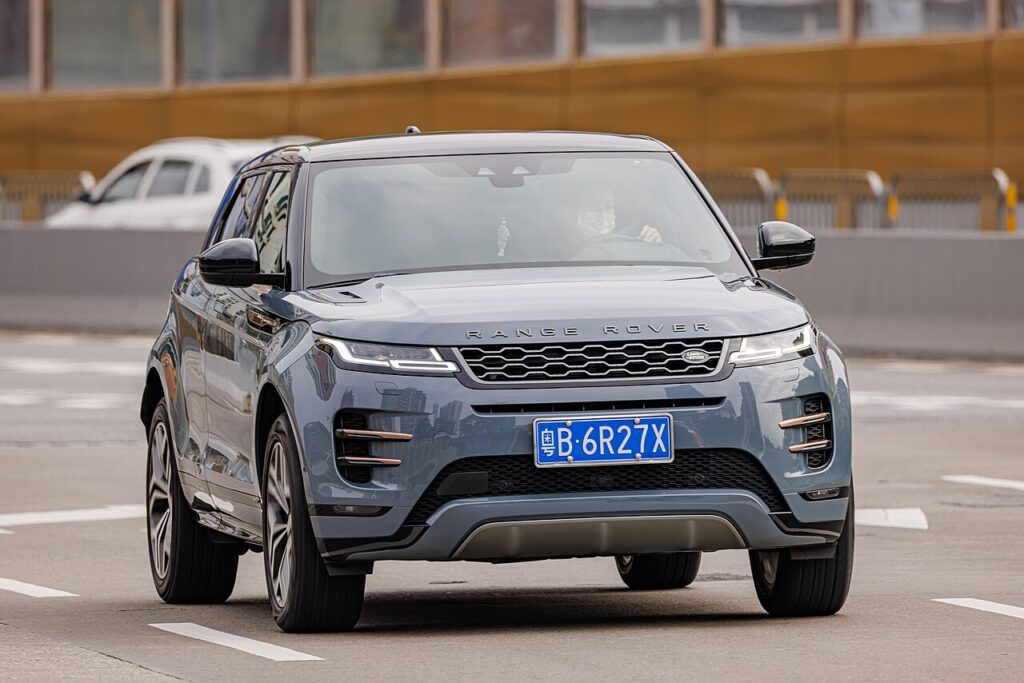
How the System Works
The Evoque uses direct sensors in each wheel that report actual pressures. There’s no reset button — once the pressures are correct, the system recognises them and the warning light goes out (it may take a short drive to confirm).
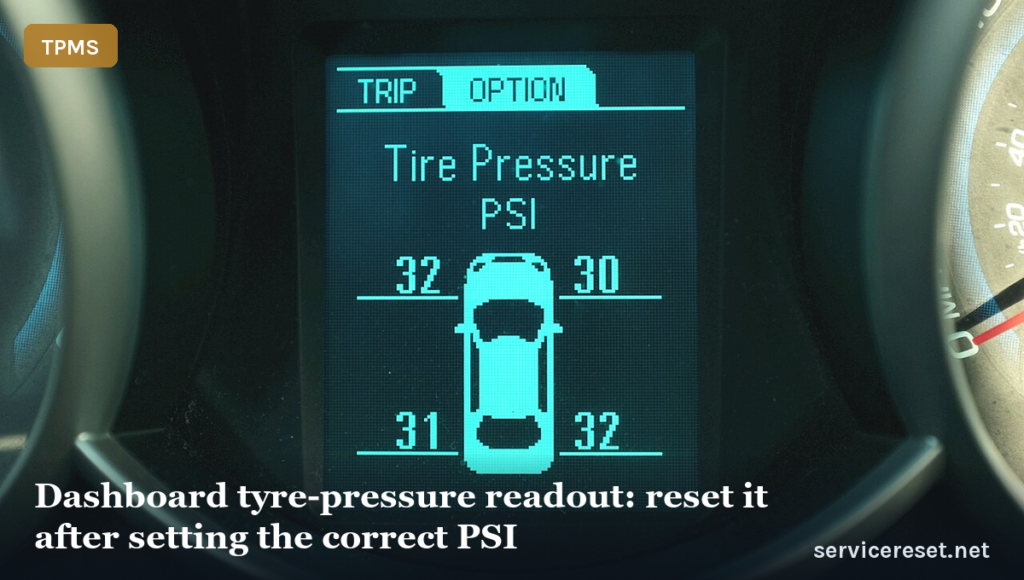
Because the sensors read the real pressure in each wheel rather than inferring it from wheel-speed, the Evoque can also display per-tyre values in the driver information screen. That lets you pinpoint the low corner instead of guessing, which is handy before assuming a sensor has failed.
Getting Ready
- Check the tyres cold — before driving or after the car has stood a few hours, so heat from the road doesn’t inflate the reading.
- Use the door-shut placard figures and match the column for your load: normal, fully laden, or high speed.
- Use an accurate gauge rather than relying on a forecourt airline.
- Include a full-size spare if fitted, as it will carry its own sensor.
Clearing the Warning
- Check the tyres cold where possible.
- Set all four tyres to the correct pressures (placard in the driver’s door shut or handbook) — note the higher pressures listed for full load or high speed.
- Switch the ignition on; with the pressures correct, the warning light should go out.
- If it doesn’t clear immediately, drive for a few minutes so the sensors report.
If the Warning Stays On
- Recheck every tyre — one below spec keeps the warning on, and a corner that’s only slightly down is easy to miss.
- Use the right load setting from the placard; the lighter figure when you’re fully loaded reads as under-inflated to the system.
- Drive a short distance. The sensors send fresh values once the wheels are turning, so a stationary check may not clear the light.
- Space-saver or spare fitted? A temporary wheel runs a different pressure and the warning can stay on until the proper wheel is refitted.
- Slow puncture. If one tyre keeps needing air, there’s a leak — a nail, corroded rim or perished valve — to find and fix.
- Cold weather. A sharp overnight temperature drop lowers pressure and can re-trigger the warning; top up while cold.
- Sensor fault. The battery-powered in-wheel sensors last several years; a flat or failed one can’t report and needs replacing.
What Happens Next
With every tyre at the correct pressure the light goes out — sometimes at ignition-on, sometimes after a few minutes of driving once the sensors have transmitted. It then stays off unless a tyre drops meaningfully again. If the warning keeps coming back, treat it as a prompt to physically check the pressures; it often catches a slow leak early, before it turns into a flat.
Frequently Asked Questions
How do I reset the tyre pressure warning on a 2019-on Evoque?
Set all four tyres to the correct cold pressures from the door placard — the system recognises them and the light goes out, possibly after a short drive so the sensors can report. There’s no reset button to press; getting the pressures right is the whole procedure.
Why is there no reset button?
The Evoque uses direct sensors that read the actual pressure in each wheel, so it doesn’t need a stored reference to relearn. Once every tyre is at or above the correct figure, the system recognises that all is well and turns the warning off by itself.
Why won’t the light go out?
Usually one tyre is still below spec, the wrong load column was used, or the car hasn’t been driven far enough for the sensors to send fresh readings. Recheck every corner cold with a good gauge, take a short drive, and if it’s still lit with genuinely correct pressures, suspect a sensor with a failing battery.
Can I see each tyre’s pressure?
Yes — because the Evoque has direct sensors, the driver information screen can show the live pressure for each wheel. Scroll to the vehicle-status or tyre-pressure page in the instrument cluster menu. It’s the fastest way to see exactly which tyre is holding the warning on rather than checking all four blind.
Do I need a tool?
Not for a normal reset after adjusting pressures — that clears itself. A tool is only needed when a sensor has failed and a replacement must be fitted and matched to the car, which is a workshop job rather than a roadside fix.
Does cold weather turn the warning back on?
It can. Pressure falls by roughly 1 to 2 psi for every 10°C drop, so a cold morning may push a borderline tyre below the threshold even with no leak. Top the pressures back to the placard figure while the tyres are cold; if the light doesn’t clear on its own, a short drive lets the sensors update.
If the warning came on alongside other dashboard lights, that suggests a stored fault rather than a simple low tyre — decode the code on autodtcs.com.
Independent guide — not affiliated with Land Rover. Always follow your official service manual and safety precautions. Read our full disclaimer.