These instructions apply to the Mercedes GLC Mk1 (X253) 2015-2022.
For other models, please choose your vehicle here.
The Mercedes GLC (X253, 2015–2022) uses a pushbutton electric parking brake (EPB), with the clamp motor built into each rear caliper. That motor drives the rear piston, so the rear pads cannot be changed until the EPB has been retracted electronically into its service position. There is no foot pedal and no hand lever on the X253 — the rear piston is not something you wind back by hand.
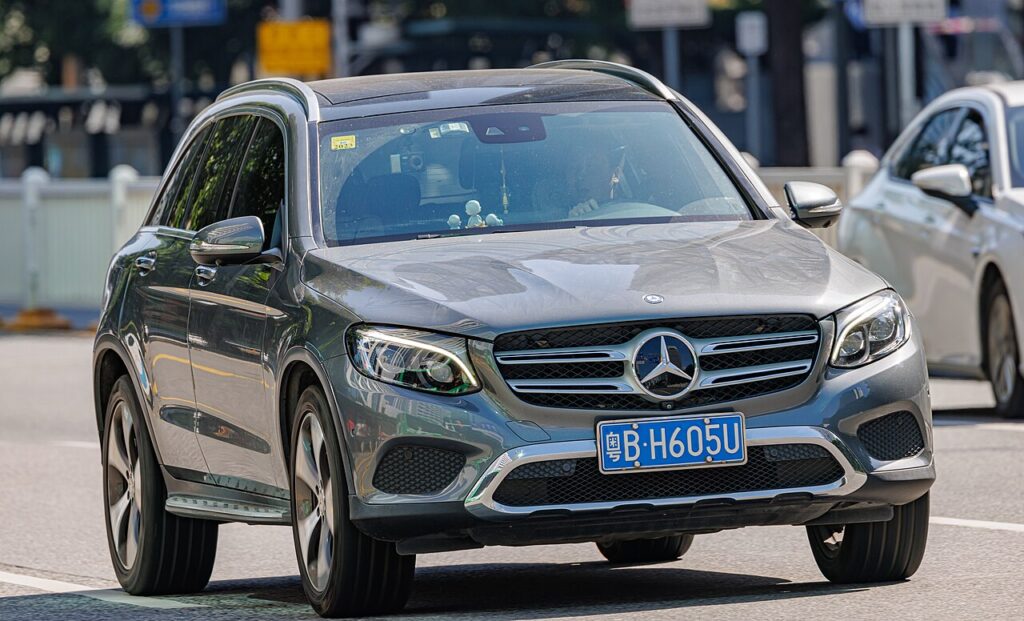
This guide explains how to put the X253 rear EPB into the brake-pad fitting position, retract the caliper safely, and exit and bed in.
Which parking brake does the X253 have?
The first-generation GLC (X253), launched in 2015 to replace the GLK, came with the electric parking brake across the range, from the GLC220d and GLC300 to the AMG GLC43 and GLC63. The switch sits on the dash near the steering column; there is no cable, pedal or ratchet lever. The parking-brake clamp is integrated into the rear calipers, so the rear piston is motor-driven and must be commanded into the open/service position before the pads are removed.
Put the rear EPB into the service position
The X253 supports the on-board cluster workshop routine and a generic OBD EPB tool. Cluster method:
- Switch the ignition to position 1 (on, engine off). Do not press the brake or start the engine.
- Close all doors, the bonnet and the glovebox so nothing reads as open.
- Set the instrument display to show the total odometer.
- Press and hold the telephone/hang-up button and the OK button on the steering wheel together for about five seconds to open the workshop menu.
- Select Brake Pad Replacement, press OK, then OK again to reach Fitting Position; the rear EPB motors run as the spindles retract.
With a tool, plug into the OBD port, choose the rear-brake/EPB function and run “service mode / open caliper.” Mercedes XENTRY does the same and lets you re-adapt the parking brake afterwards. Once the EPB is retracted, wind the hydraulic piston back with a piston tool to make room for the new pads.
Critical warning
Never force a true EPB piston back by hand or with a clamp. The X253 rear piston runs on a motor-driven threaded spindle; pushing it in while the brake is applied shears the gears and ruins the caliper. Always retract it electronically through the cluster menu or a tool first. (A foot-brake or cable caliper genuinely does wind back by hand — the GLC has neither, so never use that method here.)
Exit service mode and bed in
With the new pads fitted and the hydraulic piston wound home, reassemble and take the EPB out of fitting position — press OK in the menu to exit, or run the tool’s close/calibrate step so it clamps to normal travel. Park the GLC, pump the brake pedal until firm so the pistons seat, cycle the EPB switch a couple of times and confirm the warning clears. Bed the pads in: six to eight moderate stops from a safe speed, then a few firmer ones, avoiding a single hard high-speed stop on cold pads.
Frequently Asked Questions
Can I do the GLC rear pads without a scan tool? Yes — the phone + OK cluster menu gives the Fitting Position with no tool. A generic OBD EPB tool is a reliable alternative.
Why won’t the workshop menu open on my GLC? Usually an open door, bonnet or glovebox, or the display not on the odometer. Ignition must be on with the engine off.
Do the front pads need the EPB step? No. The EPB only clamps the rear axle, so the fronts are a standard hydraulic wind-back.
Got “Parking brake inoperative” after the job? Exit service mode, pump the pedal firm and cycle the EPB switch; an EPB adaptation in XENTRY clears a stubborn warning.
Is the AMG GLC43/63 different? Larger calipers and discs, but the same motor-on-caliper EPB and the same fitting-position routine.
If your GLC logs a brake or EPB fault code during the work, you can decode it on autodtcs.com before going further.
Independent guide — not affiliated with Mercedes. Always follow your official service manual and safety precautions. Read our full disclaimer.