These instructions apply to the Volvo S60 Mk3 (225) 2018-present.
For other models, please choose your vehicle here.
After adjusting pressures or changing a wheel on your Volvo S60 (225, 2018–present), you store the new values as the system’s reference from the centre touchscreen. No tool needed. The tyre-pressure warning is not, by itself, a sign that anything has broken — it simply means the car is now seeing pressures that differ from the last set it stored as ‘correct’. That usually comes down to a genuinely soft tyre, a cold spell, or a wheel that has been changed. Once you have set the pressures properly and stored a fresh reference, the warning clears.

How the System Works on This Model
The S60 detects a soft tyre by comparing how quickly each wheel rotates, using the ABS wheel-speed sensors rather than a transmitter inside each wheel. A tyre losing air has a slightly smaller rolling radius, so it turns marginally faster than the rest, and the car spots the difference. Because the monitor works by comparison, it needs a stored reference of what ‘correct’ looks like — and that is precisely what the ‘Store tyre pressures’ function saves. It is why the routine ends with a short drive: the system needs a few minutes of rolling data to lock in the new baseline.
Getting Ready
- Check pressures cold — first thing, or after the car has stood a few hours. Warm tyres read high and store a misleading reference.
- Set all four to the figures on the driver’s door-pillar label, choosing the laden figure if you are carrying a full load.
- Use your own gauge to confirm any tyre a garage has inflated.
- If a space-saver or a different wheel is fitted, set it to its own correct pressure first.
- Plan to start the engine and have a safe stretch of road to complete the drive cycle.
Storing the Pressures
- With the engine off, adjust the tyre pressures to the label values.
- Start the engine.
- On the centre touchscreen, select ‘Car status’ → ‘Tyre pressure’ → ‘Store tyre pressures’ and press OK.
- Drive for about 10 minutes, exceeding 35 km/h (22 mph) where safe — the system is then reset.
If the Light Stays On
- Recheck every tyre with a gauge — one low corner is enough to trigger it, and a 4–5 PSI drop is hard to see by eye.
- Complete the drive cycle. The reset needs the short run above 35 km/h; the warning may not clear until the system has gathered enough rolling data.
- Store again after inflating or a wheel swap so the reference matches what is actually in the tyres.
- Cold morning? A sharp temperature drop can shed a couple of PSI — top up to the label figure and re-store.
- Space-saver fitted? A narrow spare rolls at a different rate and can keep the warning lit until the full-size wheel is back on.
- Same corner falling repeatedly? Treat it as a possible slow puncture and inspect the tyre and valve before storing over the top of it.
- If pressures are correct and it still won’t clear, a wheel-speed/ABS sensor fault can upset the monitor and is worth scanning for.
What Happens Next
Once you have stored the pressures and completed the short drive, the warning should go out and stay out for the journey. The car now watches against the fresh reference, so it will only warn again if a tyre genuinely drifts. If the light comes back within a day or two on the same wheel, assume a real leak rather than a system quirk and have the tyre checked.
Frequently Asked Questions
How do I reset the tyre pressure light on a Volvo S60?
Set all four tyres cold to the door-pillar figures, start the engine, then on the touchscreen go to Car status → Tyre pressure → Store tyre pressures and press OK. Finish by driving for about ten minutes above 35 km/h where it is safe, which lets the system lock in the new baseline and clear the light.
Is a tool needed?
No — the S60 stores the reference itself through the touchscreen and a short drive. There is nothing to plug in. The only equipment worth having is an accurate gauge and a source of air, so the pressures you store as ‘correct’ are genuinely at the label figure before you save them.
Why did it light up in cold weather?
Air contracts as it cools, so pressures fall by roughly 1–2 PSI for every 5 °C drop. A cold night can push a borderline tyre below the threshold. Top every tyre back to the label figure while they are cold, re-store, and the warning should stay off unless a tyre is actually leaking.
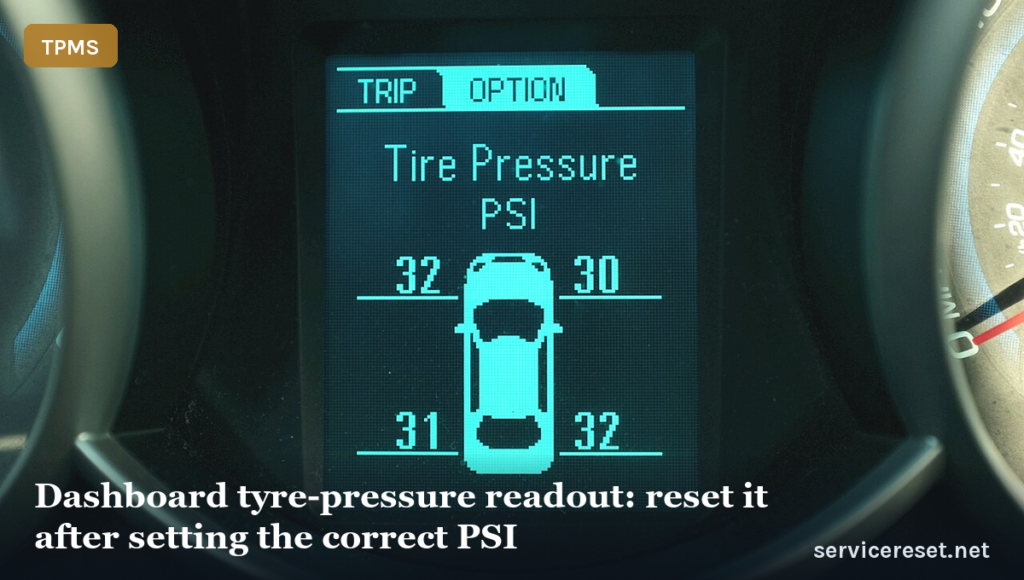
It lit after a wheel change — normal?
Yes. Changing, rotating or replacing a wheel alters what the system sees, so it flags the difference. Set the pressures on the wheels now fitted and run the store so the new arrangement becomes the reference. The same applies after a puncture repair or switching between summer and winter sets.
Do I have to store again after rotating the tyres?
It is sensible to. Even at identical pressures, moving wheels between axles changes the rolling pattern the system has learned, so storing a fresh reference afterwards keeps it accurate and avoids a nuisance warning a few miles down the road. It takes only a moment through the same Car status menu.
Can I still drive with the warning showing?
You can drive, but check the pressures at the first safe opportunity. The light means at least one tyre may be low, and running underinflated affects handling, braking and tyre wear. If a tyre is clearly deflating or the car pulls or feels unstable, stop and inspect it rather than pressing on.
Got a TPMS fault code rather than a low-pressure warning? Look it up on autodtcs.com. To clear a service reminder, see our S60 service reset.
Independent guide — not affiliated with Volvo. Always follow your official service manual and safety precautions. Read our full disclaimer.