These instructions apply to the Suzuki Swift Mk3 (AZG/AZH) 2010-2017.
For other models, please choose your vehicle here.
The Suzuki Swift AZG/AZH (2010–2017) uses an indirect TPMS: it calculates tyre pressure from each wheel’s rotational speed via the ABS sensors, not from wheel-mounted transmitters. With no per-wheel sensors to learn, the “reset” is really a calibration drive — you tell the system the pressures are now correct by driving a few minutes at normal speed.
When a TPMS Reset Is Required
- After adjusting pressures, replacing or rotating tyres/wheels, or a seasonal summer/winter wheel swap.
- After a battery disconnect if the TPMS warning has come on without an obvious cause.
Before You Start
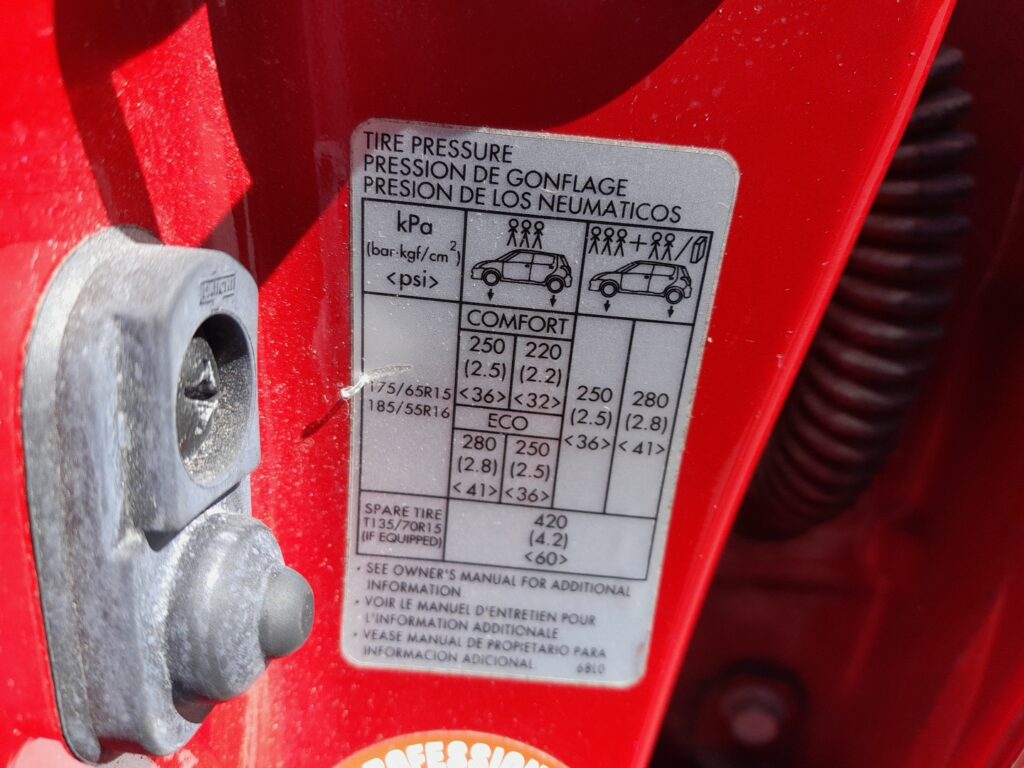
- Inflate all four tyres to the cold placard pressure on the driver’s door jamb — cold means before driving, or after the car has sat at least three hours.
- Make sure all four tyres are the same brand / model / size — mismatched tyres confuse the indirect system.
- Use an accurate gauge (petrol-station gauges are often ±3 psi out) and park on a level surface with the engine off.
TPMS Reset — Step-by-Step
- Confirm all four tyre pressures match the door-jamb placard (cold).
- Start the engine and pull away normally.
- Drive the vehicle continuously for about 10 minutes.
- Keep the speed above 25 km/h (15 mph) for at least the first few minutes. Stop-start city driving for the full 10 minutes will work, but a stretch of A-road or motorway lets the system finish quicker.
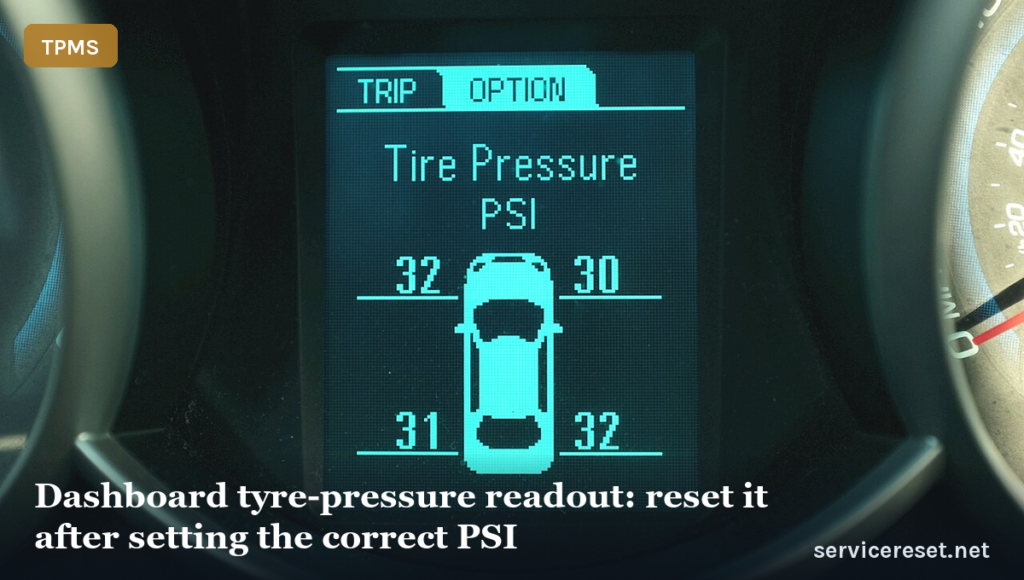
- Check that the TPMS warning light on the dashboard switches off during the drive — usually within the first 5 minutes.
There’s no button to press, no menu to navigate. The Swift’s indirect TPMS auto-calibrates against the new pressures once it sees consistent wheel-speed data at driving speed. After the drive, check the warning is off; over the next few days a genuine leak would bring it back.
When It Won’t Cooperate
- Warning light stays on after the 10-minute drive. Re-check all four tyre pressures cold. Even one tyre 5 psi below the placard will keep the system flagged. Top up to placard, then redo the drive.
- Warning light comes back after a few miles. One or more tyres has a genuine slow leak. Use a soapy-water spray on each tyre to find the leak; common culprits are a punctured tread (visible nail or screw), a leaking valve stem, or a corroded bead seal on an alloy wheel.
- Warning light came on in cold weather despite no leak. Tyre pressure drops about 1 psi per 5 °C drop in temperature. If pressures were last set on a warm day and the weather has turned, all four tyres can genuinely be below the threshold. Top up to placard at the new ambient temperature and recalibrate.
- Light never goes out, even during the drive. The ABS module may have a fault, or one of the ABS wheel-speed sensors is failed. Indirect TPMS depends entirely on those sensors; a faulty sensor means the system can’t function. Have ABS codes read with a scan tool.
- Two different tyre brands fitted (e.g. winter tyres on one axle, summer on the other). Indirect TPMS will misread because the rolling radii differ. Either match brands or live with the warning until you can match them up.
Frequently Asked Questions
Does the Swift have a TPMS button?
No — the AZG/AZH (2010–2017) Swift uses indirect TPMS without a dedicated reset button. Some later Swift trims and other Suzuki models have a button for direct-sensor systems, but on this generation it’s drive-to-calibrate only.
How long does the calibration take in practice?
10 minutes of mixed driving is the manufacturer figure. In practice, motorway driving wraps it up in 5 minutes; pure city driving with lots of stops can take 15–20. Once the warning light goes off you’re done; further driving doesn’t make it “more reset.”
Will indirect TPMS detect a slow leak as quickly as direct TPMS?
Not always. Indirect systems compare each wheel’s speed to the others — if all four tyres are losing pressure equally (a slow leak in cold storage, for example), the system can miss it because the relative rolling radii stay the same. For peace of mind, check pressures with a gauge once a month regardless of what the dashboard says.
I had new tyres fitted but the warning came on immediately. What’s wrong?
The new tyres are at the correct pressure but the system hasn’t learned them yet. Drive for 10 minutes per the procedure above and the warning will clear. If it stays on, the new tyres may be a slightly different rolling radius than spec — confirm size matches the door jamb placard exactly.
Does the spare wheel affect TPMS?
The Swift’s space-saver spare is typically a smaller diameter than the road tyres. Running on the spare will trigger the TPMS warning because the rolling radius differs from the other three wheels. This is normal behaviour while you’re on the spare; the warning will clear when you replace the road tyre and recalibrate.
Independent guide — not affiliated with Suzuki. Always follow your official service manual and safety precautions. Read our full disclaimer.