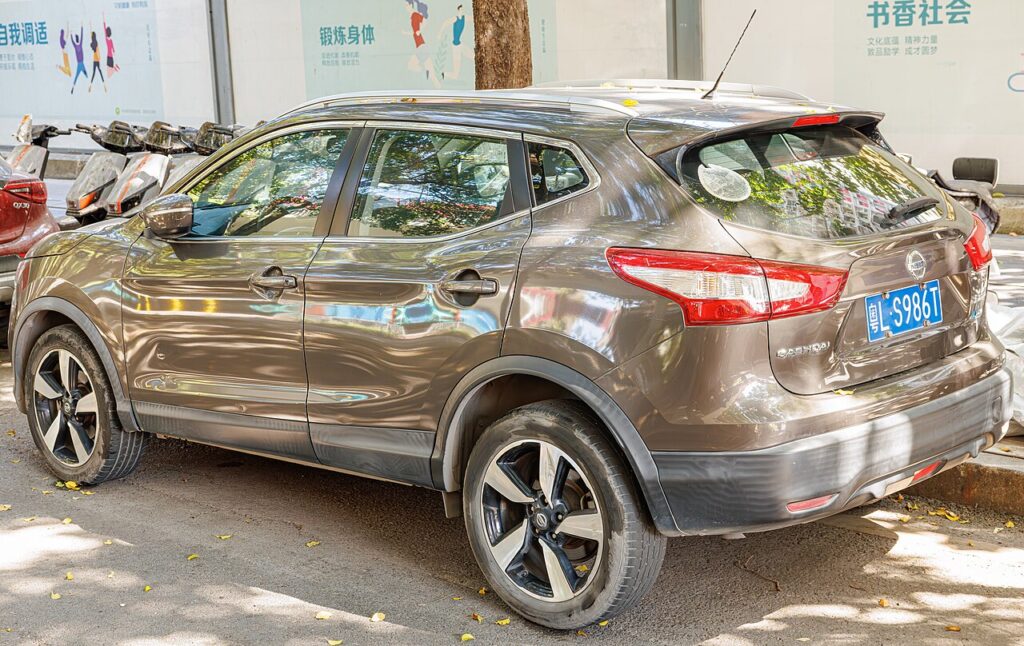
These instructions apply to the Nissan Qashqai Mk2 (J11) 2014-2021.
For other models, please choose your vehicle here.
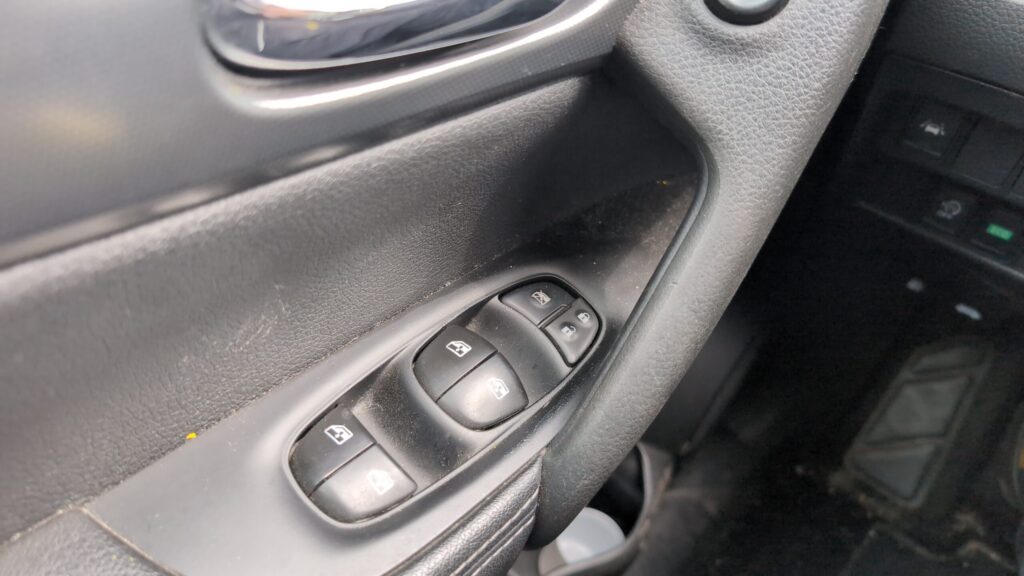
The second-generation Nissan Qashqai (J11 chassis, 2014–2021 — also Rogue Sport in the US) has one-touch up and down on the driver’s window on every trim, and on all four windows from Acenta+ upwards. After a 12-volt battery disconnect, a window-related fuse change, or any door-module work that cuts power to the switch pack, the one-touch feature stops working — the windows still operate while you hold the switch but auto-up and auto-down disengage and the anti-pinch protection reverts to safety-default mode. The fix is an owner-method 30-second procedure per window.
Before you start
The Qashqai J11 shares its window architecture with the Pulsar C13 and Note E12 — the procedure is structurally identical across the platform family. Each door’s switch pack holds its own calibration in non-volatile memory; the body control module routes signals but does not own the position data.
- Battery state of charge must be healthy. A drop below 11.5 V during motor inrush is enough to confuse the position encoder. If the car has been sitting more than a week, run the engine for 5 minutes before starting the procedure.
- All doors closed. Door-ajar inputs reset the BCM’s command timer mid-procedure.
- Intelligent key in the cabin. Without the key, push-button ignition won’t enter ACC/ON state and the windows won’t power up.
- Sit inside the car with the relevant door closed. Door tilt position affects regulator load just enough to confuse the calibration on the J11 — running the procedure with the door open gives inconsistent results.
- Don’t run with the engine cranking or running. Ignition ON without engine is the cleanest condition.
Tools required
None.
Initialization procedure — driver’s side
- Switch ignition to ON (press START twice without the brake pedal pressed; the dashboard illuminates but the engine doesn’t crank).
- Verify all four doors are closed and the central locking is unlocked.
- Press the driver’s window switch fully down (second detent) to drive the window to fully open. If auto-down doesn’t engage yet, hold the switch in the first detent until the window is fully open.
- Pull the driver’s window switch fully up (second detent) to drive the window to fully closed.
- Once the window reaches the top, continue holding the switch up for 2 additional seconds. This is the calibration trigger — the switch pack’s microcontroller records the position as the upper end-stop.
- Release the switch.
- Test one-touch in both directions with brief presses. Both auto-up and auto-down should now work from a single switch tap.
Initialization procedure — passenger and rear windows
On Acenta+ trims (one-touch on all four windows), repeat the procedure from each door’s own switch panel. The driver’s master panel can move the other windows but cannot calibrate them — this is a frequent source of confusion. Each rear-door switch is on the door card itself, near the armrest.
- From inside the relevant door (with door closed), press down fully to open the window completely.
- Pull up fully to close, hold for 2 seconds at the top.
- Release. Test one-touch.
- Repeat for each remaining window.
How to verify it has worked
- A brief switch press sends the window all the way to its end-stop without you holding it.
- Anti-pinch test: place a soft cloth on the top edge of the glass during a close — the window should reverse by 5–10 cm on contact.
- Global close via the remote key (Tekna trim and higher with this feature) closes all four windows when you hold the lock button for 3 seconds.
If Something Goes Wrong
The window opens but won’t close in auto mode. The lower end-stop registered but the upper one didn’t. Re-run the procedure but extend step 5 to 5 seconds of held-up at the top. If that still doesn’t take, the motor is drawing too much current at the seal (worn felt, dirty channel) and the controller is suppressing the calibration to protect itself. Silicone-spray the felt channels and retry.
The procedure works on the driver’s window but not on the passenger or rear windows. Each door has its own switch pack on the Qashqai J11. Run the procedure from each door’s own switch with the door closed — not from the driver’s master panel.
The window closes one click at a time after the procedure (no smooth auto-up). The microcontroller is in “learning” mode and hasn’t accepted the calibration. Cycle the window fully open and fully closed three more times, holding the switch up for 5 seconds at the top of each cycle. Usually accepts on the third attempt.
Initialization succeeds but is lost again the next morning. The switch pack is losing power between key cycles. The most common cause on the J11 is a damaged wire in the driver-side door-to-body rubber boot — the harness flexes through that boot every time the door opens and a known fatigue point develops at the bottom flex. A Nissan-aware scan tool will log “intermittent power” body codes; the fix is to re-pin the affected wires at the boot exit.
One-touch worked yesterday but doesn’t today. Temperature effect: cold weather (below about 3 °C) stiffens the window seals and raises motor current near the top of travel. The controller interprets this as an obstruction and disables one-touch for that key cycle to protect the motor. Cycling each window manually a couple of times warms the seals and one-touch usually returns.
Frequently asked questions
Does the procedure work the same on the diesel and petrol Qashqai?
Yes — engine variant has no bearing on the window hardware. The 1.2 DIG-T, 1.6 DIG-T, 1.5 dCi, 1.6 dCi, and 2.0 NA variants all share identical body electronics.
Will the Rogue Sport (US-market J11) work the same way?
Yes — Qashqai J11 and Rogue Sport are the same car. Procedure is identical.
What about the J11 facelift (2017+)?
Same procedure. The facelift updated styling and added more standard equipment but didn’t change the window control architecture. 2014–2021 cars all behave identically for this procedure.
Why does the Qashqai need a manual procedure when newer Nissans don’t?
Most Nissan models from 2022 onwards self-calibrate on the first key cycle after a power interruption. The J11 generation pre-dates this auto-calibration logic, which is why the manual procedure is needed.
Can I skip this and just live with hold-to-move?
Yes — the windows still operate while you hold the switch, and the car is safe to drive indefinitely without the calibration. You lose: one-touch up/down, anti-pinch reverse-by-10cm, and remote-key global close. Those are convenience and safety-redundancy features, not mechanical-protection features.
Related: Qashqai J11 battery disconnect and reconnect. For window-related B-prefix codes that won’t clear, see autodtcs.com.
Independent guide — not affiliated with Nissan. Always follow your official service manual and safety precautions. Read our full disclaimer.