These instructions apply to the Lexus NX Mk1 (Z1) 2014-2021.
For other models, please choose your vehicle here.
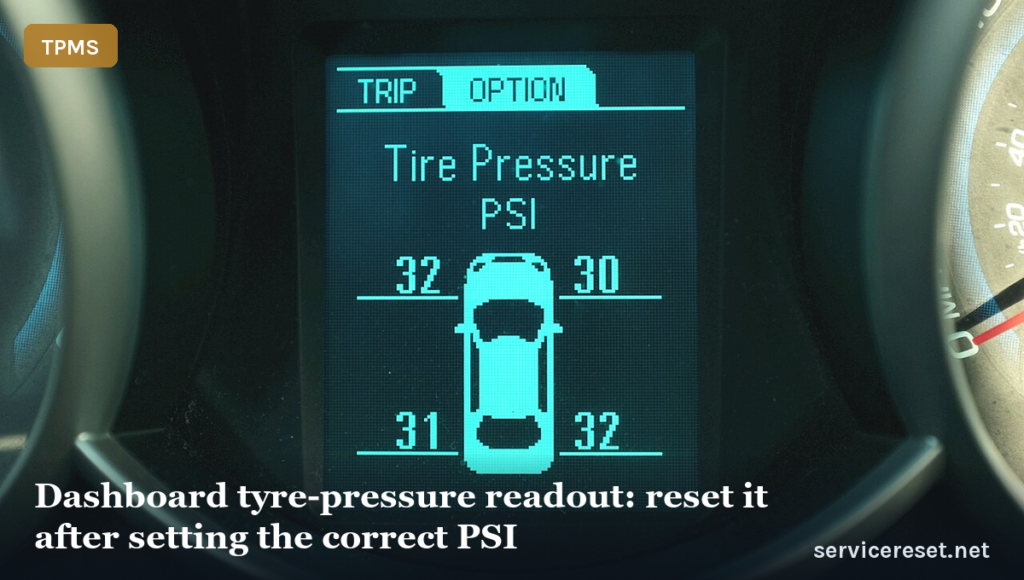
If the tyre-pressure warning has come on in your Lexus NX (2014–2021) after you’ve adjusted the pressures or changed a wheel, you need to reset the monitor so it learns the new pressures as correct. That little horseshoe-shaped light with the exclamation mark isn’t telling you something is broken — it simply means the current pressures no longer match the reference values the system last stored. On the NX that’s cleared with the dashboard menu and a reset button, and it only takes a minute once the tyres are set correctly. Here’s how.

How the System Works on the NX
The NX uses a direct system — a battery-powered sensor sits inside each wheel and transmits the actual pressure. Unlike an indirect system that only compares wheel-speeds, this one knows the real figure in each tyre, which is why it needs a stored reference to compare against. When you reset, you’re telling it “these current pressures are correct”, so it takes a fresh baseline. That’s also why a reset must be redone after you deliberately change the pressures or swap to a different set of wheels — the old baseline no longer applies.
When to Reset
- After checking or adjusting the tyre pressures.
- After changing one or more wheels or tyres, or fitting winter wheels.
- After the pressures dropped in cold weather and you’ve topped them back up.
Getting Ready
- Set the tyres cold — ideally before driving, or after the car has stood for a few hours. Warm tyres read a few psi high and will throw the reference off.
- Use the door-pillar placard figure in the driver’s door shut, and match the load column (normal versus fully laden) you’re actually running.
- Do all four corners, and don’t forget any full-size spare that carries its own sensor.
- Park on level ground with the handbrake on.
Resetting the System
- Park on a level surface and set all four tyres to the correct cold pressures (placard in the driver’s door shut).
- Switch the ignition on.
- Scroll the multi-information display menu and select ‘Tyre pressure monitoring’.
- Press and hold the TPMS reset button until the TPMS warning light flashes, then release.
- Switch the ignition off, then on. The system stores the current pressures as the new reference.
If It Won’t Clear or Won’t Stay Set
- Recheck every tyre — a single corner a few psi low will keep the warning on and block the reset from taking.
- Hold the reset button until the light actually flashes — releasing too early cancels the initialisation and nothing is stored.
- You reset warm. If you set and stored the pressures with hot tyres, they’ll read low once cold and the light returns — redo it cold.
- A space-saver or spare fitted after a puncture runs a different pressure; the light may stay on until the proper wheel is back.
- Slow puncture. If one tyre keeps needing air, you have a leak — find and fix it before expecting the light to stay off.
- Cold snap overnight. A sharp temperature drop can shed a couple of psi and re-trigger the warning; top up and reset.
- Sensor at end of life. The in-wheel sensor batteries last several years; a dead or faulty one can’t report and needs replacing and registering.
What Happens Next
Once the pressures are right and the reset has taken, the warning light goes out and stays off for normal driving. The system now treats the stored pressures as its baseline and only warns again if a tyre drops meaningfully below it. It’s good practice to re-check the pressures cold every couple of weeks and before long trips — the monitor is a safety backstop, not a substitute for a gauge.
Frequently Asked Questions
How do I reset the tyre pressure light on a Lexus NX?
Set all four tyres to the correct cold pressures from the driver’s door placard, switch the ignition on, then scroll the multi-information display and select Tyre pressure monitoring. Press and hold the TPMS reset button until the warning light flashes, then release. Switch off and on again and the current pressures are stored as the new reference.
Where is the TPMS reset button?
It’s a small dedicated button, typically low on the dash or below the steering wheel area, marked with the TPMS symbol. The exact position varies slightly by model year and trim, so if you can’t spot it, check the tyre-pressure section of your handbook — it will point to the precise location for your car.
Why won’t the warning clear?
Almost always it’s one tyre still below the placard figure, or the reset button wasn’t held long enough for the light to flash. Recheck every corner cold, including the spare if it carries a sensor, then repeat the reset. If the pressures are genuinely correct and it still won’t clear, suspect a sensor with a flat internal battery.
Do I need a diagnostic tool?
No, not for a normal reset after adjusting pressures or a routine wheel swap — that’s done entirely from the dash. A tool is only needed when a sensor is replaced and its ID must be registered to the car, or when fitting a completely new set of sensors.
Does it need to be reset after rotating the tyres?
If the pressures are the same front and rear you generally just re-store the current values so the system has a clean baseline. Where the placard specifies different front and rear pressures, set each axle correctly first, then run the reset so the stored reference matches the tyres in their new positions.
Can cold weather turn the light back on?
Yes. Tyre pressure falls by roughly 1 to 2 psi for every 10°C drop, so a cold morning can push a borderline tyre below the warning threshold even though nothing is leaking. Top the pressures back up to the placard figure when the tyres are cold and reset if the light doesn’t clear on its own.
If the warning came on alongside other dashboard lights, that points to a stored fault rather than a simple low tyre — decode the code on autodtcs.com.
Independent guide — not affiliated with Lexus. Always follow your official service manual and safety precautions. Read our full disclaimer.