These instructions apply to the Hyundai Bayon Mk1 (BC3) 2021-Present.
For other models, please choose your vehicle here.
When the tyre-pressure warning lights up on your Hyundai Bayon (2021–present), it means one or more tyres has dropped below the level the car expects to see. On this model it is usually nothing dramatic — a cold overnight temperature drop, a slow leak from a nail, or a tyre that simply hasn’t been topped up in a while will all trigger it. The Bayon uses a direct TPMS (a sensor inside each wheel) that relearns automatically as you drive once the pressures are correct. There’s no reset button and no menu step to press. Here’s how to clear the light properly.

How the Bayon’s TPMS Works
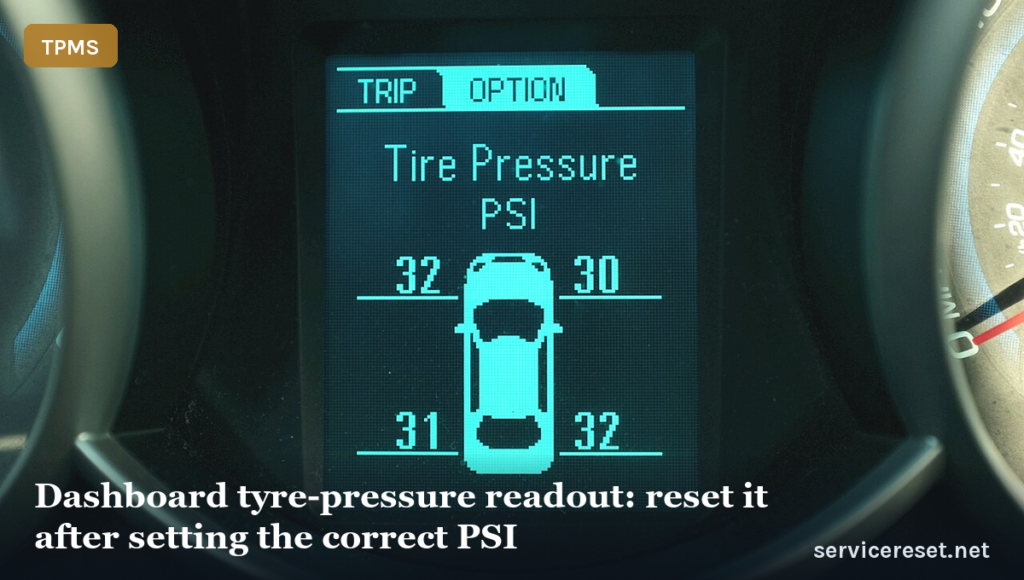
Each wheel carries its own battery-powered sensor that measures the pressure inside the tyre and radios it to a receiver in the car. Because every corner reports separately, the driver display can usually show which tyre is low rather than just a general warning. This is a direct system — it reads real pressure, not wheel-speed differences the way an indirect (ABS-based) setup does — so once the actual pressures are corrected there is nothing to “store” by hand; the warning clears itself after a short drive.
Getting Ready
- Check the tyres cold — before driving, or after the car has stood for a couple of hours. A warm tyre reads higher and gives a false result.
- Find the correct figures on the driver’s door-pillar label (open the driver’s door and look at the B-pillar). It lists the front and rear pressures.
- Have an accurate gauge and a pump or forecourt airline ready.
- Note that a laden or fully loaded car often needs a higher rear pressure — the label shows both settings.
- Don’t forget to reset the pressures back down again after a heavily loaded trip.
How to Clear the Warning
- Set all four tyres to the correct pressure (cold) — the figure is on the driver’s door-pillar label.
- Drive for about 10–20 minutes at a steady speed above 25 km/h (15 mph).
- The system reads the corrected pressures and the warning goes out.
If the Light Stays On
- Re-check every tyre — one slightly low corner keeps the light on.
- Give it a few more miles. The sensors only transmit periodically, so the display can lag behind a fresh top-up.
- Look for a slow puncture. If one tyre keeps dropping, a nail or a leaking valve is the likely cause — have it inspected.
- After a wheel swap or new tyres, the sensor for that corner must be recognised; a tyre fitter can match it if it isn’t picked up.
- Check the valve caps and cores — a weeping valve loses pressure gradually.
- A steady-flashing TPMS light (about a minute at start-up) means a sensor fault — a flat sensor battery, or a sensor not matched after a wheel change — and needs a tyre shop’s tool.
What Happens Next
Once the pressures are right and the car has been driven for a few minutes above walking pace, the amber tyre symbol goes out and stays out for the rest of the journey and beyond. If the display shows individual pressures, you’ll see the low corner climb to match the others. Expect a small natural drop again as the weather turns colder — that’s normal, not a fault.
Frequently Asked Questions
How do I reset the tyre pressure light on a Hyundai Bayon?
Set the pressures correctly when the tyres are cold, then drive for 10–20 minutes above 25 km/h. There’s no button to press — the direct system relearns on the move and the warning clears on its own once every corner is up to spec.
Is there a reset button?
No. Unlike some rivals with a “SET” switch, the Bayon’s direct TPMS clears itself once the pressures are right and you’ve driven a short distance. There’s nothing to hold down and no menu to open.
Why won’t the light go out after pumping the tyres up?
Usually one tyre is still slightly below spec, or the system just needs a few more miles to confirm the new readings. Double-check all four against the door-pillar figures with an accurate gauge. If the light flashes steadily instead, that points to a sensor fault rather than a low tyre.
Do I need a tool?
Not for a normal reset. A workshop tool is only needed if a sensor has been replaced, or the wheels were swapped and a sensor needs matching to its new position. For an everyday top-up, driving is all it takes.
Why does the light keep coming back on cold mornings?
Air contracts as it cools, so pressures fall by roughly 1 psi for every 5–6 °C drop. A tyre set on a warm afternoon can slip below the threshold overnight. Top the pressures up when cold to the door-pillar figure and the warning should stop reappearing.
Does the spare wheel have a sensor?
Many Bayons ship with a space-saver or a repair kit rather than a full-size spare, so there may be no spare sensor to worry about. If your car does carry a full-size alloy spare, check whether it has its own sensor and keep it inflated too.
If a fault code is stored alongside the warning, look it up on autodtcs.com. To clear a service reminder instead, see our Bayon service reset.
Independent guide — not affiliated with Hyundai. Always follow your official service manual and safety precautions. Read our full disclaimer.