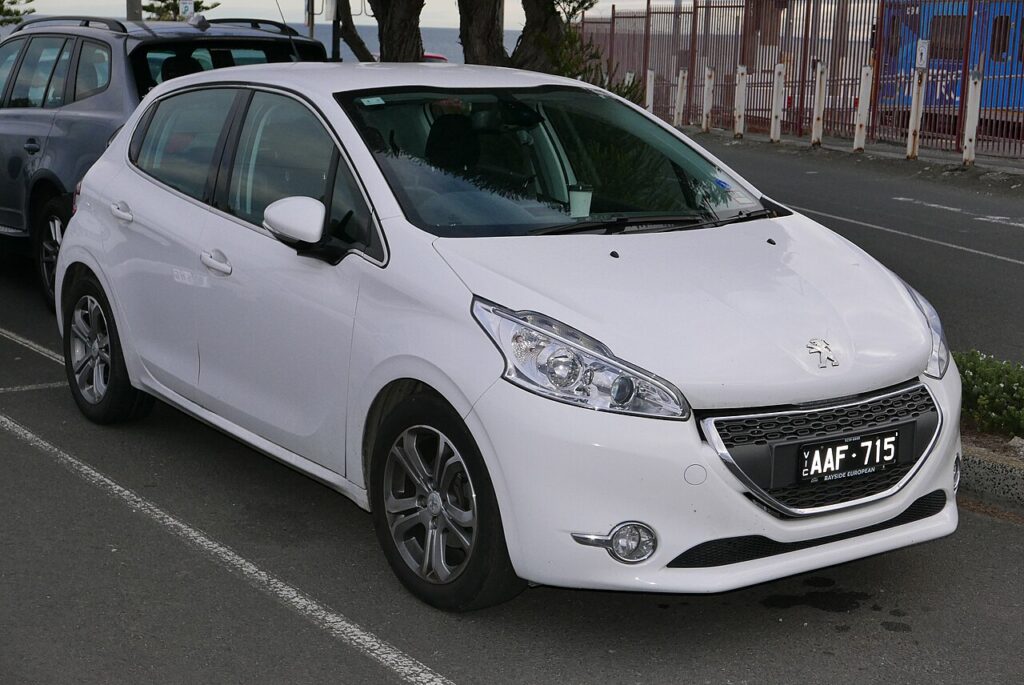
These instructions apply to the Peugeot 208 Mk1 (A9, A91) 2012-2019.
For other models, please choose your vehicle here.
When the tyre-pressure warning light shows on your Peugeot 208 Mk1 (A9, 2012–2019), it usually just means the system needs to relearn your current pressures after a check, top-up or wheel change. How you reset it depends on whether your 208 has the touchscreen or a reset button. This guide covers both.
How the 208 System Works
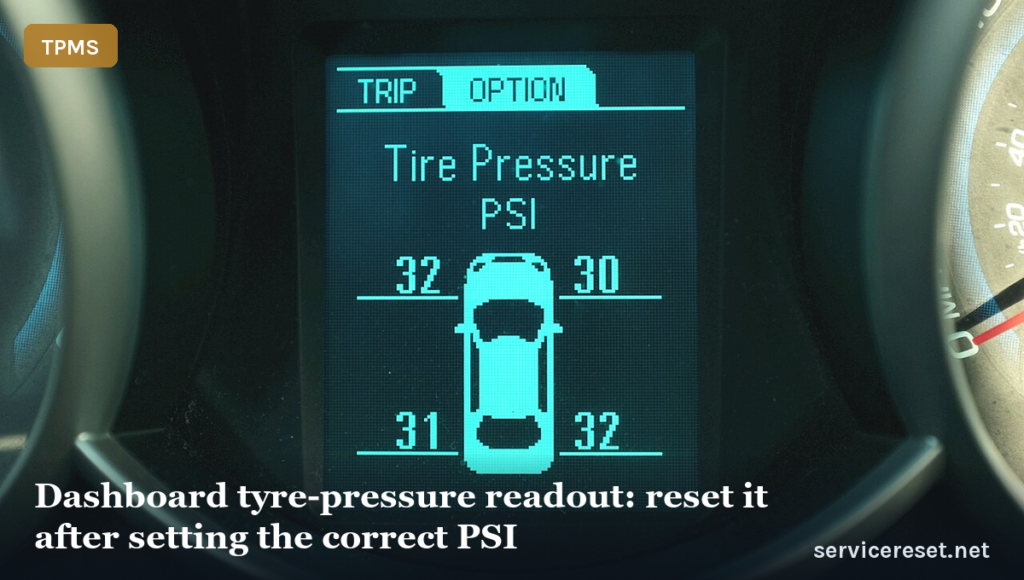
The 208 uses a direct tyre-pressure monitoring system with sensors in the wheels (Peugeot calls the reset “under-inflation initialisation”). After you adjust the pressures or change a wheel, you tell the car to store the current pressures as the new reference. Once stored, the system monitors against that baseline.
When to Reset
- After checking or adjusting the tyre pressures (including seasonal changes).
- After changing one or more wheels or tyres.
- After rotating the wheels front-to-back.
Set Your Pressures First
The reset stores whatever pressures are in the tyres at that moment, so they must be correct first. Set all four (cold) to the figures on the placard in the driver’s door aperture or behind the fuel flap, using the laden column for a full load. Never reset with a tyre already low.
Method 1 — Touchscreen Cars
- Make sure all four tyres are at the correct cold pressure.
- Switch the ignition on.
- On the touchscreen, open the “Driving assistance” menu.
- Press “Under-inflation initialisation”.
- Select “YES” to confirm. The system is reset.
Method 2 — Cars with a Reset Button
- Set the correct cold pressures and switch the ignition on.
- Press and hold the tyre-pressure reset button for about 3 seconds.
- Release the button — an audible signal confirms the reset.
After either method, a short drive lets the system settle and confirm.
Light Won’t Go Out? Work Through This
- A tyre is genuinely low: the system is doing its job — find and fix the leak, re-inflate, then reset.
- Reset not stored: repeat the touchscreen steps and confirm YES, or hold the button the full 3 seconds.
- Flashing (not steady) light: a flashing TPMS light points to a sensor fault rather than a low tyre — a flat sensor battery is common on older 208s. The car may store a code you can look up on autodtcs.com.
Frequently Asked Questions
What is “under-inflation initialisation”?
That is Peugeot’s name for the TPMS reset — it stores your current (correct) tyre pressures as the reference the system monitors against.
Where is the reset button?
On cars without the touchscreen, the tyre-pressure reset button is on the dash or centre console. Hold it for about 3 seconds until the signal sounds.
Why does the light come back a few days later?
Either a tyre is slowly losing air, or it was a little low when you reset. Re-check all four cold pressures and reset again.
The light flashes instead of staying steady — what does that mean?
A flashing TPMS light usually indicates a sensor fault rather than a low tyre — often a flat sensor battery. It will not clear with a reset and needs the sensor checked.
After tyre or seasonal-wheel work it is worth confirming the service reminder is clear — see our Peugeot 208 service indicator reset guide.
Independent guide — not affiliated with Peugeot. Always follow your official service manual and safety precautions. Read our full disclaimer.