These instructions apply to the Suzuki Swift Mk2 (RS) 2004-2010.
For other models, please choose your vehicle here.
A spongy or long-travel brake pedal, or the brake warning light coming on, is often the first sign of a brake fluid problem on the 2004–2010 Suzuki Swift (Mk2, RS). This guide shows how to check the fluid level against the MAX and MIN lines and what a low level actually means on your Swift.
Before you panic at a lit brake light: on the Swift it can simply mean the parking brake is still applied. Release the handbrake fully with the engine running. If the light stays on, the fluid in the reservoir has dropped below the specified level, or there is an ABS/brake-balance fault — that needs investigating.
The check below applies to all engines — the 1.3 (M13A), 1.5 (M15A), 1.6 Sport (M16A) and the 1.3 DDiS diesel. The reservoir and fluid specification are the same across the range.
How to Check the Brake Fluid on a Suzuki Swift
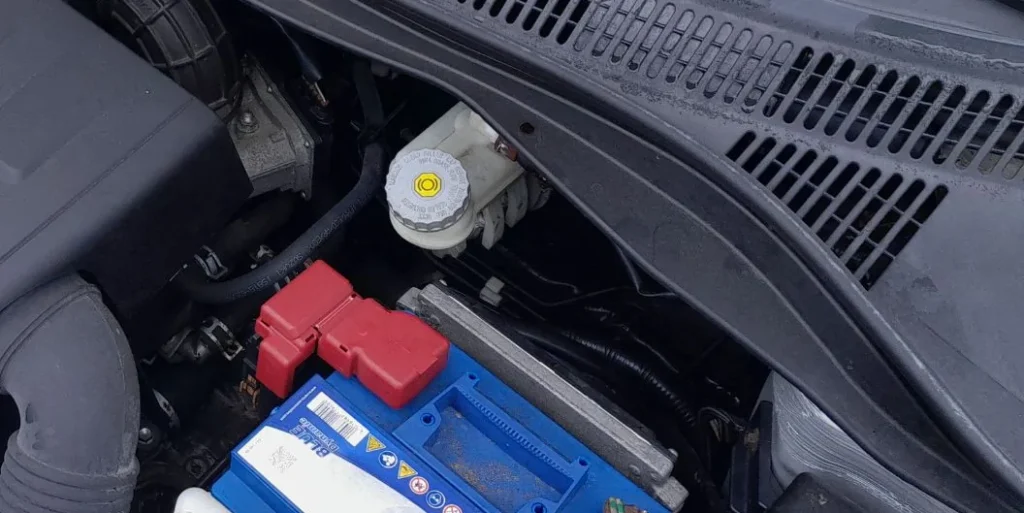
- Park on level ground and let the car cool. Set the handbrake, switch off the engine and open the hood. A level surface gives an accurate reading against the reservoir markings.
- Find the brake fluid reservoir. It sits on top of the brake master cylinder, against the bulkhead at the back of the engine bay (on the driver’s side of a left-hand-drive car; the opposite side on a right-hand-drive UK car). It is a small translucent plastic tank with a screw cap, marked “MAX” and “MIN” on the side.
- Read the level against the MAX and MIN lines. Look at the side of the reservoir without removing the cap. The fluid should sit between the MAX and MIN marks.
- Understand a low reading before you top up. With disc brakes the level falls gradually as the pads wear — the fluid is simply filling the space behind the pistons, which is normal. A sudden or rapid drop, on the other hand, points to a leak in the brake system. Either way, if the level is low your brakes should be inspected.
- Top up only to MAX, with the correct fluid, if appropriate. If the level is near MIN, add fresh brake fluid of the specified grade up to the MAX line — no higher. Keep dirt and other liquids out of the reservoir, and avoid skin and eye contact; brake fluid is harmful and damages paint. Wipe the cap area clean before you open it.
- Never let the reservoir run dry. If it empties, air gets into the brake lines and the pedal goes to the floor. If you cannot keep the level up, or the pedal feels spongy, stop driving and have the system checked before use.
The Swift’s owner manual specifies SAE J1703 or DOT3 brake fluid. Use only fresh fluid from a sealed container — never reclaimed fluid or fluid that has been stored in an open or old container, as it absorbs moisture.
That moisture matters: brake fluid is hygroscopic, meaning it draws water out of the air over time. Absorbed water lowers the fluid’s boiling point and can cause a soft pedal or brake fade under hard use. For that reason Suzuki schedules a full brake fluid replacement about every 2 years (30,000 km), regardless of level. Topping up is not a substitute for that change.
Frequently Asked Questions
What brake fluid does a Suzuki Swift use?
The 2004–2010 Swift (Mk2) owner manual specifies SAE J1703 or DOT3 brake fluid for all versions. Always use fresh fluid from a sealed container, and top up only to the MAX line. The complete fluid should be replaced about every 2 years or 30,000 km.
Why is my Suzuki Swift brake light on?
First check the obvious one — the handbrake. The light is shared with the parking brake, so it comes on whenever the handbrake is applied and should go out once you fully release it with the engine running. If it stays lit, the fluid in the reservoir has dropped below the specified level, or (if it appears together with the ABS light) the brake-force control function has failed. Both need inspecting.
Is low brake fluid dangerous?
A slightly low level from worn pads is normal, but you should never ignore it. If the reservoir runs dry, air enters the lines and the brakes can fail, and a rapid drop means a leak somewhere in the system. If the level is low, top up to MAX and have the brakes inspected rather than just refilling and forgetting it.
If a brake or ABS warning light stays on, the car may have stored a fault code — you can read what it means at autodtcs.com.
This guide is for general information only. Always follow the procedures and specifications in your official Suzuki owner manual, and if you are unsure about any part of your brake system, have it checked by a qualified mechanic. We are not affiliated with Suzuki.
Independent guide — not affiliated with Suzuki. Always follow your official service manual and safety precautions. Read our full disclaimer.