These instructions apply to the Suzuki Swift Mk2 (RS) 2004-2010.
For other models, please choose your vehicle here.
Verified specifications for the Suzuki Swift Mk2 (RS series, 2004–2010) — engine, performance, fluids and capacities, tires and battery. The table covers the 1.3 (M13A) and 1.5 (M15A) petrol, the 1.6 Sport (M16A) and the 1.3 DDiS diesel. Match the column to your car’s engine; figures are drawn from the Suzuki owner’s manual and verified European data.
Each column is one specific vehicle — a single engine or motor and, where shown, body style. Dimensions and several weights are specific to that body and drivetrain; other body or powertrain versions differ, so match the column to your own vehicle.
| 1.3 (M13A) PetrolEU | 1.5 (M15A) PetrolEU | 1.6 Sport (M16A)EU | 1.3 DDiS Diesel (Z13DT)EU | |
|---|---|---|---|---|
| Length | — | — | — | — |
| Width (excl. mirrors) | — | — | — | — |
| Height | — | — | — | — |
| Wheelbase | — | — | — | — |
| Track (front / rear) | — | — | — | — |
| 1.3 (M13A) PetrolEU | 1.5 (M15A) PetrolEU | 1.6 Sport (M16A)EU | 1.3 DDiS Diesel (Z13DT)EU | |
|---|---|---|---|---|
| Kerb weight | 965-1,000 kg | 975-1,010 kg | 1,060 kg | 1,040-1,065 kg |
| Gross vehicle weight | — | — | — | — |
| Payload (approx.) | — | — | — | — |
| Max axle load, front | — | — | — | — |
| Max axle load, rear | — | — | — | — |
| Towing (braked trailer) | — | — | — | — |
| 1.3 (M13A) PetrolEU | 1.5 (M15A) PetrolEU | 1.6 Sport (M16A)EU | 1.3 DDiS Diesel (Z13DT)EU | |
|---|---|---|---|---|
| Engine code | M13A | M15A | M16A | Z13DT (1.3 Multijet) |
| Fuel | Petrol | Petrol | Petrol | Diesel |
| Cylinders / layout | 4, in line, 16 valves | 4, in line, 16 valves | 4, in line, 16 valves | 4, in line, 16 valves |
| Displacement | 1,328 cc | 1,490 cc | 1,586 cc | 1,248 cc |
| Max power | 68 kW (92 PS) @ 5,800 rpm | 75 kW (102 PS) @ 5,900 rpm | 92 kW (125 PS) @ 6,800 rpm | 51 kW (69 PS) @ 4,000 rpm |
| Max torque | 116 Nm @ 4,200 rpm | 133 Nm @ 4,100 rpm | 148 Nm @ 4,800 rpm | 170 Nm @ 1,750-2,000 rpm |
| Aspiration | Naturally aspirated | Naturally aspirated | Naturally aspirated | Turbocharged + intercooler |
| Emission standard | Euro 4 | Euro 4 | Euro 4 | Euro 4 |
| 1.3 (M13A) PetrolEU | 1.5 (M15A) PetrolEU | 1.6 Sport (M16A)EU | 1.3 DDiS Diesel (Z13DT)EU | |
|---|---|---|---|---|
| 0–100 km/h (0–60 mph) | 11.0 s (0-100 km/h) | 10.0 s (0-100 km/h) | 8.9 s (0-100 km/h) | 14.2 s (0-100 km/h) |
| Top speed | 175 km/h | 185 km/h | 200 km/h | 165 km/h |
| Drive | Front-wheel drive | Front-wheel drive | Front-wheel drive | Front-wheel drive |
| Transmission | 5-speed manual (4-speed automatic optional) | 5-speed manual (4-speed automatic optional) | 5-speed manual | 5-speed manual |
| 1.3 (M13A) PetrolEU | 1.5 (M15A) PetrolEU | 1.6 Sport (M16A)EU | 1.3 DDiS Diesel (Z13DT)EU | |
|---|---|---|---|---|
| Fuel consumption (combined) | 6.2 l/100km (NEDC) | 6.5 l/100km (NEDC) | 7.5 l/100km (NEDC) | 4.6 l/100km (NEDC) |
| Urban / extra-urban | — | — | — | — |
| CO₂ (combined) | 143 g/km (NEDC) | 159 g/km (NEDC) | 175 g/km (NEDC) | 122 g/km (NEDC) |
| Fuel tank | 43 L | 43 L | 45 L | 45 L |
| Drive-by noise | — | — | — | — |
| 1.3 (M13A) PetrolEU | 1.5 (M15A) PetrolEU | 1.6 Sport (M16A)EU | 1.3 DDiS Diesel (Z13DT)EU | |
|---|---|---|---|---|
| Front brakes | — | — | — | — |
| Rear brakes | — | — | — | — |
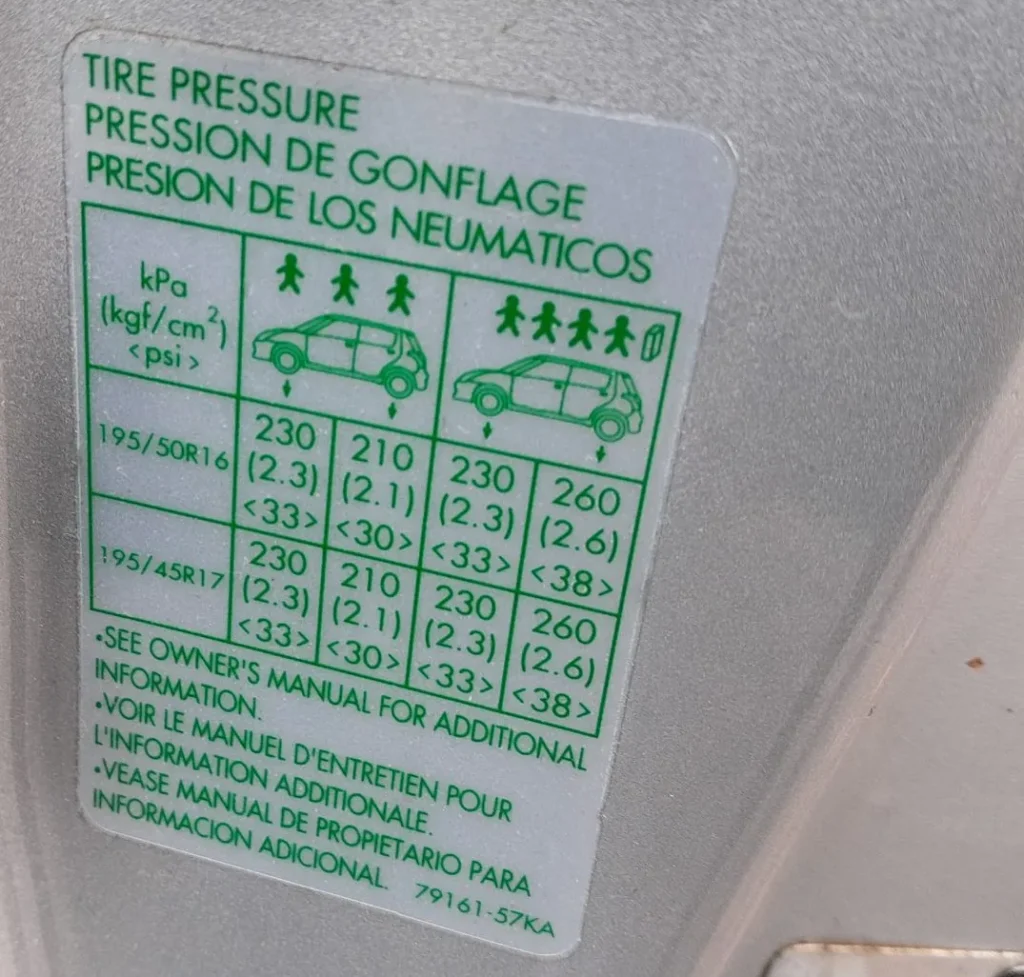
| Tyre sizes | 165/70 R14 (base) or 185/60 R15 | 185/60 R15 | 195/50 R16 or 195/45 R17 | 185/60 R15 |
| Rim sizes | 15 x 5.5JJ (15-inch) | 15 x 5.5JJ (15-inch) | — | — |
| Tyre pressures, normal (front / rear) | — | — | Up to 3 occupants: 2.3 bar / 33 psi front, 2.1 bar / 30 psi rear (195/50 R16 and 195/45 R17) | — |
| Tyre pressures, laden (front / rear) | — | — | Full load (up to 5 + luggage): 2.3 bar / 33 psi front, 2.6 bar / 38 psi rear | — |
| Wheel-nut torque | — | — | — | — |
| 1.3 (M13A) PetrolEU | 1.5 (M15A) PetrolEU | 1.6 Sport (M16A)EU | 1.3 DDiS Diesel (Z13DT)EU | |
|---|---|---|---|---|
| Engine oil (with filter) | 3.9 L (with filter) - SAE 5W-30, quality SG/SH/SJ/SL | 3.9 L (with filter) - SAE 5W-30, quality SG/SH/SJ/SL | 3.7 L service fill (approx. 4.2 L dry) - SAE 5W-30 | 3.2 L (with filter) - SAE 5W-30 (ACEA C2/C3) |
| Coolant | 6.2 L (incl. reservoir) - ethylene-glycol LLC antifreeze | 6.2 L (incl. reservoir) - ethylene-glycol LLC antifreeze | 6.2 L (incl. reservoir) | — |
| Gearbox oil (manual) | 2.2 L (5-speed manual) - API GL-4 SAE 75W-90 | 2.2 L (5-speed manual) - API GL-4 SAE 75W-90 | 2.2 L (5-speed manual) - API GL-4 SAE 75W-90 | 2.6 L (5-speed manual) - API GL-4 SAE 75W-90 |
| 12 V battery | 12V 55B24R or 46B24R (JIS, approx. 45 Ah) | 12V 55B24R or 46B24R (JIS, approx. 45 Ah) | 12V, approx. 44 Ah / 440 A (EN); JIS 55B24R/46B24R equivalent | — |
| Air-con refrigerant | R-134a | R-134a | R-134a | R-134a |
| Spark plugs | NGK IFR6J-11 iridium (or NGK BKR6E-11 / Denso K20PR-U11), 1.1 mm gap | NGK IFR6J-11 iridium (or NGK BKR6E-11 / Denso K20PR-U11), 1.1 mm gap | — | — |
| Spark-plug gap | — | — | — | — |
Sources: Owner's manual. Where an owner’s manual or homologation figure exists it takes precedence; workshop data fills only what those omit.
Frequently Asked Questions
What oil does a Suzuki Swift 1.3 or 1.5 take?
The 1.3 M13A and 1.5 M15A petrol engines take about 3.9 liters of SAE 5W-30 (quality SG, SH, SJ or SL) when the filter is changed. The 1.6 Sport and 1.3 DDiS diesel use different grades and capacities — check your own handbook.
What size tires does the Suzuki Swift (2004–2010) use?
The base 1.3 runs 165/70 R14, the 1.5 and 1.3 diesel use 185/60 R15, and the 1.6 Sport uses 195/45 R17. Higher 1.3 trims also came on 185/60 R15.
How big is the fuel tank?
About 43 liters on the 1.3 and 1.5 petrol per the owner’s manual; European data lists 45 liters for the Sport and the DDiS diesel.
What are the correct tire pressures for a Suzuki Swift?
Suzuki prints the exact cold tire pressures on the tire information label on the driver’s door lock pillar, and they change with how heavily the car is loaded. Always set the pressures to the figure on that label rather than a generic number.
⚠️ Disclaimer: These figures are provided for general reference and can vary by model year, trim, and market. Always confirm against your vehicle’s own documentation (the label on the door pillar and your owner’s manual). ServiceReset.net is not affiliated with Suzuki Motor Corporation.
Independent guide — not affiliated with Suzuki. Always follow your official service manual and safety precautions. Read our full disclaimer.