If your air conditioning needs a re-gas or a repair, one of the first questions the workshop asks is which refrigerant your car uses. Get it wrong and you can damage the system, because the two types in use today — R134a and R1234yf — are not interchangeable. Here is how to tell which one your car takes, and why it matters.
A quick history: R12, R134a and R1234yf
Car air conditioning has been through three main refrigerants:
- R12 (Freon) — used on older classics. It is a CFC that harms the ozone layer and has been banned for servicing across the EU since the early 2000s.
- R134a — the replacement that ran on the vast majority of cars from the late 1990s to the mid-2010s, and is still in millions of vehicles today.
- R1234yf — the current standard on newer cars, chosen because it breaks down far faster in the atmosphere and has a much lower global-warming impact than R134a.
How to tell which refrigerant your car uses
You do not have to guess:
- Check the under-bonnet label. There is a sticker, usually near the condenser or the A/C service ports, that states the refrigerant type and the exact charge weight in grams. This is the definitive answer.
- Use the year as a rough guide. Cars first registered in Europe from around 2017 are most likely on R1234yf; most vehicles built through the 2000s and early-to-mid 2010s use R134a. There is an overlap period, so always confirm with the label.
- The service fittings differ. The two systems use different quick-connect port sizes so that the wrong gas cannot easily be added — a technician can identify the system from the ports.
Here is what those two labels actually look like on real cars — the difference is obvious once you have seen them:
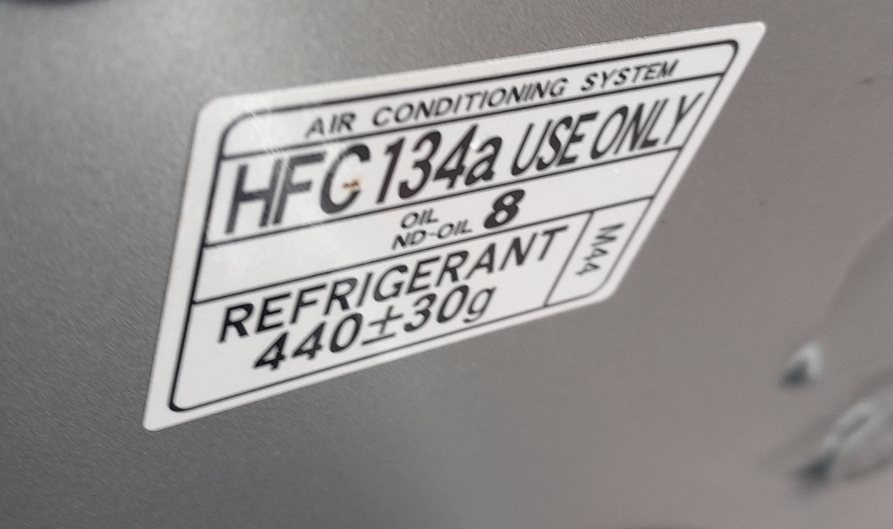
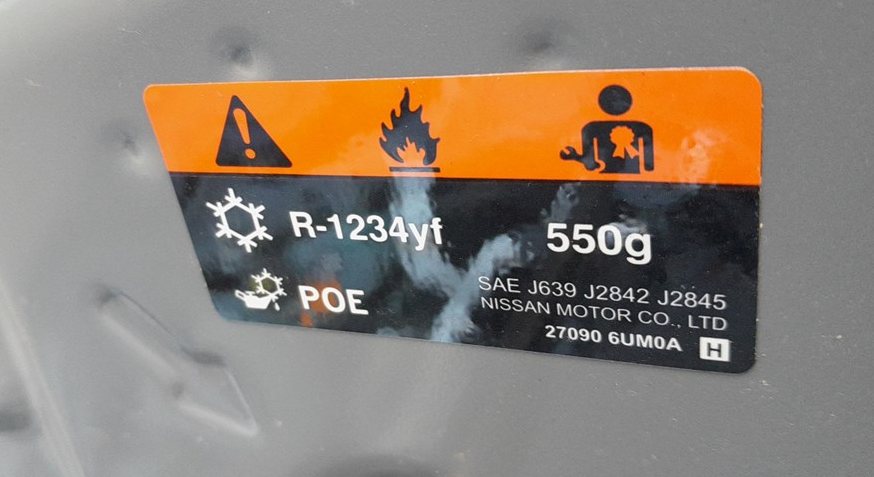
Why you must never mix them
R134a and R1234yf are designed to work with different lubricating oils and run at slightly different pressures. Putting one into a system built for the other — or topping up with the wrong gas — contaminates the oil and can wreck the compressor. There is no “universal” car refrigerant, and the cheap top-up cans sold for one type must never go into the other.
Is R1234yf more expensive?
Yes. R1234yf costs significantly more per kilo than R134a, and workshops need separate, dedicated equipment to handle it. That is why a re-gas on a newer car is usually pricier than on an older one. It is also mildly flammable, which is another reason the work is left to trained technicians rather than DIY kits.
What about converting an old R12 car?
An R12 system can be converted to run on R134a, but it is a proper workshop job: the old oil is drained, the system is flushed, a compatible dryer and service port are fitted, and it is recharged with the correct amount. It is never a simple top-up, and again the two gases must not be mixed during the process.
Frequently asked questions
How do I know if my car is R134a or R1234yf?
Read the label under the bonnet near the A/C service ports — it lists the refrigerant type and charge weight. As a rough guide, cars from about 2017 onward tend to use R1234yf.
Can I put R134a in an R1234yf car?
No. The two use different oils and pressures, and mixing them can damage the compressor. Always use the type your car was designed for.
Why is my A/C re-gas so expensive?
If your car uses R1234yf, the gas itself and the specialist equipment cost far more than for older R134a systems.
Want the bigger picture of how the whole system works? Read our guide to how car air conditioning works. And if a climate warning light is showing, you can look up the fault code on our sister site.
