These instructions apply to the Citroën Berlingo Mk2 (B9) 2008-2018.
For other models, please choose your vehicle here.
If the one-touch (auto up/down) function on your Citroën Berlingo Mk2 (B9, 2008–2018) has stopped working — usually after a battery disconnection or a flat battery — the window needs re-initialising so it relearns its end positions. It is a 30-second job per window with no tools. This guide shows how.
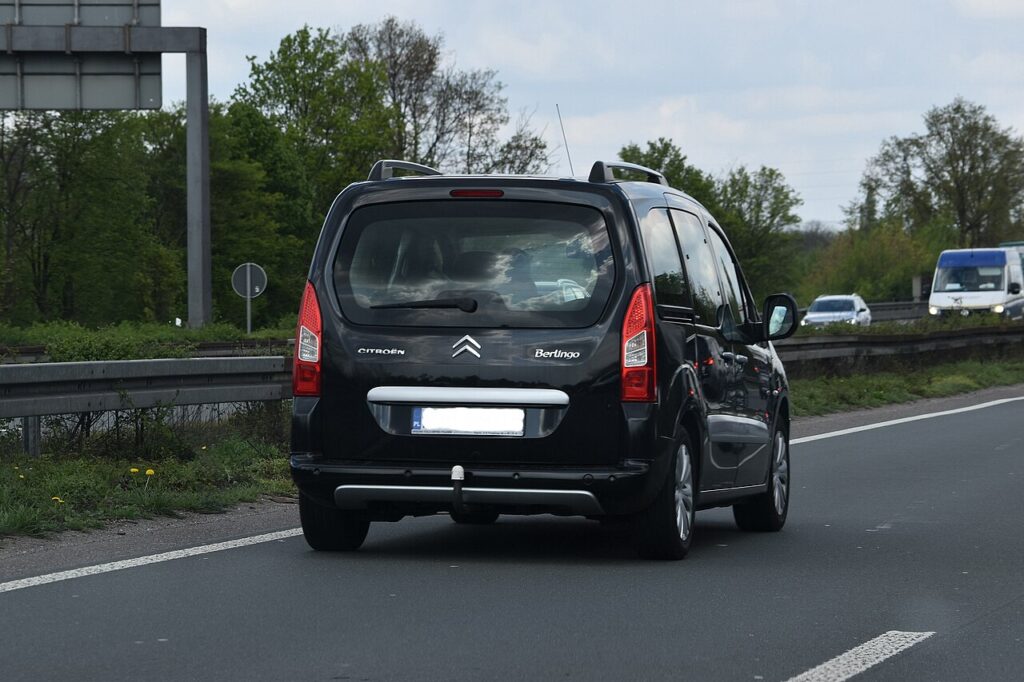
On the B9 Berlingo the driver’s window (and the passenger window on higher trims) has a one-touch feature that raises or lowers the glass with a single press. After any interruption to the 12V supply it can lose that ability and only move while you hold the switch. That is not a fault or a failed motor — the window controller has simply forgotten where the top and bottom stops are, and a short relearn puts it right.
Why One-Touch Stops Working
The window motor remembers its fully-open and fully-closed positions so the auto and anti-trap (pinch protection) functions work. Cutting power clears that memory, so the window only moves while you hold the switch. Re-initialising restores it. Anything that drops the supply will do it — disconnecting the battery, a jump start, a flat or heavily discharged battery, or even a poor connection at the terminal — which is why owners most often notice it straight after battery work.
Before You Start
- Turn the ignition on so the window has full power for the relearn.
- Sit at the door you are working on and keep that door closed.
- Check the glass can travel fully — nothing on the seal, and the runners clear of grit or ice.
- If the battery was flat, give it a short charge first so voltage does not sag during the routine.
- Work one window at a time; do the driver’s window first, then the passenger’s if it also has one-touch.
How to Re-initialise a Berlingo Window
- Close the driver’s door.
- Press and hold the window open switch until the window is fully open, then release.
- Pull and hold the window close switch until the window is fully closed, then keep holding for 1 more second.
- Release the switch — the procedure is complete.
- Repeat for the passenger’s window using that door’s switch.
If It Still Won’t Auto-Close
- Repeat the procedure. The hold at full close is what registers the top limit, so a second run often does it.
- Make sure the glass reaches the very top and bottom. Grit or a dry seal in the runner can stop it short, so the limit never registers.
- Confirm the door is fully shut during the relearn — an ajar door can hold the window in its protected mode.
- Check the battery is healthy. If it had gone flat, charge it and try again; low voltage is the usual reason a relearn will not stick.
- Look at the door fuse and switch if the window is completely dead rather than just non-auto — a blown fuse or a tired switch is a separate fault from the relearn.
- If one window still refuses to auto after several clean attempts, have the regulator and motor checked — a worn regulator can stall before the glass reaches the seal.
What to Expect After
Once the window has relearned its stops, a single press again drives it fully up or down, and the anti-trap reverses the glass if it meets resistance on the way up. The setting stays put until the next time the battery is disconnected or goes flat, so you should not have to repeat it in normal use. If one-touch keeps disappearing on its own, that usually points to a weak 12V battery or a poor terminal connection rather than the window itself.
Frequently Asked Questions
Why did my Berlingo windows lose auto after the battery was off?
Disconnecting power wipes the stored end positions, so auto and anti-trap switch off until you re-teach each window. It happens after any interruption to the 12V supply — a disconnect, a jump start or a flat battery. Running the open-then-close-and-hold routine restores the memory and one-touch comes back.
The window goes up a bit then stops — why?
That is the anti-trap protection reacting because the limits are not learned. With no stored closed position the controller treats the rising glass as if it has hit an obstruction and stops it. Complete the open-then-close-and-hold routine, keeping the switch held at the top, and it clears.
Do I need any tools?
No — just the door switches and the ignition on. There is no scan tool, code or garage visit involved. A scan tool is only relevant if a window is electrically dead or logging a fault, which is a different problem from simply having lost the one-touch memory.
Does the Berlingo relearn work differently from other cars?
The idea is the same — teach the window its full-open and full-closed stops — but the exact sequence varies by model. On the B9 Berlingo you fully open, then fully close and hold for a second at the top. Follow the steps above for this car rather than a routine you have seen for a different make.
Do I have to do both front windows?
Only the windows that have one-touch, and only the ones that lost it. On many Berlingos that is just the driver’s window; higher trims add the passenger side. Re-teach each affected window from its own switch, since the stops are stored separately for each door.
Will this happen again if I change the battery?
Yes. Any disconnection of the 12V supply clears the stored positions, so expect to re-initialise the window after a battery change or disconnect. It only takes about half a minute. If one-touch keeps vanishing without any battery work, have the battery and its connections checked.
If you have just done battery work, run this alongside the other resets — see our Berlingo battery disconnect/reconnect guide. For warning lights, look up the code on autodtcs.com.
Independent guide — not affiliated with Citroën. Always follow your official service manual and safety precautions. Read our full disclaimer.