These instructions apply to the Kia Ceed Mk3 (CD) 2018-Present.
For other models, please choose your vehicle here.
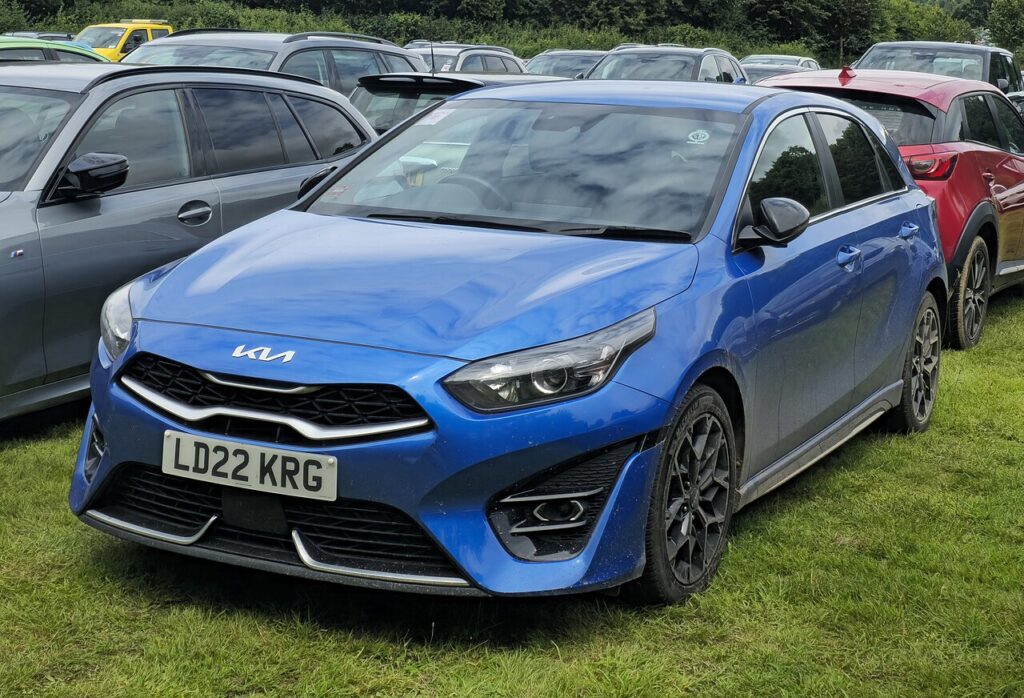
The Kia Ceed (Mk3/CD, 2018–Present) — including the Proceed and XCeed — can be fitted with an Electronic Parking Brake, but not every car has one. On the trims that do, the rear caliper is clamped by a motor instead of a cable, so the pads cannot be renewed until that motor is backed off. This guide is specific to the EPB-equipped CD Ceed and is honest about the trim split and the fact that there is no owner button shortcut.
First check: does your Ceed actually have an EPB?
The Mk3 Ceed was sold with two different rear parking brakes. Lower trims use a conventional cable handbrake with a lever between the seats — those cars need no service mode at all; you just wind the rear pistons in the normal way. The EPB is generally a higher-trim or option-pack item (commonly GT-Line and above), identified by a small switch with a P-in-a-circle symbol on the console instead of a handbrake lever. If your car has the lever, stop here: this guide does not apply to you.
Why the EPB-equipped Ceed needs a scan tool
On EPB cars, pulling the switch drives a motor on each rear caliper to screw the piston out against the pads. To fit thicker new pads you must run that motor backwards into pad-change state, then compress the piston.
The CD Ceed has no owner button sequence for service mode. Kia does not provide a dash-only pad-change mode — the manufacturer-correct method is a scan tool (Kia KDS or a capable aftermarket EPB tool) on the OBD2 port running the rear pad-replacement routine.
- Confirm the car has an EPB switch, not a handbrake lever.
- Park on level ground, chock the front wheels, switch the ignition ON (engine off), turn AUTO HOLD off and release the EPB.
- Connect the scan tool to the OBD2 socket under the dash and select Ceed / CD / EPB.
- Run the Pad Replacement routine; the rear motors whir as they retract and the tool confirms the calipers are open.
- Raise the car, remove the rear wheels, wind each piston in with a proper tool, fit the new pads, torque the hardware, then exit service mode through the tool.
Critical warning: never force the EPB pistons back by hand or with a clamp. On EPB Ceeds the piston rides on the parking-brake spindle and must be retracted electronically — forcing it strips the spindle and can burn the motor, leaving the parking brake dead and a fault stored that needs the scanner to clear.
Exit and bed-in: use the tool’s close-caliper step so the motors re-clamp onto the new pads, pump the brake pedal until firm, and cycle the EPB twice to confirm it holds and releases. Bed the pads with several gentle slow-downs from about 30–40 mph and avoid hard stops for the first hundred miles while the friction material seats.
Frequently Asked Questions
How do I know whether my Ceed has an EPB? Look at the console: a P-in-a-circle switch means EPB; a pull-up lever means a cable handbrake and no service mode is needed.
Which trims got the EPB? It is generally a higher-trim or option item on the Mk3 — commonly GT-Line and above — rather than standard across the range, so always check the individual car.
Is there a button sequence to enter service mode? No. EPB Ceeds need a scan tool on the OBD2 port; there is no owner-accessible dash sequence.
What if I clamp the piston in on an EPB car? You can shear the spindle or burn the motor, after which the scanner is needed just to clear the fault.
Does a handbrake-lever Ceed need any of this? No — cable-handbrake cars wind back conventionally and have no electronic service mode.
If a brake or EPB warning light stays on after the job, decode the stored fault first at autodtcs.com to tell a calibration message from a genuine fault.
Independent guide — not affiliated with Kia. Always follow your official service manual and safety precautions. Read our full disclaimer.