These instructions apply to the Kia Niro Mk1 (DE) 2016-2022.
For other models, please choose your vehicle here.
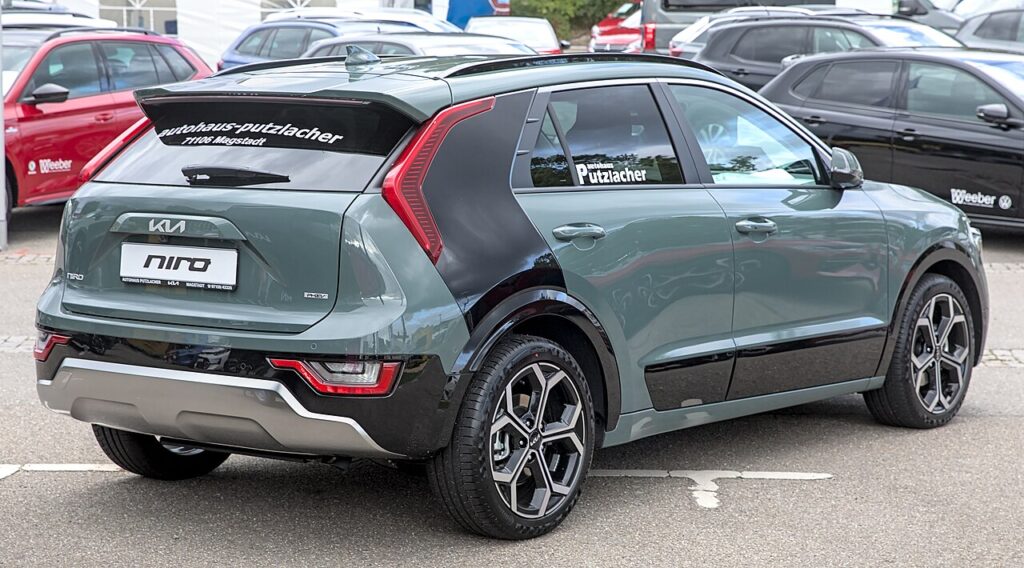
The Kia Niro (Mk1/DE, 2016–2022) — in Hybrid, Plug-in Hybrid and the e-Niro electric form — uses the Smart Key with proximity entry and a START/STOP button across nearly the whole range. When the fob’s coin cell dies, the remote buttons and hands-free detection stop, but the Niro will still start once you press the fob directly against the button.
Start the Niro With a Dead Fob
If the cluster shows “Key not detected”, the fob’s radio is flat but the car can still read the key’s passive transponder at close range.
- Get inside with the emergency blade first (see below) and sit in the driver’s seat.
- Press the brake pedal firmly and hold it. The Niro reads this as the start condition whether it’s the hybrid’s petrol engine or the e-Niro’s drive system coming to READY.
- Hold the Smart Key flat against the START/STOP button so the transponder sits over the reader coil behind it.
- Press the button through the fob. The coil energises the chip, the immobiliser verifies the key, and the car powers up.
Unlock the Door With the Emergency Key Blade
- Slide the catch on the back of the Smart Key and pull the metal blade straight out.
- At the driver’s door, prise off the slim cap behind the handle if one covers the lock cylinder, then insert the blade.
- Turn to unlock. The alarm may chirp; starting the car clears it.
Why a Flat Battery Doesn’t Strand You
The chip that authorises the drivetrain is a passive RFID transponder with no battery of its own. The car energises it by induction through the coil behind the START/STOP button. The coin cell only powered the remote-lock radio and the proximity broadcast for hands-free entry. A dead cell costs you remote locking and walk-up detection — not the ability to start. Note that on the Niro the 12V auxiliary battery is in the boot, not under the bonnet, so don’t confuse a flat 12V battery with a flat fob; only the fob is covered here.
Replace the Coin Cell
- Pull the emergency blade out to open the seam in the fob case.
- Twist the two halves apart with a coin or plastic tool.
- The Mk1 Niro Smart Key uses one CR2032 3V lithium coin cell. Note the orientation — the plus (+) side usually faces the back cover.
- Fit the fresh cell the same way up, handling it by the edges, and clip the case shut.
Remote locking and keyless start return at once. Expect two to three years from a quality cell.
Frequently Asked Questions
Does the dead fob method work on the e-Niro? Yes. Hold the fob to the button with the brake pressed; the electric e-Niro simply shows READY instead of starting an engine.
Where exactly do I hold the fob? Flat against the START/STOP button with the brake held, then press the button with the fob still touching it.
My car won’t start even with the fob against the button — could it be the 12V battery? Possibly. The Niro’s 12V auxiliary battery sits in the boot. If the dash is dead too, that points to the 12V rather than the fob cell.
Why did the alarm sound when I used the blade? Manual entry reads as a break-in until the transponder is verified. Starting the car cancels it.
Which battery does the Mk1 Niro fob take? A single CR2032 3V lithium coin cell, available almost anywhere.
If a warning light stayed on after the no-start, look it up on autodtcs.com to confirm it was just the fob and not a stored immobiliser fault.
Independent guide — not affiliated with Kia. Always follow your official service manual and safety precautions. Read our full disclaimer.