Quick referenceToolsNoneTime~5 minMethodMenu reset or drive to relearn
These instructions apply to the Dodge Charger Mk6 (LX) 2006-2010.
For other models, please choose your vehicle here.
The Dodge Charger (2006–2010, LX) uses a Tyre/Tire Pressure Monitoring System (TPMS) to warn you when one or more tyres are under-inflated. After correcting pressures, the system re-learns automatically — no special tools or scanners required. Follow the steps below to clear the warning and make sure the display updates correctly.

Before You Begin
- Find the recommended cold tyre pressures on the driver’s door jamb placard (front/rear values may differ).
- Use a reliable gauge and adjust all four tyres when the car is cold (parked for 3+ hours or driven <1.6 km / 1 mile).
- Inspect valves and caps; replace damaged caps to keep moisture out.
Manual TPMS Reset (Auto Re-Learn)
- Set all four tyres to the placard pressure (PSI/kPa/BAR as listed).
- Start the engine and drive above 25 km/h (15 mph) for several minutes. A short drive of up to ~10 minutes is typically enough for the system to pick up the new values.
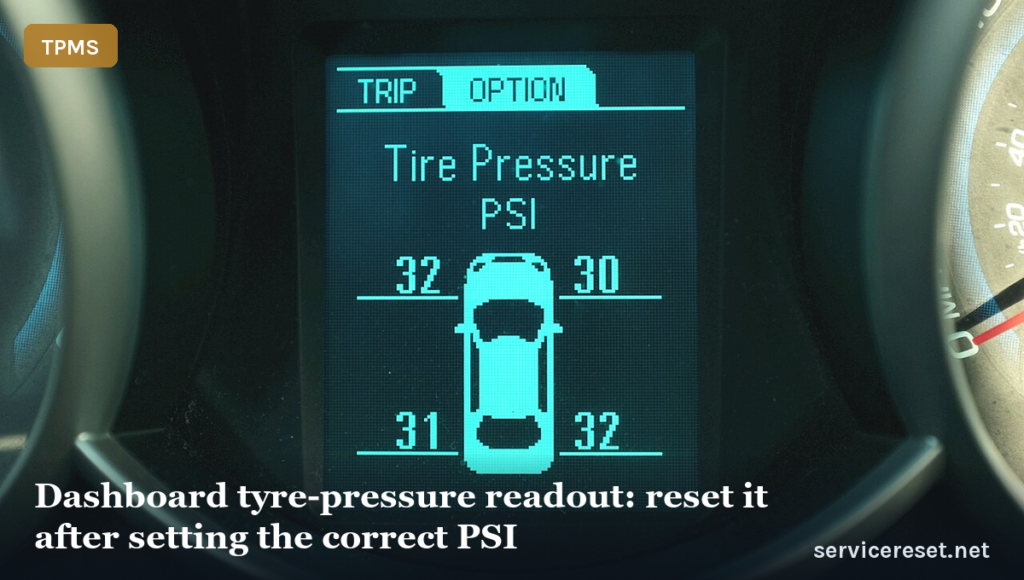
- Watch the cluster/EVIC: the low-pressure telltale should switch off once all wheels report acceptable pressure.

Troubleshooting & Tips
- Light stays on: Recheck all tyres with a manual gauge; a small mismatch on one wheel can keep the warning active. Top up and drive again above 25 km/h (15 mph).
- “Check TPM System” message / flashing telltale: The system has detected a fault or is missing data from a sensor. Drive a few minutes after setting pressures; if the message returns repeatedly, a sensor battery may be weak (TPMS sensors typically last ~7–10 years).
- Units: You can switch pressure units (PSI/kPa/BAR) in the EVIC/Personal Settings so your gauge and display match.
- Seasonal changes: Cold weather lowers pressure; expect the light on cold mornings. Inflate to placard pressure while tyres are cold.
- Spare tyre: Some configurations don’t monitor the spare; a low spare won’t trigger the warning, but you should still keep it at spec.
- After tyre rotation or replacement: The system re-learns automatically during the drive cycle — no extra steps needed.
Safety & Maintenance Notes
- Never exceed the maximum pressure printed on the tyre sidewall.
- Replace missing valve caps and avoid metal caps that can seize on TPMS stems.
- If a tyre keeps losing pressure, check for punctures, bead leaks, or a damaged TPMS valve.
Disclaimer: This guide is for general information. Always follow your vehicle’s official safety guidance. Perform repairs at your own risk.
Independent guide — not affiliated with Dodge. Always follow your official service manual and safety precautions. Read our full disclaimer.
Tyre tools: Changed tyre size or just adjusting pressures? Use our free non-stock tyre pressure calculator, bar/PSI/kPa converter and tyre size comparison tool.