These instructions apply to the Dodge Charger Mk6 (LX) 2006-2010.
For other models, please choose your vehicle here.
If your Charger has the optional power sunroof and one-touch Open and Close have quit — yet holding the switch still tilts the glass up to vent — the roof has lost its position calibration. Cutting battery power wipes the stored travel limits, so the module no longer trusts its Open and Close endpoints. Teaching it the closed position takes only a few seconds. This applies solely to Chargers built with the factory sunroof. Keep hands and anything else out of the opening while it runs.
How you know it needs a relearn
On a Charger the giveaway is that press-and-hold still vents the glass, but a single tap for full open or auto-close does nothing. It typically turns up after the battery has been disconnected for an install or a long storage stint. A roof that jerks, stalls halfway or reverses under load is a different problem — that is binding or an obstruction, and it needs clearing rather than a calibration attempt.
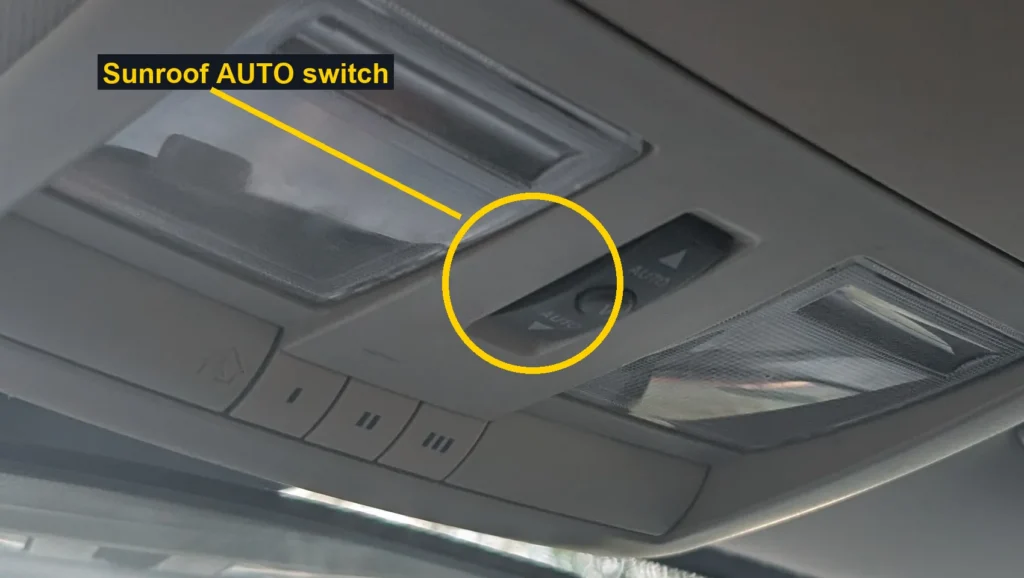
- Turn the ignition to the Run position.
- Press and hold the VENT button until the glass reaches the full-vent position and the motor has stayed stopped for at least one second.
- Briefly press and hold the CLOSE switch, then release; the glass should travel to the fully closed position.
- Confirm normal operation — one-touch Open and Close should work again.
Why it happens
The sunroof control counts motor rotations from learned endpoints to track the glass and decide when to stop or auto-reverse. Losing power clears those reference points, so the module retains the memory-free held-button vent mode but shuts off the automatic one-touch functions until it relearns the closed stop.
If it doesn’t work or common mistakes
- Wait the full second with the motor stopped at full vent before pressing Close, or the endpoint won’t register.
- Brush dirt and grit out of the guide track first; a fouled rail is a common reason the relearn stops short.
- If the glass won’t complete its close or backs off by itself, don’t force it — suspect an obstruction or a stored motor fault.
- A replacement sunroof motor is a separate case: it also requires the multi-cycle anti-pinch (excessive-force) calibration, a safety step that goes beyond this position teach-in.
Cleaning the tracks and clearing the corner drains now and then keeps the Charger’s sunroof calibrated and moving freely.
Independent guide — not affiliated with Dodge. Always follow your official service manual and safety precautions. Read our full disclaimer.