These instructions apply to the Hyundai i20 Mk1 (PB) 2009-2014.
For other models, please choose your vehicle here.
When the tire-pressure warning light comes on in your Hyundai i20 Mk1 (PB, 2009–2014), it usually just means the system needs to relearn your current pressures after a check, top-up or wheel change. The good news: there’s no reset button to press — the i20 relearns automatically as you drive. This guide shows how to set it correctly and what to do if the light stays on.
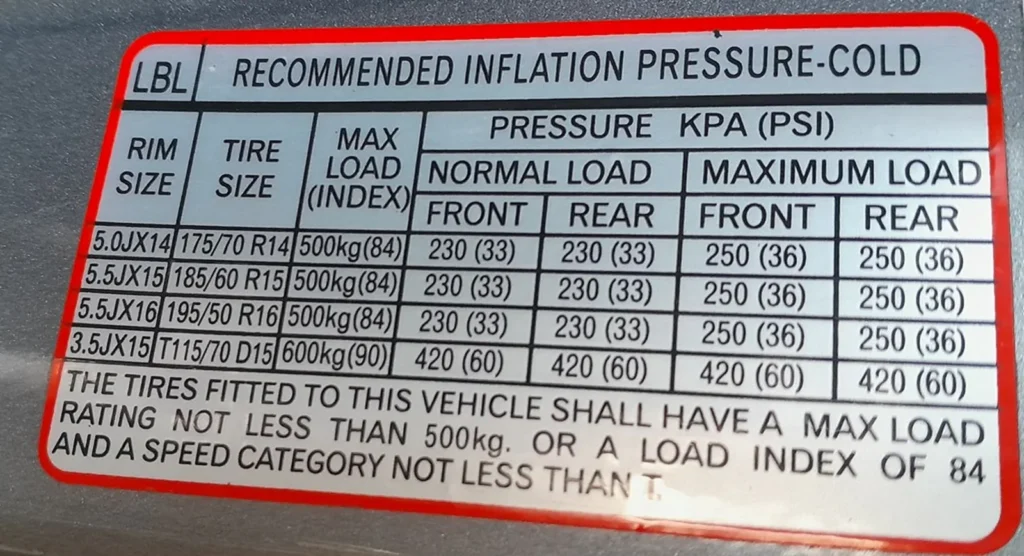
Hyundai i20 Cold Tire Pressures (2009-2014)
Recommended cold pressures for the first-generation i20 (PB), from the Hyundai owner manual. Always set them cold and confirm against the label in your driver’s door jamb.
| Tire size | Normal (front / rear) | Full load (front / rear) |
|---|---|---|
| 175/70 R14 / 185/60 R15 / 195/50 R16 | 2.3 / 2.3 bar (33 / 33 psi) | 2.5 / 2.5 bar (36 / 36 psi) |
| Space-saver spare (T115/70 D15) | 4.2 bar (60 psi) | |
Fuel-economy (ECO) versions run higher, at 2.6 bar (38 psi) front and rear. The compact spare takes 4.2 bar (60 psi). “Full load” means four or five people plus luggage. After adjusting pressures, reset the monitor using the steps below.
How the i20 System Works
The i20 Mk1 (with direct TPMS) uses a sensor in each wheel. After a pressure change it simply needs a short drive to read the new values and clear the warning — there is no menu step or button.
Set Your Pressures First
Park on level ground and set all four tires (cold) to the figures on the placard in the driver’s door aperture, using the laden column for a full load. Getting these right is the whole job — the system reads whatever you set.
How to Reset (Relearn) the i20 TPMS
- Make sure all four tires are at the correct cold pressure.
- Start the car and drive normally for about 10 minutes.
- Keep your speed above 25 km/h (15 mph) for as much of that as possible — the sensors report while the wheels are turning.
- The warning light goes out once the system has read all four correct pressures.
Light Won’t Go Out? Work Through This
- A tire is genuinely low: the system is doing its job — find and fix the leak, re-inflate to the placard figure, then drive again.
- Not driven far enough: give it a continuous 10-minute run above 25 km/h rather than short stop-start trips.
- Light flashes for about a minute then stays on: that signals a sensor fault (often a flat sensor battery, typically after 5–7 years) rather than a low tire. A code may be stored that you can look up on autodtcs.com.
Frequently Asked Questions
Where is the TPMS reset button on an i20?
There isn’t one. The i20 relearns automatically — just set the correct pressures and drive for about 10 minutes above 25 km/h.
Why does the light come back a few days later?
Either a tire is slowly losing air, or it was a little low when the system last read it. Re-check all four cold pressures and drive again.
Do I need to reset after just topping up the air?
The system relearns on its own, but a short drive after any adjustment lets it confirm the new pressures and clear the light.
The light flashes then stays on with correct pressures — why?
A flashing-then-steady TPMS light points to a sensor fault, not a low tire. Have the sensors checked — a flat sensor battery is the usual cause.
After changing the battery, the tire-pressure system may also need a short relearn drive — see our i20 battery disconnect/reconnect guide.
Independent guide — not affiliated with Hyundai. Always follow your official service manual and safety precautions. Read our full disclaimer.