These instructions apply to the Suzuki Swift Mk4 (A2L) 2017-Present.
For other models, please choose your vehicle here.
If the one-touch (auto up/down) windows stop working on your Suzuki Swift Mk4 (A2L, 2017–present) — usually after a flat or disconnected battery — the motor has lost its learned limits. Re-teaching it on the Swift involves briefly pulling the window fuses, then a normal up/down learn. It only takes a couple of minutes.
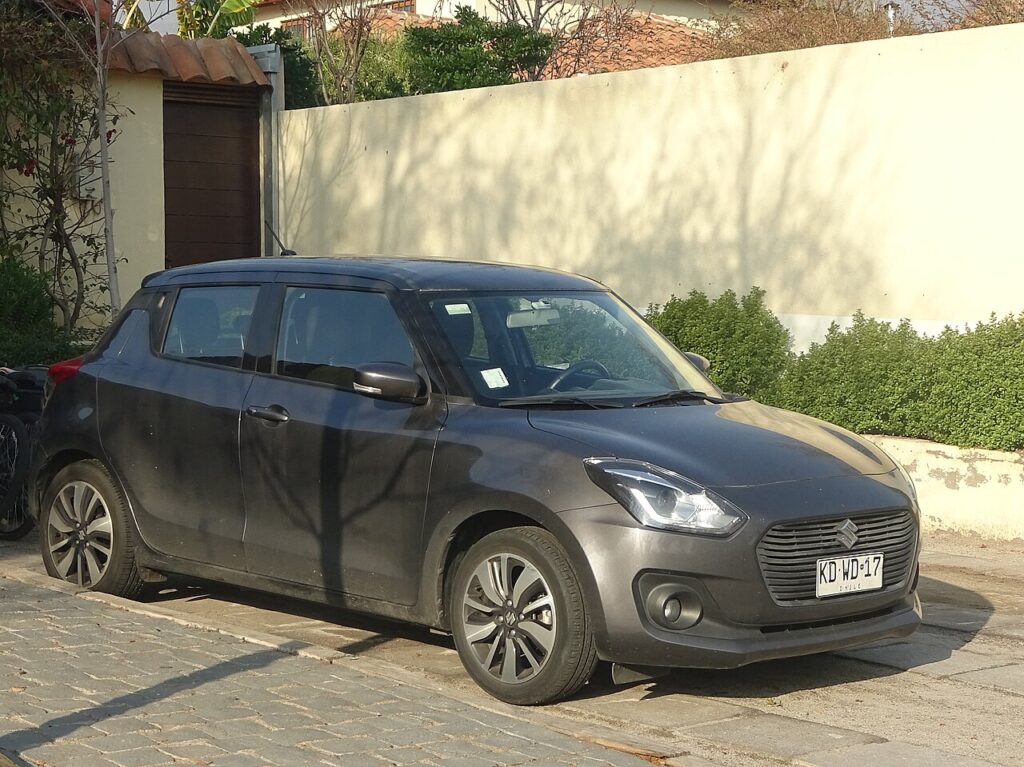
On the Swift this is a very common after-battery symptom, and it is not a fault. The switches and the motor are fine — the window control unit has simply lost the two end positions it needs to run the glass on its own. Until those are re-taught, the window only moves while you keep your finger on the switch, and the automatic single-tap raise and lower stay disabled.
How It Works on This Model
Each front window on the Swift is driven by a motor with a position counter, and the controller remembers exactly where the glass sits fully up and fully down. Those stored figures are what let one tap run the window the whole way and let the anti-pinch protection know when to stop and reverse. Any loss of 12 V power — a jump-start, a battery change, or a deep flat — erases them, so the controller reverts to a safe hold-to-move mode until it is re-initialised. The Swift relearn begins with a short fuse pull that clears the controller before the up/down teach.
Before You Start
- Park safely and keep hands and fingers well clear of the glass during the learn.
- Find the ‘P/W T’ and ‘P/W’ fuses — the fuse map printed on the box lid or in your handbook shows exactly where they are.
- Start with the ignition off, and be ready to switch it on for the up/down learn.
- Do one window at a time from its own door switch so the controller isn’t confused.
- If the battery is still low after a flat, charge it first — weak voltage can stop the learn holding.
How to Re-initialise the Windows
- Turn the ignition off.
- In the fuse box, remove the ‘P/W T’ and ‘P/W’ fuses.
- Pull and hold the window-close switch and wait 15 seconds, then release.
- Refit the ‘P/W T’ and ‘P/W’ fuses.
- Turn the ignition on.
- Press and hold the open switch until the window is fully open.
- Pull and hold the close switch until the window is fully closed, then hold for 2 more seconds and release.
- Check one-touch up and down work. Repeat for the passenger window, then switch the ignition off.
If It Won’t Stay Set
- Confirm both fuses were the ones removed and are pushed fully home — a half-seated fuse causes intermittent operation.
- Hold a moment longer at the fully-closed stop so the controller clearly registers the top limit.
- Run the sequence without letting go early — if you release mid-way, restart that window from step one.
- A window that drags or squeaks in its channel can stall the learn; cleaning the rubber runs and adding a little silicone lets the glass reach a true end stop.
- No luck after two clean tries suggests more than a lost memory — a worn switch or a window-module fault may be logging a code.
What to Expect After
With the limits stored again, a single tap sends the glass fully up or down, it stops cleanly at the top, and the anti-pinch reversal works normally. The relearn is permanent until the next time the battery is disconnected, so you only need to repeat it after future battery work.
Frequently Asked Questions
Why did my Swift windows stop going up automatically?
A battery disconnect, a jump-start, or a fully flat battery wiped the up and down limits the window controller had learned. With no stored positions it falls back to a safe mode where the glass only moves while you hold the switch. The fuse-pull and up/down relearn restore the one-touch feature — nothing is actually broken.
Do I really need to pull fuses?
Yes — on the Swift the ‘P/W T’ and ‘P/W’ fuses are removed to clear the window controller before the up/down teach. Skip that step and the relearn often stays half-done, so the auto function won’t hold. Refit both fuses fully before switching the ignition on for the learn.
Which windows need re-initialising?
Every one-touch window that lost the function, usually the driver’s and front passenger’s. Do each from its own door switch, one at a time. It is quickest to run through them all after a battery job rather than find a missed one later.
Do I need any tools?
No special tools. You only pull the two fuses by hand — a fuse puller or fine pliers helps if they are tight — then operate the window switches. The whole relearn is done from the driver’s seat in a couple of minutes.
Could this happen again?
Yes, any time 12 V power is interrupted — a future battery replacement, a jump-start, or a battery that goes flat while parked. It is harmless, just a cleared memory. Keep this sequence handy and you can restore one-touch in minutes whenever it happens.
What if only one window is affected?
That is normal — sometimes only one motor loses its memory, or you simply notice one first. Re-initialise just that window from its switch. If it refuses to learn while the others are fine, the cause is more likely that door’s switch or motor than a lost setting.
This is the step most owners miss after battery work — see our Swift battery guide. For warning lights, look up the code on autodtcs.com.
Independent guide — not affiliated with Suzuki. Always follow your official service manual and safety precautions. Read our full disclaimer.